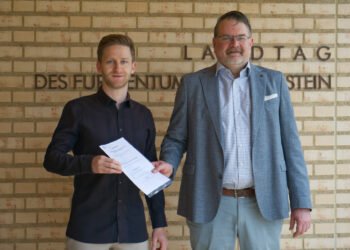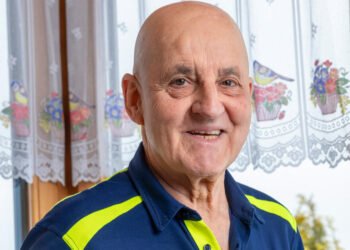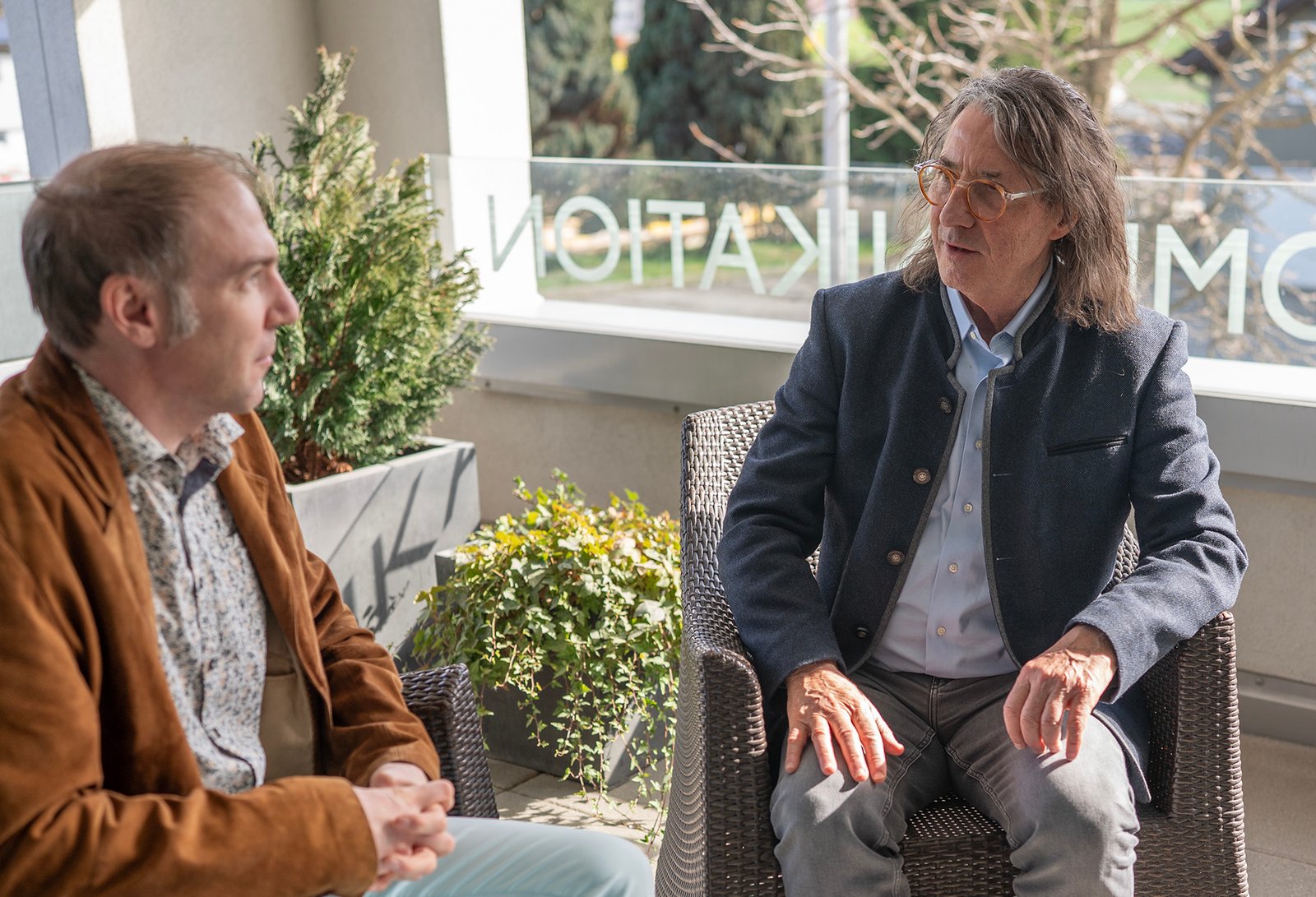
Johannes Kaiser has been at the head of the FBP parliamentary group for over a year. The first year of the legislature was characterized by numerous parliamentary initiatives, intensive debates and major political dossiers. In the Landesspiegel interview, Kaiser takes stock of his time as parliamentary group spokesman and explains what priorities the FBP parliamentary group wants to set in the coming years.
The FBP wants to position itself clearly in the current legislature and communicate its concerns more clearly, says Kaiser.
“We want to define clear goals for the group and work well together.”
Although the group has become smaller, it does not only see disadvantages in this. “Of course we feel in the state parliament that we have moved closer together“, he said. At the same time, the group is very well positioned. Many of the new MPs are strongly anchored in their regions and specialist areas. “This makes it possible to contribute in a concentrated manner without getting lost.”
Fewer group members mean more individual work for each individual MP. “However, the experience and information remains in a manageable team size – this means you can work efficiently.” The motivation is correspondingly high.
Active from day one
The FBP attracted attention in the new legislature with numerous parliamentary initiatives. This was not always met with enthusiasm by the coalition partner. For the group spokesman, however, this activity is part of the core of parliamentary work.
“For me, the first part of the state parliament sessions is the most interesting – the parliamentary proposals“, he says. There, ideas and initiatives are brought directly from society into politics. The DNA of the people’s representatives – the state parliament members – should be to address issues from the economy, society and people’s everyday lives. “The state parliament sets the tone there.”
He also associates this with a stronger role for parliament vis-à-vis the government. This has a large administrative apparatus, while the state parliament can absorb impulses from the population.
“You can feel that we are closer to the people than before.”
It is in the nature of things that an active faction is not always convenient for the government. “Of course, it is more pleasant for a government if its coalition partner acts more calmly. But anyone who feels that fewer proposals should be made has a strange understanding of state parliament work.“
Criticism after rejected proposal for deregulation
A postulate from the Citizens’ Party to reduce bureaucracy, which did not find a majority in the state parliament last week, also caused discussions. He rejects the criticism of this.
In the debate, people did not want to understand the issue. As a member of the state parliament, I am often approached by companies, associations and citizens about bureaucratic hurdles that make little sense and represent unnecessary burden of effort. Deregulation and de-bureaucratization measures require a systematic approach. Other comparable small states such as Luxembourg and Malta are showing us how.
The administration itself can do little to change this. The state parliament and the government give it en masse legal provisions, regulations, ordinances and control lists, which it has to carry out. It is up to the state parliament and the government to clear out laws, eliminate unnecessary regulations and reduce over-regulation in order to free the administration, companies and the population from obvious bureaucratic ballast in clearly identified areas. That was the objective of the FBP’s postulate of bureaucracy reduction and deregulation. For the VU, DpL and FL, today’s bureaucracy and tight regulations seem to be reasonable in many areas of people.
“Aim – to free the population from obvious bureaucratic burden.”
AHV stabilization as an urgent task
The parliamentary group spokesman sees the stabilization of the AHV as a central issue. The basis for this is the technical report, which regularly checks the financial development of the pension provision.
The last report from October 2024 showed that the legally stipulated reserve of five annual expenses would be undercut in the coming years. “The law clearly stipulates that the government must submit proposals for measures within one year – and that legal deadline was October 2025“, he says.
The Haas government has already let this legal obligation to act pass by without doing anything for 5 months and, as Government Councilor Emanuel Schädler answered my small question about this in the March state parliament, another 8 to 9 months will be added. Compliance with legal deadlines applies not only to citizens, but also to the government. If this deadline is ignored, it will be very problematic.
“The AHV and retirement provision is probably the most important social work in the country. If you wait too long, the necessary measures will become less popular and more drastic.” Early action, on the other hand, enables a balanced combination of various adjusting measures to secure the AHV for today’s younger generations. If this legal deadline is not met, the scope for action for the government and state parliament becomes increasingly smaller, as increasingly drastic and unpopular measures have to be taken.
State Hospital: Focus on Inspira II
The new construction of the state hospital also remains a key political issue. Kaiser was a supporter of a new building from the start. He would have preferred a solution in conjunction with the Medicnova. However, after two referendums, the mandate is clear. “As a democrat, I of course accept that.”
However, he is critical of the progress of the project so far. “How the project went afterwards was anything but professional.” The fact that the building owner is now owned by the state was therefore an important step.
The central question now is whether the “Inspira II” project can be realized with the 93 million franc loan approved by the voters. “If that is possible, the order must be fulfilled.“
The state hospital project would hardly survive another referendum. “The focus and full attention should be on the Inspira II project And by the fall, as the government is promising, an answer will be presented as to whether and how the state hospital can be realized within the framework of the loan approved by the people.” For the FBP faction, as Johannes Kaiser emphasizes in this context, it makes absolutely no sense for the government to have decided on further planning with an object study on the Wille area in parallel, when the previous plans have not yet risen above the level of pre-project quality.
“Only the Inspira II project within the framework of the credit spoken by the people has a chance of being realized.”
Energy self-sufficiency as a long-term goal
The FBP group sees several priorities for the coming years. Energy and climate issues, transport issues – especially the opening of the locks from Feldkirch to the lowlands – and educational issues are particularly important.
Let’s stay on the topic of energy: This is primarily about expanding renewable energies and greatly increasing the country’s self-sufficiency. Although Liechtenstein has hydropower, it is limited. In addition, photovoltaics, possible wind energy projects and, above all, storage capacities are needed.
“As a small country, we are actually in a good position to significantly reduce our energy dependence“, says Kaiser. Dependence on the international energy market is a risk – for the economy and the population alike. “We must therefore continue to pursue these topics consistently.“