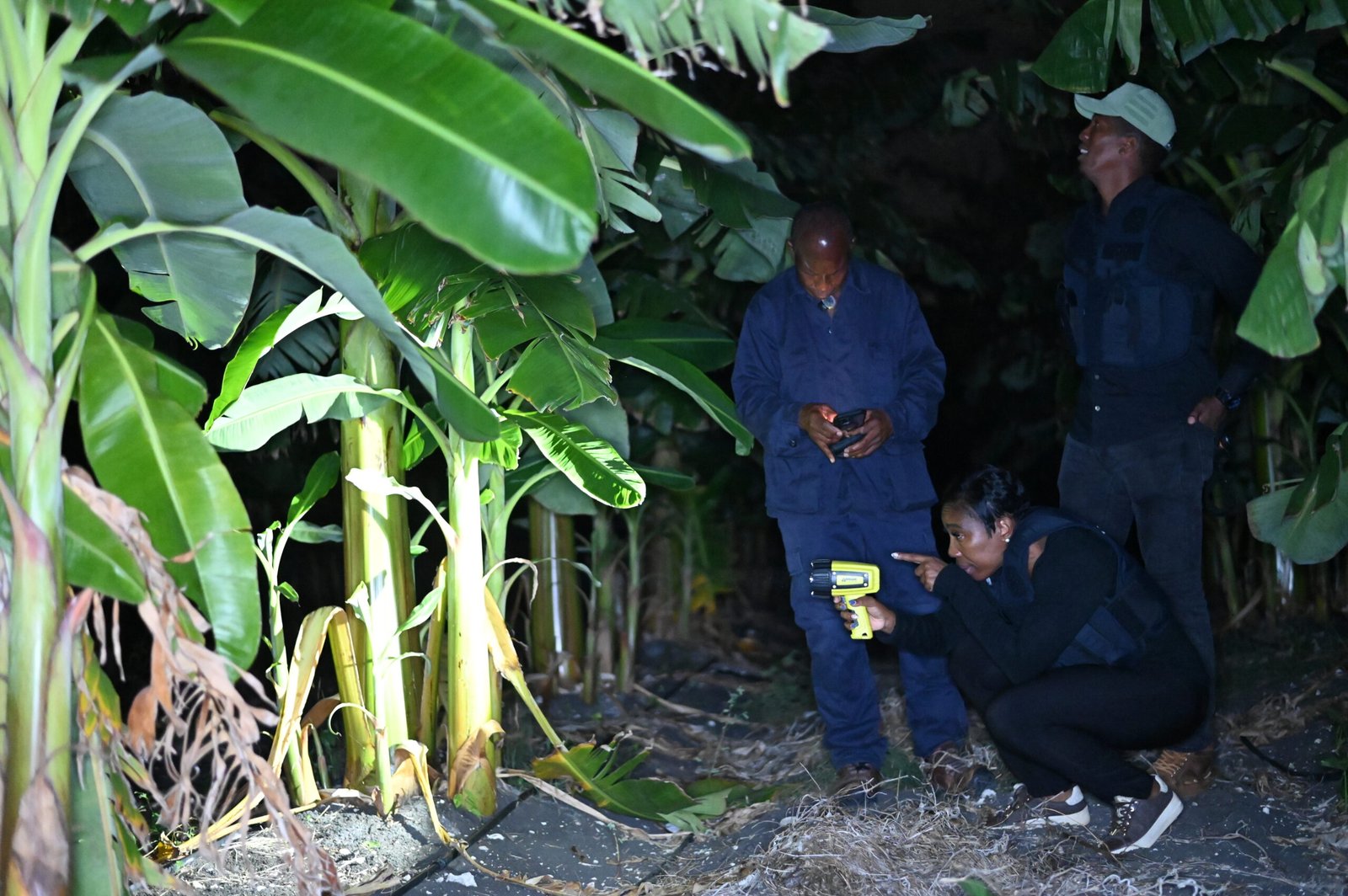
Minister of Agriculture Dr Shantal Munro-Knight has put consumers, vendors and thieves on notice with a series of new measures to combat crop and livestock theft, after witnessing firsthand the scale and sophistication of the crime during an overnight patrol with police and farmers.
The minister, who joined the Barbados Police Service’s fledgling crop patrol unit on visits to several farms, said the experience reinforced the need for decisive action, with changes expected at both the consumer and vendor levels as the government intensifies its response to a well-organised criminal enterprise.
“We will be addressing this issue of praedial larceny with everything that we have,” Munro-Knight declared.
“We can’t release everything, but there will be some definite changes that will be coming both from the consumer end… as well from those that sell. So I’m putting everybody on very, very, very clear notice about the seriousness with which we’re taking this issue.”
The overnight patrol, piloted in March, formed part of the ministry’s ongoing engagement with farmers and the Barbados Police Service as part of additional measures to curb theft — popularly known by the archaic, colonial-era legal term of praedial larceny — and strengthen protections for the island’s agriculture.
The farm minister said accompanying police officers and speaking directly with farmers was essential if meaningful policies were to be developed:
“Having a hands-on approach and directly interacting with those that I would say are on the front line is important because I can’t do policy and leadership and set direction unless I understand the experience fully.
“It was really, really important for me to be able to come out at night. From what I hear from the farmers, this is really the tip of the iceberg for them. They’re out here 24/7, but even just a couple of hours that I’ve been out here listening to the stories from them, listening to the policemen who come out, there’s so many facets to this.”
Among the issues that stood out, Munro-Knight said, was the level of organisation employed by thieves targeting farms:
“The level of organisation by the criminals – and I’m going to call them criminals, I make no apologies for that – the dedication from the farmers themselves… all the farms that we visited, farmers are out here 24/7, no sleep. So they work and then they do a second job just having to protect the crops.”
She also praised the close relationship between farmers and members of the patrol unit, noting that several farmers referred to officers by their first names and contacted them directly whenever suspicious activity occurred:
“It demonstrates that we have a platform to be able to build on, and that is what the Ministry of Agriculture has intended to do – build on that platform.”
Munro-Knight said the consequences of praedial larceny extended far beyond the immediate financial losses suffered by farmers.
“I can’t encourage farmers and households and others to produce. I can’t ask people to grow more when they feel that all of their investment can just come to naught by somebody just coming in at the end and taking everything.
“How is that fair to them? How is that fair to the level of practical investment – and I’m talking about money – that people have?”
Farmers described investing months of labour and significant financial resources into producing crops, only to have them stolen shortly before harvest, she said.
One concern repeatedly raised during the patrol, she said, involved the potential health implications for unsuspecting consumers of stolen produce:
“The very first farmer that we visited said his main concern is really about the fact that these thieves are coming in and taking up crops which have been sprayed with pesticides and then selling them on the market.
“People are going to be at risk…. falling sick and don’t know why because what you are selling that has been illegally gained is going to make you sick because you don’t know what the farmers have sprayed that with.
“Many times the thieves are coming in and stealing those crops before they are ready to be harvested. So they’re young and they’re sprayed as well, and that’s a health challenge that we have to face because of praedial larceny.”
The minister also noted the wider damage inflicted on farms, saying thieves often destroy irrigation lines, equipment and neighbouring crops while carrying out the thefts.
“So it’s a really vicious cycle.”
Stealing crops and livestock has long been one of the most persistent challenges facing Barbadian agriculture, with farmers repeatedly reporting the theft of yams, sweet potatoes, cassava, livestock and other produce, often just days before harvest.
Barbados TODAY has previously reported on farmers losing tens of thousands of dollars’ worth of crops annually, while industry officials have warned that the crime discourages investment, threatens food security and places additional pressure on local food production.
Munro-Knight maintained that reversing those trends would require strong action across the supply chain.
“We’re taking this issue seriously,” she said. “We cannot build a resilient agricultural sector if the people who are producing our food feel that everything they have worked for can simply be stolen.”
(SM)