DUBLIN, Ireland, November 13.
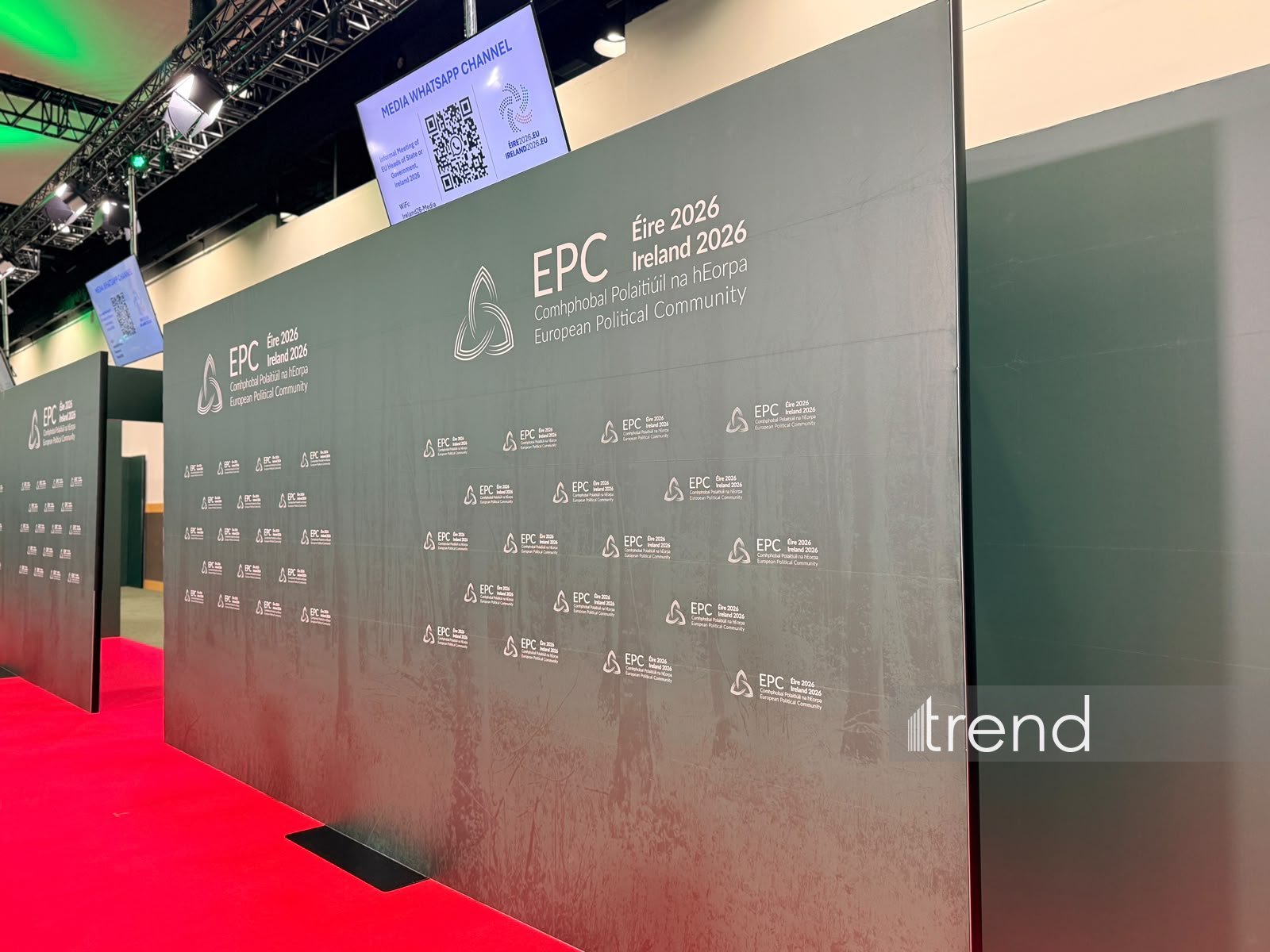
The 9th Summit of the European Political Community
(EPC), held on November 12 in Dublin, became a platform for
discussing the prospects for expanding cooperation between
Azerbaijan and European countries in the fields of energy,
transport, and regional security.
The summit was held under the motto “Europe – strong, secure and
connected”. In the face of ongoing security challenges, the need to
diversify energy supplies and strengthen transport routes, European
leaders have paid attention not only to the continent’s internal
resilience, but also to cooperation with partners outside the EU.
In this context, Azerbaijan was seen as one of the important
participants in the emerging system of energy and transport
connectivity between Europe and the Caspian region and Central
Asia.
Azerbaijan’s participation in the Dublin EPC Summit was
accompanied by an intense diplomatic agenda and covered a wide
range of issues of bilateral and multilateral cooperation. Within
one day, President of Azerbaijan Ilham Aliyev held a series of
meetings with leaders of European states and institutions,
discussing energy security, transport connectivity, trade and
economic relations, investments, and regional stability.
President Aliyev held meetings with Ukrainian President
Volodymyr Zelenskyy, Moldovan President Maia Sandu, Bulgarian Prime
Minister Rumen Radev, Greek Prime Minister Kyriakos Mitsotakis,
Czech Prime Minister Andrej Babiš, Romanian President Nicușor Dan,
European Council President António Costa, Lithuanian President
Gitanas Nausėda and UK Prime Minister Andy Burnham.
At the negotiations with Zelenskyy, the parties discussed the
expansion of economic and trade ties, cooperation between the
private sector, and the prospects for mutual visits. The Ukrainian
President expressed gratitude to Azerbaijan for humanitarian
assistance, in particular for the supply of electrical
equipment.
The meeting with Maia Sandu was dedicated to the further
development of energy cooperation, strengthening trade ties, and
interaction in the agricultural sector. Sandu thanked Azerbaijan
for its support in strengthening Moldova’s energy security.
During the negotiations with the Prime Minister of Greece,
special attention was paid to the role of Azerbaijan in ensuring
the country’s energy security and the importance of TAP. The
parties also considered additional opportunities for exporting
Azerbaijani gas to Europe.
During the meeting with the Prime Minister of Bulgaria, the
prospects for energy partnership, the creation of an electricity
corridor, and issues of interconnectivity were discussed. Economic
and trade relations, investment projects, and the role of
Azerbaijan in ensuring the energy security of the Czech Republic
were discussed with the Prime Minister of the Czech Republic.
Meetings with the Presidents of Romania and Lithuania, as well
as the President of the European Council, António Costa, added to
the agenda of European cooperation and regional connectivity.
A separate result of the visit was the signing of a strategic
declaration with the UK, which cemented the two countries’
intention to expand cooperation in energy, transport, investment,
digital technology, and security.
Sustainable peace in South Caucasus also
important for Europe
On the sidelines of the summit, President Ilham Aliyev met with
Prime Minister of Armenia Nikol Pashinyan. The negotiations
continued the dialogue initiated at the Washington Peace Summit on
August 8, 2025, and enshrined in the Washington Joint
Declaration.
The parties discussed practical steps to further strengthen
peace, develop transport and transit communications, economic and
trade relations, border delimitation, and the implementation of
confidence-building measures.
Particular attention was paid to the Trump Route for
International Peace and Prosperity (TRIPP) project. The leaders
reviewed the progress of work on planning and designing the railway
and road sections of the route, as well as the prospects for the
development of transit communications.
Important practical evidence of the progress of regional
normalization was the discussion of cargo transportation already
taking place. Since November 2025, a total of 105,000 tons of cargo
have been transported through the territory of Azerbaijan to
Armenia. The parties noted the transit of goods to and from Armenia
through Azerbaijani territory as a positive development.
The meeting in Dublin once again showed that the agenda of
Azerbaijani-Armenian normalization gradually covered not only
issues of political settlement, but also the practical restoration
of regional ties. The development of transport routes, transit,
trade, and energy infrastructure became one of the tools for
strengthening peace.
Europe wants to receive as many energy resources
as possible from Azerbaijan
The energy component has become one of the most prominent areas
of discussion in Dublin. Against the background of the desire of
European countries to diversify sources and routes of supply,
Azerbaijan remains important as a supplier of natural gas and oil,
as well as a potential partner in the development of renewable
energy, and trans-regional energy corridors.
The interest of European partners in expanding cooperation with
Azerbaijan was further confirmed by statements made on the
sidelines of the summit.
Irish Prime Minister Micheál Martin linked Azerbaijan’s
participation in the EPC to tangible outcomes for the continent’s
economic security, including energy supply and countering hybrid
threats. He emphasized that the forum enables European nations and
partners from outside the EU to coordinate their approaches to
common challenges.
Moldovan President Maia Sandu expressed Chisinau’s interest in
broadening energy cooperation with Baku. She noted that energy
remains a significant challenge for Moldova, despite reforms
implemented in recent years and efforts to diversify supply
sources. She expressed hope that engagement with Azerbaijan would
help identify further opportunities for collaboration.
Bulgarian Prime Minister Rumen Radev also confirmed an interest
in increasing supplies of Azerbaijani gas, noting that Bulgaria
would welcome additional volumes to meet its own energy needs.
Furthermore, Radev highlighted the advancement of a green energy
corridor project involving Azerbaijan, Georgia, Türkiye, and
Bulgaria.
Croatian Prime Minister Andrej Plenković, for his part, stated
that Zagreb is interested in importing natural gas from Azerbaijan,
noting that Azerbaijan is already a supplier of oil to the Croatian
market.
Greek Prime Minister Kyriakos Mitsotakis and Lithuanian
President Gitanas Nausėda also underscored the importance of
Azerbaijan to Europe’s energy security.
Middle Corridor and region’s new transport
architecture
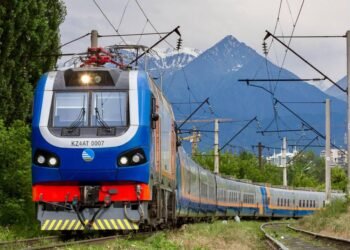
Transport connectivity has emerged as a vital area of
cooperation between Azerbaijan and its European partners. The
Middle Corridor, which links China and Central Asia to Europe via
the Caspian Sea and the South Caucasus, is gaining added
significance as European nations seek to diversify their trade
routes and enhance the resilience of their supply chains.
A key outcome of the summit was the strengthening of this
dimension within the bilateral relationship between Azerbaijan and
the UK. On the sidelines of the forum, President Ilham Aliyev and
UK Prime Minister Andy Burnham signed a joint declaration on
strategic partnership.
The document provides for, among other things, intensified
cooperation on the Middle Corridor, the development of transport,
logistics, and infrastructure, and expanded collaboration in
renewable energy, “green” finance, low-carbon technologies, and
innovation. Particular attention was also given to artificial
intelligence and digital governance.
The declaration further underscored the importance of the Middle
Corridor as a tool for fostering cross-border trade and investment.
The two sides agreed to utilize their joint intergovernmental
commission as the primary mechanism for advancing initiatives
related to investment, economic diversification, the development of
the corridor, and energy cooperation.
The significance of transport connectivity was also highlighted
during other meetings held by the President of Azerbaijan.
Specifically, discussions with Bulgarian Prime Minister Rumen Radev
focused on the creation of an electricity corridor and the further
development of bilateral cooperation. Meanwhile, Lithuanian
President Gitanas Nausėda, commenting on the importance of the
Middle Corridor, noted the interest among European countries in
developing reliable transport and energy links with partners beyond
the EU. Thus, the transport agenda of the Dublin summit encompassed
several interconnected areas: the development of the Middle
Corridor, the establishment of new regional routes, the expansion
of the capacity of existing infrastructure, and the restoration of
economic ties in the South Caucasus.
For Azerbaijan, this represents an opportunity to strengthen its
role as a transit hub between Europe and Asia, not merely by virtue
of its geographical location, but also through infrastructure
development and the expansion of international partnerships.
European partners on role of
Azerbaijan
The significance of Azerbaijan to Europe was also reflected in
the assessments offered by other summit participants.
Slovenian Prime Minister Janez Janša stressed the importance of
the Caspian region to Europe’s energy security, noting that its
resources could make a substantial contribution to the development
of the continent’s strategic economy.
President of North Macedonia Gordana Siljanovska-Davkova
described Azerbaijan as a significant factor for stability; she
linked the decision to host the EPC summit in the country in 2028
to the trust placed in Baku and the recognition of its role in
regional and international affairs.
Speaking on the prospects for TRIPP, Secretary General of the
Council of Europe Alain Berset said that any initiatives
contributing to the strengthening of international peace and
security deserved support. At the same time, he emphasized the need
for such initiatives to be embraced by the populations of the
countries directly affected.
Lithuanian President Gitanas Nausėda expressed hope for a
lasting peace between Azerbaijan and Armenia, speaking positively
of the parties’ efforts to advance the normalization of
relations.
For her part, President of the European Parliament Roberta
Metsola emphasized that the diversification of energy supplies
remains a priority for the EU, not least as a means to reduce costs
for European households and businesses.
These assessments highlight that Azerbaijan features on the
European agenda in several capacities: as an energy partner, a
transit country, a participant in the regional peace process, and a
hub for developing interregional connectivity.
EPC Summit in Azerbaijan in 2028: new phase of
engagement
The Dublin summit took on added significance given that the next
major milestone for Azerbaijan will be hosting a meeting of the EPC
in 2028.
In an exclusive interview with Trend ahead of the
summit, Slovak Minister of Foreign and European Affairs Juraj
Blanár stated that hosting the forum in Azerbaijan would create
opportunities to intensify engagement between the European Union
and the entire South Caucasus region.
According to him, the upcoming summit should reaffirm the EPC’s
role as a platform for open dialogue and practical cooperation
among European states, a space for overcoming differences, building
trust, and developing collective responses to geopolitical,
economic, and security-related challenges.
Blanár especially emphasized the strategic importance of the
South Caucasus as a connecting link between Europe and Central
Asia, as well as its growing role in the energy security of the
European continent.
He noted that Azerbaijan has been a key partner in the
development of transport, energy, and digital cooperation, and that
hosting the summit in Baku would serve as a signal in support of
lasting peace and post-conflict normalization in the region.
Thus, the upcoming forum in Azerbaijan has taken on an
additional political dimension. It will provide an opportunity for
European leaders to discuss relations with the South Caucasus from
within the region itself, a region that plays an increasingly
prominent role in trade, energy, and transport links between Europe
and Asia.
The outcomes of the Dublin summit demonstrated that Azerbaijan’s
significance in its relations with European states has been shaped
at the intersection of three core areas: energy security, transport
connectivity, and the peace process in the South Caucasus.
Crucially, these areas don’t exist in isolation. Advancing a
peace agenda between Baku and Yerevan creates further conditions
for opening regional communication channels; the development of the
Middle Corridor expands trade opportunities between Europe and
Asia; and the energy partnership strengthens Azerbaijan’s ties with
European markets.
The meetings held by President Ilham Aliyev, the agreements
reached with the UK, and the discussions regarding concrete steps
toward Azerbaijan-Armenia normalization have given Baku’s
participation in the summit a practical substance.
Looking ahead, Azerbaijan is set to host the EPC in 2028. This
offers the country an opportunity not only to welcome European
leaders but also to serve as a platform for further discussions on
the future of the South Caucasus, its transport potential, and its
role within the framework of Euro-Asian economic and energy
ties.