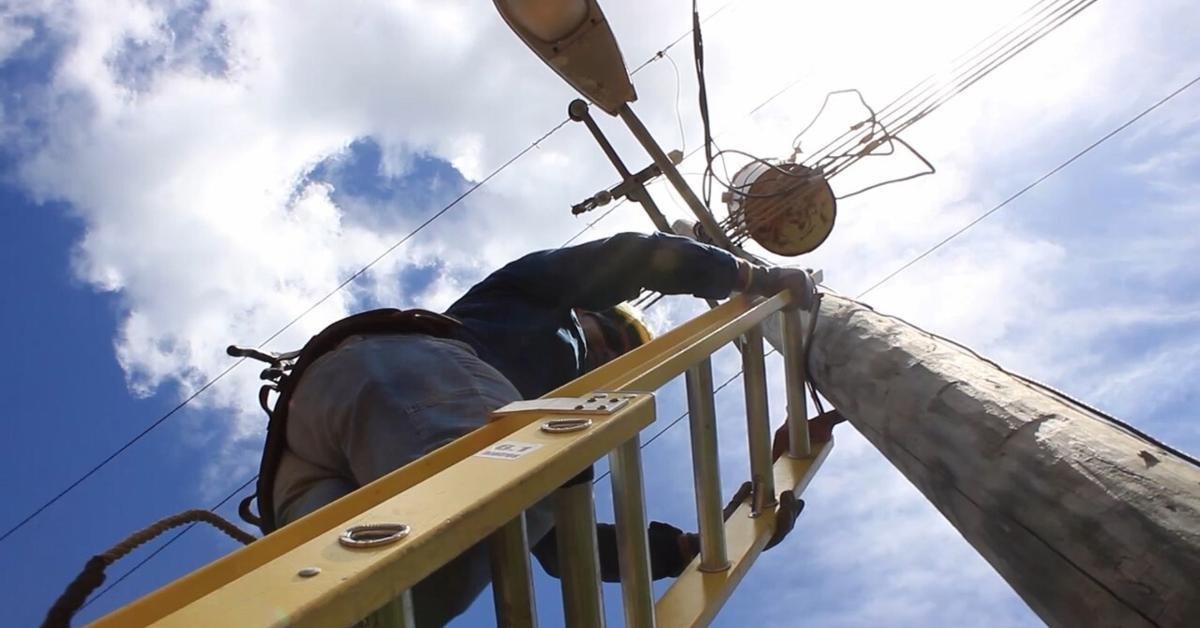
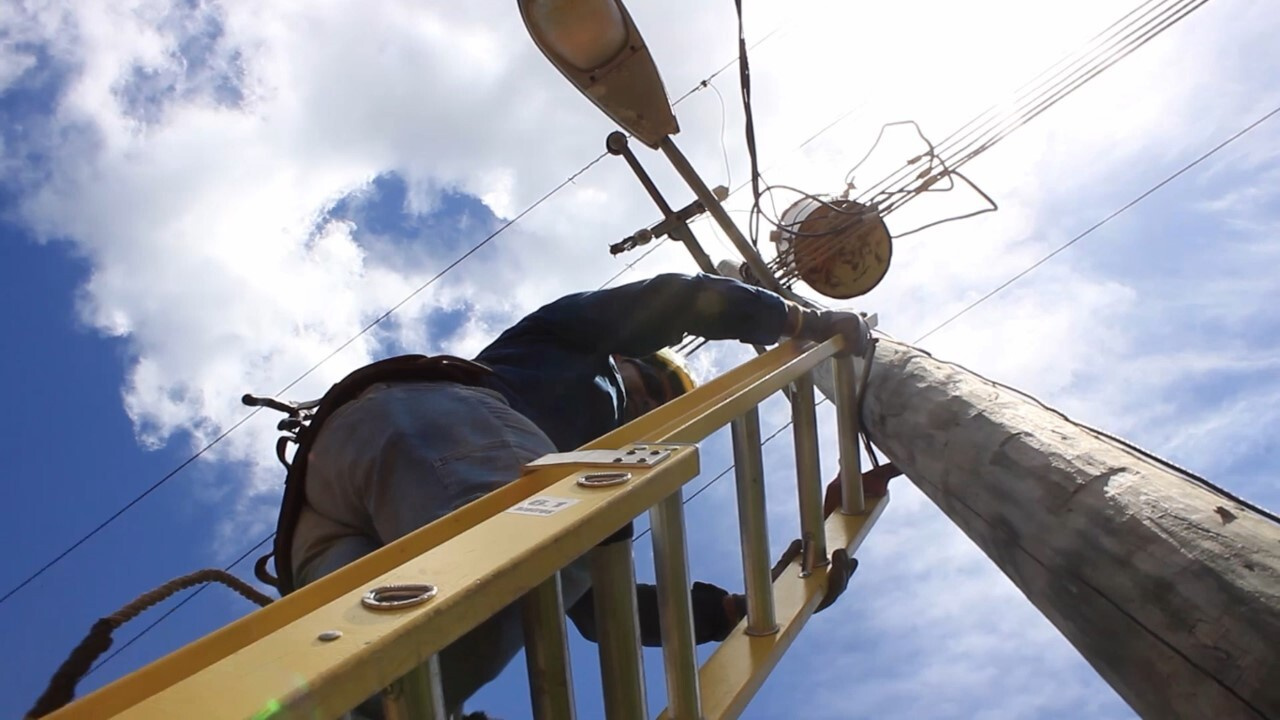
Havana/The Cuban electricity crisis also takes a toll on those trying to keep an increasingly deteriorated network up and running. One lineman died and another was seriously injured in Cienfuegos after the pole they were working on broke. According to a Palmira source consulted by 14ymediothe deceased was the father of two small children. While in Santiago de Cuba a worker from the Electrical Union of Cuba (UNE) who was carrying out, during his work day, the inspection of a line, continues to be missing since Thursday.
The Cienfuegos accident occurred in the Juraguá area, where Mario Vives died The Chineseresident in Palmira, and another worker, Ridier Molina, is admitted to intensive care. The first secretary of the Communist Party in the province, Armando Carranza Valladares, reported in a comment posted on social networks that the injured man had left the Emergency Surgical Unit and remained under observation in the Multipurpose ICU. He also noted that the funeral services for the deceased were being prepared in Palmira.
The exact circumstances of the accident have not been officially clarified, although the first information that circulated on social networks points to the fall of the pole on which they were working. The episode joins a succession of incidents that have once again put the spotlight on the conditions in which the electrical brigades work.
Just a few days before, Edisvey Rolando Pérez Rodríguez, a 32-year-old lineman from Sancti Spíritus who was part of a brigade sent to Havana, died.
Alexander Pantoja Bertot, a project specialist at the Santiago de Cuba Electric Company, remains missing since Thursday, when he went out to inspect the line that supplies electricity to the Gota Blanca reservoir, in a rural area between Palma Soriano and Contramaestre. The search is concentrated in an area that includes the communities of La Aduana, Juan Barón, Arroyo Blanco de Aguacate, Haiti Chiquito and Las Cruces. The state company confirmed the participation of the Police, while his sister, Yaima Bertot, has asked for help on social networks to locate him.
Just a few days before, he died Edisvey Rolando Pérez Rodrígueza 32-year-old lineman from Sancti Spíritus who was part of a brigade sent to Havana to carry out maintenance work. The Electrical Union confirmed that it was a work accident, although it did not initially detail the causes.
Later, a report attributed to the Sancti Spiritus Electric Company emerged according to which an irregular connection made in a home would have caused a return of current while the brigade was replacing a damaged transformer. The discharge fatally hit Pérez Rodríguez.
In 2025, 38 workers died in work accidents in Cuba and five of them belonged to the electrical sector
The danger, however, did not begin this year. In September 2025 he died Cleivi Pujada Castro after coming into contact with a high voltage line while repairing a circuit in Bauta. Days earlier, Osmani Hernández Madroza, 35, suffered burns so severe in San Miguel del Padrón that both of his arms had to be amputated. In March 2024, another lineman He died after falling from a pole in Boyeros.
Official statistics reflect the dimension of the problem. In 2025, 38 workers died in work accidents in Cuba and five of them belonged to the electrical sector. A year earlier, seven had died. Added to the deterioration of the facilities is the lack of personnel. Between 2021 and 2023, the Electrical Union lost about 15,000 workers and maintains a staff of around 40,000, at a time when the Ministry of Energy and Mines itself recognizes difficulties in filling specialized positions.
Workers in the sector have also reported a shortage of dielectric gloves, boots, helmets and harnesses. In some teams, according to testimonies collected by 14ymediothe same harness must be shared between several members of the brigade.
Complaints against employees of the company itself for alleged irregularities in distribution have also increased.
To this precariousness is now added the social tension caused by blackouts that, in many places, last a good part of the day. The linemen, who do not decide the outage schedules or the amount of electricity available, frequently end up becoming the visible face of the crisis to exhausted neighbors.
The opposite phenomenon also exists. As electricity becomes an increasingly scarce commodity, complaints have increased against employees of the company itself for alleged irregularities in distribution. In July, the UNE He acknowledged that he was investigating to two linemen after residents of Calabazar accused them of favoring certain circuits. This newspaper also documented testimonies about payments to speed up repairs or obtain more advantageous connections.
The result is a particularly dangerous combination. Fewer workers must face aging infrastructure, constant breakdowns, clandestine connections and increasingly irritated users, while brigades from one province are sent to another each time a new emergency overwhelms local capabilities.
In the middle of the official announcements on megawatt recovery and new investments, it is those workers who end up climbing the pole, opening the transformer or traveling kilometers of lines to repair a system that is failing on more and more fronts. For them, the crisis in the national electrical system is also measured in deaths, injuries and days that may not end with the return home.