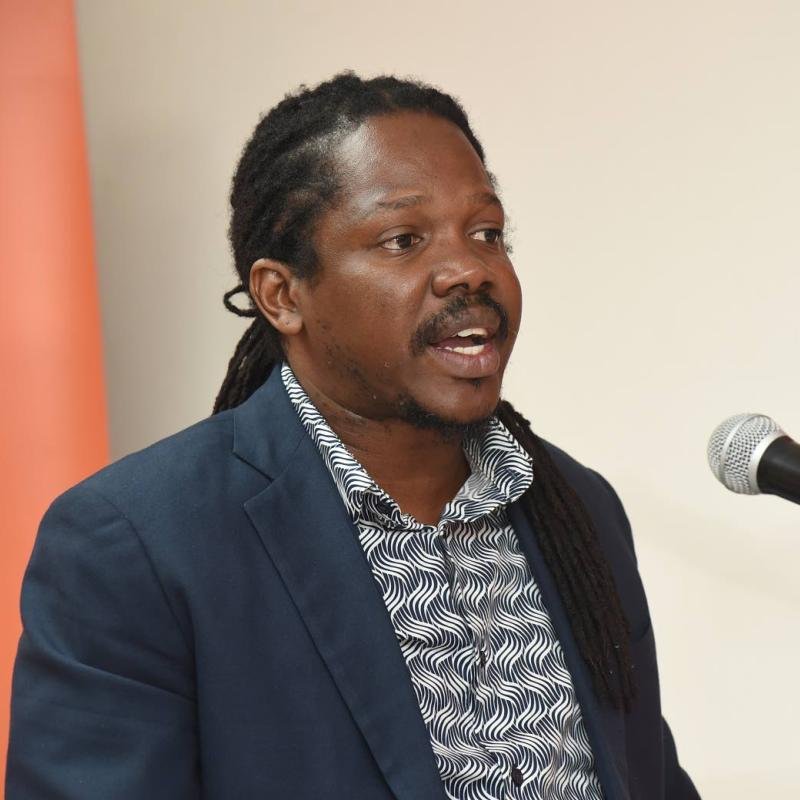
Damion Crawford, the Opposition’s spokesman on education, and the teachers’ union president, La Sonja Harrison, are correct that there must be inclusive dialogue on the education ministry’s proposal to close scores of schools.
That is the responsible approach to any serious matter of policy, especially when it affects a sensitive area such as education. However, this necessary debate ought not to become a zero-sum game of political football or an industrial relations bargaining chip. All parties must come to the table with a sense of responsibility and open minds.
The greater obligation, however, rests with the Government. It must engage the issue with transparency, including frankly informing stakeholders of the likely impact of its plans on their various constituencies. The Government must also be prepared to genuinely listen to, and seriously analyse, counter-proposals.
How the administration frames the issue is therefore important. This is not merely a question of the education authorities moving to close or merge schools because immediate population shifts provide a rational case for consolidation and economic gains, although those are critical underlying factors.
disruption to communities
More importantly, the matter should be placed in the deeper context of Jamaica’s long-term demographic transition to an increasingly grey country with a growing preference for urban living; the social and economic realities of this transition; how state resources can be allocated more efficiently; and what can be done in the immediate term to alleviate the disruption to communities, students, parents and teachers at institutions that must be closed.
The issue of school closures is not new. Indeed, it is one that constantly confronts education policymakers as communities atrophy or expand, or as new ones are built. It is, however, always a sensitive social and political subject and a fraught industrial relations matter for teachers who must be transferred or furloughed.
The current situation was thrust into the public domain in late July, when the parents of students at Mulgrave Primary School in the southwestern parish of St Elizabeth protested over fears that the institution would be shuttered and its students transferred to another school seven miles away. Mulgrave was one of hundreds of schools seriously damaged by Hurricane Melissa, the Category 5 storm that ravaged western Jamaica last October. It was also among a raft of schools across Jamaica with too few students for it to be economically sensible for them to remain open.
While education officials, using the hurricane damage as the proximate cause, had informally identified up to a dozen schools for permanent closure at the start of the new school year a fortnight ago, announcements have been made regarding only a handful. However, internal education ministry analyses of national demographic shifts, current student-teacher ratios, and the relative cost of maintaining institutions suggest that the real number of schools that ought to be mothballed is around 220.
This figure is not new. It has remained relatively steady for a decade and a half, despite the closure of some institutions.
In 2015, then Education Minister Ronald Thwaites reported that, of Jamaica’s 830 primary schools at the time, 220, or more than a quarter (27 per cent), had fewer than 100 students, although they were “fully commissioned with teachers”.
“The cost of a unit of primary education in those schools is roughly between five and 10 times what it is in a larger school,” Thwaites said. Yet costs and outcomes did not justify the expenditure.
demographic trends
The problem not only persists but has been exacerbated by demographic trends. According to Jamaica’s 2022 census data, 61 per cent of the island’s population now lives in urban communities, an increase of 11.2 percentage points from the 2011 census. Many schools in rural areas are dying for want of students, while additional schools are needed in some existing and new urban communities.
Additionally, Jamaica’s population in recent years has hovered between stagnation and decline. Between the 2011 and 2022 censuses, the island’s population grew at an average annual rate of 0.24 per cent, but growth has been negative in more recent years. Between 1972 and 1982, the average annual growth rate was 1.4 per cent.
Further, 55 years ago, at the start of the 1970s, women of childbearing age had, on average, 5.47 children. Today, the rate is 1.9, down from 2.4 in 2008 and below the 2.1 children per woman that demographers say is necessary to maintain a stable population.
At the start of the 1960s, 41 per cent of Jamaica’s population was under age 15. That figure has now been halved. In 25 years, there will be more people over age 65 than children.
These issues, in addition to Jamaica’s poor educational outcomes and questions about how best to allocate the island’s annual education expenditure of around 5.5 per cent of GDP, are pertinent to the discussion on school closures. This is particularly so, given Ms Harrison’s claim that, despite signals from Education Minister Dana Morris Dixon, the Jamaica Teachers’ Association has not been engaged.
Mr Crawford wants a parliamentary review to give members of parliament an opportunity for input. We agree. But the process must be one of genuine dialogue, not to red-flag partisans.