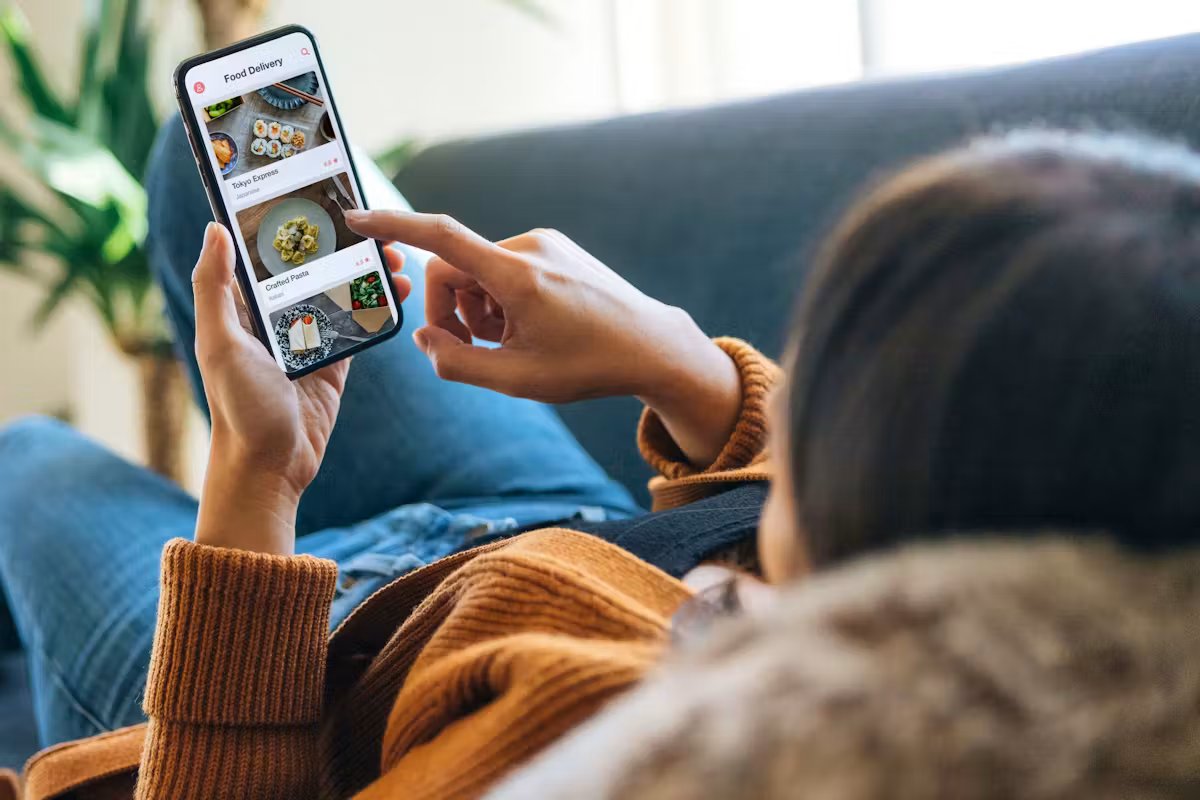
Imagine scrolling through different restaurants, like on a delivery website. There you choose one or more delicious dishes. You put it in your shopping cart, press “Order” and even track the order to your home. Everything feels as usual: the product images, the reviews and even the discounts seem realistic. But one crucial detail is missing: the food never reaches you.
In South Korea, apps and websites like these are currently attracting attention. The so-called “dopamine sites” imitate online shops, delivery services or shopping apps as realistic as possible. Users can browse, compare, fill their shopping cart, seemingly order and even track delivery. Nothing is paid. Nothing will be shipped. The purpose is not consumption, but the simulation of it.
Does shopping make you happy?
“I can buy ten iPhones and ten Playstations on a fake shopping site without paying a cent. Because you don’t pay anything, nothing ever arrives,” a news site explains the trend in a Tiktok.
The trend is received differently on social media. While some users are critical of the idea, others react with curiosity or enthusiasm. The comments on the clips range from “I think it’s sad that something like this is necessary” to “It’s crazy with delivery services” to “I need that”.
This is what lies behind dopamine shopping
At first glance that sounds absurd. Why would anyone spend time ordering things that never arrive? But the trend reveals what online shopping has developed into: you rarely open a shopping app because you urgently need something. Stress or boredom are often behind it. You scroll and compare the prices. You imagine how that new piece of clothing, gadget, or meal would make your evening better. And clicking on “Add to cart” feels like checking.
The appeal of online shopping isn’t just about the possessions. It starts beforehand: in anticipation, in choosing, in fantasizing, in the feeling of treating yourself to something. This is exactly the part that dopamine sites try to copy.
This is what a psychologist says about the trend
Can such fake shopping sites help people avoid purchases out of boredom, or do they further strengthen consumer behavior? Psychologist Franz Eidenbenz tells 20 Minutes: “Both are conceivable. However, there is a significant risk that fake shopping sites are just an appetizer. Later you actually shop to have the real shopping spree experience.”
According to the expert, functions such as “add to cart”, tracking updates or discount countdowns can also have a rewarding effect on users: “Getting a good deal is convincing to most people. Discount countdowns create an idea of ’I’ll just get it now, otherwise it’ll be too late’. The fear of missing out causes users to act immediately and without thinking.” The problem is: “These gamification methods trigger dopamine releases in the brain and can even make consumers addicted.”
According to Eidenbenz, people who are increasingly under pressure or stressed in everyday life may be tempted to distract themselves online or to compensate for unpleasant feelings through consumption. If it is more difficult to feel real joy, there is a risk of developing problematic online or purchasing behavior.
What are your experiences with online shopping? Have you ever put things in your shopping cart and then not bought them?
Do you or does someone you know have a gambling, shopping, online or other behavioral addiction?
You can find help here: