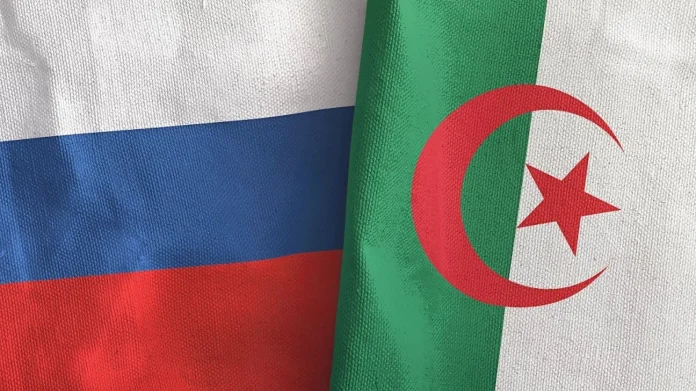
From infrastructure to technology… projects of interest to strategic partners:
Algeria is moving to expand the railway network to become one of the pillars of economic transformation and link various regions of the country to centers of production and wealth.
In the midst of this path, a new economic reading proposes the possibility of expanding cooperation with Russia to include a strategic sector whose importance is not limited to transportation, but rather is linked to logistical security, industrial development, and exploitation of mining resources.
Economist Qasi Idir, director of a consulting office specializing in government relations, believes that the Algerian ambition to develop thousands of kilometers of railway lines in the coming years opens the way for new international partnerships, including a possible partnership with Russia, given its experience in major infrastructure projects and railway-related industries.
The author of the proposal does not view railways as just a means of transporting passengers and goods, but rather as a tool to reshape the country’s economic map. According to this vision, linking the high plateaus and the south to the northern centers would give industrial and mining projects greater access to markets and export outlets, and at the same time enhance economic integration between the various regions of Algeria.
Connection projects to the south are of particular importance in this vision, given their connection to mining resource exploitation projects.
From this standpoint, the vision presented by Qasi Idir proposes expanding thinking about the railway network to go beyond its internal dimension, towards building economic corridors linking northern Algeria to its south and to African markets, thus strengthening the country’s position as a gateway between the Mediterranean and deep Africa.
What can Russia add?
In this context, the author of the proposal believes that Moscow could be a potential partner for Algeria in some aspects of this system, especially in the fields of engineering, manufacturing or providing railway equipment, signaling systems, and managing train traffic, in addition to training and transfer of expertise and technology.
The idea suggests examining the possibility of involving Russian expertise within a broader industrial and technical chain, allowing Algeria to benefit from accumulated experiences in implementing and managing railway networks and major projects.
Another factor that stands out here is digitization, says expert Qasi. As networks expand and rely on advanced electronic systems to manage the movement of trains and monitor infrastructure, the protection of information systems and data becomes an essential part of the security of strategic facilities.
In this aspect, the proposed vision calls for control of sensitive digital infrastructure, data and strategic information systems to remain in the hands of the Algerian side, with the possibility of benefiting from foreign partners in the field of technical expertise, training and knowledge transfer.
Cooperation goes beyond railways
This call does not come in isolation from the development of Algerian-Russian economic relations in recent years, as several areas have emerged as candidates for expanding cooperation outside the traditional sectors.
Digitization and cybersecurity are among the areas in which Algeria has shown increasing interest in benefiting from Russian expertise, along with the sectors of industry, agriculture, electrical equipment, and the pharmaceutical industry.
Areas related to water resources and disinfection were also presented as opportunities for cooperation and investment, at a time when space, scientific, university and cultural cooperation constitutes another aspect of relations between the two countries.
A future proposal, not an existing partnership
However, the basic fact that must be distinguished is that talking about the Russian role in the railway sector, according to this proposal, does not mean that there is currently an existing Russian partnership regarding major Algerian projects in this field.
The Bashar-Tindouf-Ghar Jbeilat line project, which entered the exploitation phase in 2026, was completed with the contribution of Algerian and Chinese institutions, including the Chinese “CRCC” complex and the Kosidar Public Complex, without Russian participation in the project, according to available data.
Accordingly, Dr. Qasi Idir’s proposal represents a forward-looking reading that suggests directing part of the Algerian-Russian economic cooperation in the future towards the railway sector, within the framework of a broader trend to diversify Algeria’s international partnerships in the fields of technology, engineering and industry.
In the end, the bet is not just about building new lines, but rather about the localization of technology, the formation of competencies, the development of the local industry, the provision of digital systems, and the linking of mining resources to manufacturing centers and markets.
This makes railways, if the circle of partnerships around it is expanded, one of the sectors in which Algeria can test the extent of the ability of its economic relations with its international partners to move from traditional cooperation to industrial and technical partnerships with greater added value.