Monday, May 4, 2026
    The GeoStrategic Consensus
    No Result
    View All Result
    • Login
    • HOME
    • AMERICAS
      • Argentina
      • Brazil
      • Canada
      • Chile
      • Colombia
      • Costa Rica
      • Cuba
      • Dominican Republic
      • Ecuador
      • El Salvador
      • Greenland
      • Guatemala
      • Honduras
      • Mexico
      • Nicaragua
      • Panama
      • Paraguay
      • Peru
      • United States
      • Uruguay
      • Venezuela
    • ASIA-PACIFIC
      • Australia
      • Brunei Darussalam
      • Cambodia
      • China
      • Federated States of Micronesia
      • Fiji
      • Indonesia
      • Japan
      • Kiribati
      • Laos
      • Malaysia
      • Marshall Islands
      • Mongolia
      • Myanmar
      • Nauru
      • New Zealand
      • North Korea
      • Palau
      • Papua New Guinea
      • Philippines
      • Samoa
      • Singapore
      • Solomon Islands
      • South Korea
      • Taiwan
      • Thailand
      • Timor-Leste
      • Tonga
      • Tuvalu
      • Vanuatu
      • Vietnam
    • CARICOM
      • CARICOM – Non-English
        • Haiti
        • Suriname
      • CARICOM Associates
        • Anguilla
        • Bermuda
        • British-Virgin-Islands
        • Cayman-Islands
        • Curacao
        • Turks-and-Caicos
      • CARICOM English
        • Antigua and Barbuda
        • Barbados
        • Belize
        • Dominica
        • Grenada
        • Guyana
        • Jamaica
        • Montserrat
        • Saint Kitts and Nevis
        • Saint Lucia
        • Saint Vincent and the Grenadines
        • The Bahamas
        • Trinidad and Tobago
    • EURASIA
      • Armenia
      • Azerbaijan
      • Balarus
      • Georgia
      • Kazakhstan
      • Kyrgyzstan
      • Moldova
      • Russia
      • Tajikistan
      • Turkmenistan
      • Ukraine
      • Uzbekistan
    • EUROPE
      • Albania
      • Andorra
      • Austria
      • Bosnia and Herzegovina
      • Bulgaria
      • Croatia
      • Cyprus
      • Czech Republic
      • Denmark
      • Estonia
      • Finland
      • France
      • Germany
      • Greece
      • Holy See
      • Hungary
      • Iceland
      • Ireland
      • Italy
      • Kosovo
      • Latvia
      • Liechtenstein
      • Lithuania
      • Luxembourg
      • Malta
      • Monaco
      • Montenegro
      • Netherlands
      • North Macedonia
      • Norway
      • Poland
      • Portugal
      • Romania
      • San Marino
      • Serbia
      • Slovakia
      • Slovenia
      • Spain
      • Sweden
      • Switzerland
      • United Kingdom
    • MIDDLE EAST AND NORTH AFRICA
      • Algeria
      • Bahrain
      • Egypt
      • Iran
      • Iraq
      • Israel
      • Jordan
      • Kuwait
      • Lebanon
      • Lybia
      • Morocco
      • Oman
      • Palestinian Territories
      • Qatar
      • Saudi Arabia
      • Syria
      • Tunisia
      • Turkey
      • United Arab Emirates
      • Western Sahara
      • Yemen
    • SOUTH ASIA
      • Afghanistan
      • Bangladesh
      • Bhutan
      • India
      • Maldives
      • Nepal
      • Pakistan
      • Sri Lanka
    • SUB-SAHARAN AFRICA
      • Angola
      • Benin
      • Botswana
      • Burkina Faso
      • Burundi
      • Cabo Verde
      • Cameroon
      • Central African Republic
      • Chad
      • Comoros
      • Cote d’Ivoire
      • Democratic Republic of the Congo
      • Djibouti
      • Equatorial Guinea
      • Eritrea
      • Eswatini
      • Ethiopia
      • Gabon
      • Gambia
      • Ghana
      • Guinea
      • Guinea Bissau
      • Kenya
      • Lesotho
      • Liberia
      • Madagascar
      • Malawi
      • Mali
      • Mauritania
      • Mauritius
      • Mozambique
      • Namibia
      • Niger
      • Nigeria
      • Republic of the Congo
      • Rwanda
      • Sao Tome and Principe
      • Senegal
      • Seychelles
      • Sierra Leone
      • Somalia
      • South Africa
      • South Sudan
      • Sudan
      • Tanzania
      • Togo
      • Uganda
      • Zambia
      • Zimbabwe
    • HOME
    • AMERICAS
      • Argentina
      • Brazil
      • Canada
      • Chile
      • Colombia
      • Costa Rica
      • Cuba
      • Dominican Republic
      • Ecuador
      • El Salvador
      • Greenland
      • Guatemala
      • Honduras
      • Mexico
      • Nicaragua
      • Panama
      • Paraguay
      • Peru
      • United States
      • Uruguay
      • Venezuela
    • ASIA-PACIFIC
      • Australia
      • Brunei Darussalam
      • Cambodia
      • China
      • Federated States of Micronesia
      • Fiji
      • Indonesia
      • Japan
      • Kiribati
      • Laos
      • Malaysia
      • Marshall Islands
      • Mongolia
      • Myanmar
      • Nauru
      • New Zealand
      • North Korea
      • Palau
      • Papua New Guinea
      • Philippines
      • Samoa
      • Singapore
      • Solomon Islands
      • South Korea
      • Taiwan
      • Thailand
      • Timor-Leste
      • Tonga
      • Tuvalu
      • Vanuatu
      • Vietnam
    • CARICOM
      • CARICOM – Non-English
        • Haiti
        • Suriname
      • CARICOM Associates
        • Anguilla
        • Bermuda
        • British-Virgin-Islands
        • Cayman-Islands
        • Curacao
        • Turks-and-Caicos
      • CARICOM English
        • Antigua and Barbuda
        • Barbados
        • Belize
        • Dominica
        • Grenada
        • Guyana
        • Jamaica
        • Montserrat
        • Saint Kitts and Nevis
        • Saint Lucia
        • Saint Vincent and the Grenadines
        • The Bahamas
        • Trinidad and Tobago
    • EURASIA
      • Armenia
      • Azerbaijan
      • Balarus
      • Georgia
      • Kazakhstan
      • Kyrgyzstan
      • Moldova
      • Russia
      • Tajikistan
      • Turkmenistan
      • Ukraine
      • Uzbekistan
    • EUROPE
      • Albania
      • Andorra
      • Austria
      • Bosnia and Herzegovina
      • Bulgaria
      • Croatia
      • Cyprus
      • Czech Republic
      • Denmark
      • Estonia
      • Finland
      • France
      • Germany
      • Greece
      • Holy See
      • Hungary
      • Iceland
      • Ireland
      • Italy
      • Kosovo
      • Latvia
      • Liechtenstein
      • Lithuania
      • Luxembourg
      • Malta
      • Monaco
      • Montenegro
      • Netherlands
      • North Macedonia
      • Norway
      • Poland
      • Portugal
      • Romania
      • San Marino
      • Serbia
      • Slovakia
      • Slovenia
      • Spain
      • Sweden
      • Switzerland
      • United Kingdom
    • MIDDLE EAST AND NORTH AFRICA
      • Algeria
      • Bahrain
      • Egypt
      • Iran
      • Iraq
      • Israel
      • Jordan
      • Kuwait
      • Lebanon
      • Lybia
      • Morocco
      • Oman
      • Palestinian Territories
      • Qatar
      • Saudi Arabia
      • Syria
      • Tunisia
      • Turkey
      • United Arab Emirates
      • Western Sahara
      • Yemen
    • SOUTH ASIA
      • Afghanistan
      • Bangladesh
      • Bhutan
      • India
      • Maldives
      • Nepal
      • Pakistan
      • Sri Lanka
    • SUB-SAHARAN AFRICA
      • Angola
      • Benin
      • Botswana
      • Burkina Faso
      • Burundi
      • Cabo Verde
      • Cameroon
      • Central African Republic
      • Chad
      • Comoros
      • Cote d’Ivoire
      • Democratic Republic of the Congo
      • Djibouti
      • Equatorial Guinea
      • Eritrea
      • Eswatini
      • Ethiopia
      • Gabon
      • Gambia
      • Ghana
      • Guinea
      • Guinea Bissau
      • Kenya
      • Lesotho
      • Liberia
      • Madagascar
      • Malawi
      • Mali
      • Mauritania
      • Mauritius
      • Mozambique
      • Namibia
      • Niger
      • Nigeria
      • Republic of the Congo
      • Rwanda
      • Sao Tome and Principe
      • Senegal
      • Seychelles
      • Sierra Leone
      • Somalia
      • South Africa
      • South Sudan
      • Sudan
      • Tanzania
      • Togo
      • Uganda
      • Zambia
      • Zimbabwe
    No Result
    View All Result
    Agentially
    No Result
    View All Result
    Home ASIA-PACIFIC Singapore

    Digital poverty holding back needy children in Malaysia

    The Analyst by The Analyst
    April 24, 2026
    in Singapore
    Digital poverty holding back needy children in Malaysia


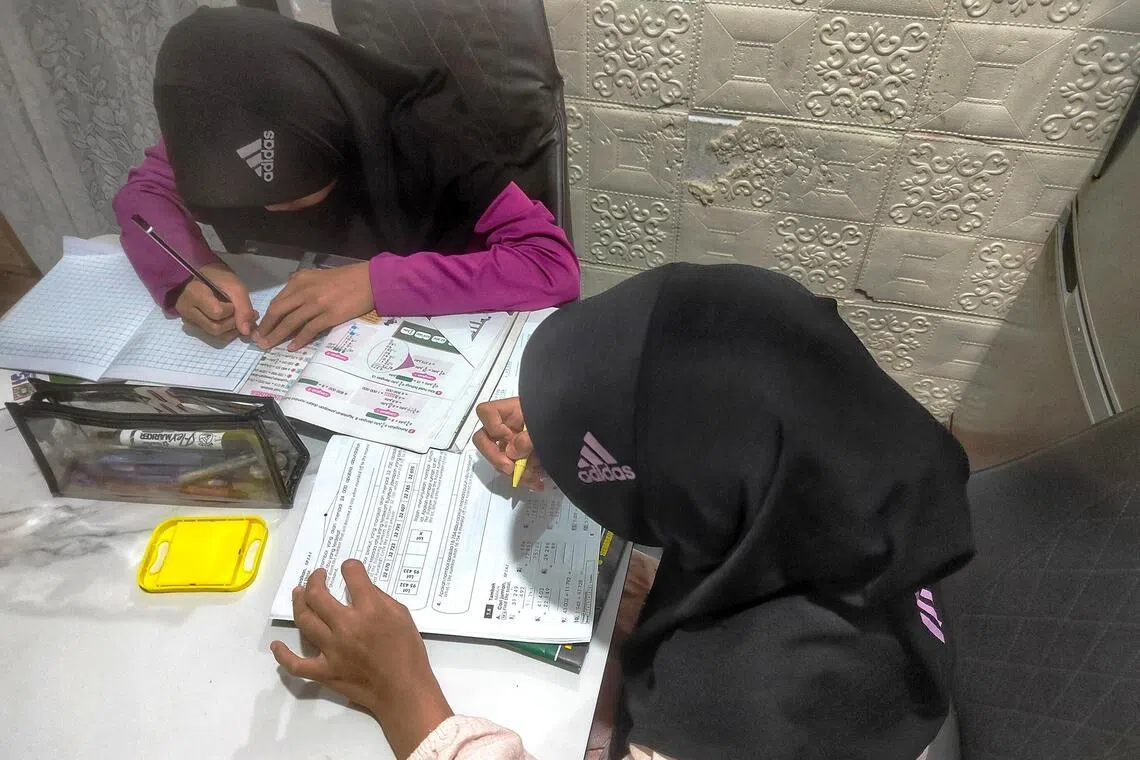
    ​KUALA LUMPUR – On most nights in a two-bedroom public housing flat in Kuala Lumpur, the small dining table would be covered with schoolbooks while four primary school-age children wait silently.

    READ ALSO

    Iran foreign ministry says US must ‘abandon its excessive demands’

    Will rising F&B salaries see workers replaced by machines?

    The siblings, aged between eight and 12, would be doing their homework, all the while sharing a single smartphone, passing it around to whoever needs it the most.

    ​“It’s my phone. When they need it for school, they use mine,” said homemaker Mas Amirah Yaacob, 34, who has two more children, aged three and five.

    The device, bought two years ago for RM399 (S$128), has a mere 64GB in storage. It is often full, bloated with her children’s assignments. When it runs out of space, she diligently clears older files.

    The only other phone in the household of eight belongs to her husband and is rarely available to the children – Mr Hafizal Abd Halim, 42, works at a cafe during the day and as a food delivery rider at night.

    His total monthly income of less than RM3,000 is less than the cost of an average laptop in Malaysia. 

    In Malaysia, where education is increasingly going digital, the cost of access remains high for low-income families. Digital poverty has evolved from an inconvenience during the Covid-19 pandemic era into a permanent hurdle, leaving families like Ms Amirah’s to navigate a modernising school system with limited tools.

    Malaysia’s shift to digital learning accelerated during the pandemic, when schools closed and lessons moved online under a home-based learning system, known locally as PdPR.

    While schools have since reopened, the digital approach to education remains. Many assignments are now hosted on DELIMa, the Education Ministry’s official digital learning platform.

    These assignments are compulsory and the scores for completing them represent a significant portion of her children’s final grades, Ms Amirah said.

    English teacher Soffeatul Raunaqiah Mohamad Rahim, 32, remembers well how some of her students struggled during the pandemic.

    ​The disparity lingered long after students returned to the classrooms, she said. The gap was apparent even in a major city like Putrajaya, the country’s administrative capital, where she had taught.

    Now teaching in Selangor, she said students with personal laptops returned to school after the pandemic more confident, while those sharing a parent’s phone are constantly playing catch-up.

    Students in Malaysia have to complete assignments hosted on digital learning platform DELIMa.

    ST PHOTO: MUZLIZA MUSTAFA

    Ms Soffeatul added that students with digital access are typically more fluent in English, more aware of global issues, and more skilled in coding and artificial intelligence – skills important for innovation and inter-school competitions.

    “Possessing these skills often means they are selected to represent their schools, which leads to better merit and improved chances of entering better schools.

    “The domino effect of having access, or lacking it, continues over time,” she told The Straits Times.

    At the height of the pandemic in 2020, Deputy Education Minister Teo Nie Ching told Parliament that 37 per cent of Malaysian students, or roughly 1.7 million children, did not have suitable devices for online learning. With nearly five million students in the system as at 2025, the digital divide remains stark.

    Even where devices are available, connectivity and digital skills remain uneven, particularly outside major cities. Despite high overall internet penetration of about 96.8 per cent of households nationwide, 2024 government data shows that gaps remain, with lower computer use and weaker connectivity in rural areas.

    Education Minister Fadhlina Sidek said in April 2024 that rural students face disadvantages, scoring lower than the national average in digital competency assessments.

    While there are limited numbers of tablets and laptops for use at schools, and underprivileged university students may apply for free gadgets under government initiatives, the Anwar administration has yet to effectively narrow the device access gap for low-income urban families.

    The Education Ministry did not respond to ST’s queries by press time.

    Meanwhile, a handful of grassroots initiatives have emerged to help needy families in small ways. The people behind them treat digital access as a necessity rather than a luxury.

    Among the more recent ones is ​PinjamGajet, or “borrow a gadget” in Malay, a long-term social initiative founded by Petaling Jaya MP Lee Chean Chung. It collects used laptops and refurbishes them, before renting them out for RM10 a month with a refundable deposit of RM150.

    Launched on March 8, the initiative has seen immediate demand, with over 130 people looking to rent and dozens of units currently in the refurbishment pipeline.

    PinjamGajet also builds local technical capacity by teaching volunteers to refurbish used laptops, turning “trash” into a sustainable educational lifeline.

    “A small deposit and a minimal fee… make the system affordable, while encouraging responsibility and enabling ongoing maintenance,” said Mr Lee, adding that the goal is to have a self-sustaining ecosystem rather than be a one-off charity.

    ​Persatuan Kebajikan Anak Kami, a welfare group which had distributed food aid to the needy during the pandemic, has expanded to supporting students with access to digital devices.

    It had noticed that children were wandering outside their homes when they were supposed to be attending online classes because they had no way to log on to their digital learning platforms.

    Since 2020, the group has distributed over 300 new laptops donated by individuals and tech firms to needy families.

    Based on feedback from the teachers, the initiative has improved student engagement for those who previously did not have laptops, the group said.

    As with PinjamGajet, Anak Kami’s approach is based on need, not academic performance.

    ​“Poverty cannot be graded,” its coordinator, Mr Muhammad Azri Abd Halim, told ST. 

    In Muar, Johor, opposition lawmaker and former minister Syed Saddiq Syed Abdul Rahman has raised funds to buy and give away thousands of new tablets and laptops since 2020, particularly to students in higher learning institutions from his constituency.

    Across Malaysia, the foundations of organisations such as Petronas and CIMB have also contributed devices to students in need.

    But with more than one million students in need of digital devices for education, such efforts can barely make a dent in the problem.

    A great many families, like Ms Amirah’s, will find themselves in the gaps between the grassroots and charitable initiatives.

    During the pandemic, she once asked about one such initiative but was told it was open only to university students.

    ​Her children’s day is long. They attend national school in the morning and religious school in the afternoon, often not returning home until 7pm. By the time they settle at the dining table, they are exhausted, but the digital workload is just beginning.

    ​​The children take turns using mum’s phone, with the eldest first in line.

    ​“There are days they cannot finish (their homework),” Ms Amirah said, explaining that this happens because the children’s assignments overlap. For complex tasks like slide presentations, the phone is virtually useless. 

    “Sometimes I have to borrow a laptop from a friend. The phone can be too slow,” said Ms Amirah. 

    ​There is no formal punishment for late work, but it takes a psychological toll on the children. They feel the pressure of their family’s poverty every time the screen lags or deadlines are missed.

    ​At the dining table, their routine continues. One device, passed from hand to hand. It works, just enough – but “just enough” rarely keeps you at the front of the pack.

    There are several options to contribute toward helping underprivileged children in Malaysia acquire gadgets for their studies. Here are some of the groups and individuals working on the issue:

    • Sign up for our weekly Asian Insider Malaysia Edition newsletter to make sense of the big stories in Malaysia.



    Source link

    Related Posts

    Iran foreign ministry says US must ‘abandon its excessive demands’
    Singapore

    Iran foreign ministry says US must ‘abandon its excessive demands’

    May 4, 2026
    Will rising F&B salaries see workers replaced by machines?
    Singapore

    Will rising F&B salaries see workers replaced by machines?

    May 4, 2026
    As EVs dominate Singapore’s roads, these are the safety questions we should be asking
    Singapore

    As EVs dominate Singapore’s roads, these are the safety questions we should be asking

    May 3, 2026
    Are stock markets in denial about the true cost of Iran war?
    Singapore

    Are stock markets in denial about the true cost of Iran war?

    May 3, 2026
    Marathoner’s defiance of human limits is an act of rare, inspirational beauty
    Singapore

    Marathoner’s defiance of human limits is an act of rare, inspirational beauty

    May 3, 2026
    Home Team to develop space satellite, humanoid robots, more AI
    Singapore

    Home Team to develop space satellite, humanoid robots, more AI

    May 3, 2026
    Next Post

    Court bars Romualdez from leaving PH

    POPULAR NEWS

    Justin Bieber fans flood Coachella festival for headlining show – Entertainment

    Justin Bieber fans flood Coachella festival for headlining show – Entertainment

    April 20, 2026

    Over 600 flee homes as Army, NPA clash in Negros Occidental

    April 21, 2026

    Ex-DPWH exec recalls P800-M ‘delivery’ to Zaldy Co 

    April 20, 2026

    Former PM Paluckas suspends party membership, to waive immunity over criminal probe

    April 24, 2026
    Pres. Ali challenges CARICOM to transform into health research powerhouse

    Pres. Ali challenges CARICOM to transform into health research powerhouse

    April 23, 2026

    EDITOR'S PICK

    The loan is over and Harry gives Trump unsolicited advice

    The loan is over and Harry gives Trump unsolicited advice

    April 24, 2026
    “Jacksonmania” took over Berlin for the world premiere of “Michael”

    “Jacksonmania” took over Berlin for the world premiere of “Michael”

    April 12, 2026
    Open the call for the 2025 National Film Fund Competition

    Open the call for the 2025 National Film Fund Competition

    April 24, 2026
    $74M on travel in four years | News

    $74M on travel in four years | News

    April 16, 2026

    Recent Posts

    • Lagarde warns of families more sensitive to inflation and admits acceleration of interest rate hikes by the ECB
    • San Marino – Very young people and ban on the use of smartphones. We’re talking about it again in the Commission
    • The images of former Rayo Piti player scratching the car of the president of Atlético Pinto
    • They were admitted to the best universities in the world, but the Peruvian State leaves them without a scholarship

      © 2026 Agentially - Navigating shifting sovereignties and global risk .

      Welcome Back!

      Login to your account below

      Forgotten Password?

      Retrieve your password

      Please enter your username or email address to reset your password.

      Log In
      No Result
      View All Result

        © 2026 Agentially - Navigating shifting sovereignties and global risk .

        This website uses cookies. By continuing to use this website you are giving consent to cookies being used. Visit our Privacy and Cookie Policy.