DALLAS (Special Envoy).- boomtown is the term with which Americans describe cities that are growing at a rapid pace, driven by investment, technology and construction. It became popular in the United States in the 19th century, during the gold rush, when thousands of people migrated to different regions of the country after the discovery of the metal. Dallas, venue of the second match of the Argentine team, this Monday, from 2:00 p.m., against Austria, at the AT&T Stadium, is one of the clearest examples. Between heat, humidity and constant movement, welcomes the World Cup in one of the moments of greatest expansion.
He soccer It also accompanied this evolution, although at a slower pace. Darío Sala, goalkeeper from Córdoba who saved for FC Dallas between 2005 and 2010, experienced that process from the inside: He came to a league that still played its games on American football fields, with markings on the grass that confused even the players themselves, and today, based in the United States, he became a businessman linked to sports and is one of the heads of a megaproject that combines high performance, education and real estate developments, of which Emanuel Ginóbili, Juan Ignacio “Pepe” Sánchez, Juan Sebastián Verón, Martín Gramática, Juan Mónaco and Mariano are also part Zabaleta, among other sports figures.
Sala has a particular story: he graduated from the General Paz Military High School as a second lieutenant in the Infantry, played handball in the Círculo de exCadetes and even joined a youth team, but then he leaned towards soccer. On the way, He studied law for a year, sold churros on the Institute field, walked dogs through Alta Córdoba and, later, received his degree as a medical visitor.. His first steps were as a forward in Deportivo Colón, in Córdoba, until a coach saw his physical bearing and decided to send him to goal. “They called me ‘Romario’: half wardrobe, half wardrobe”he jokes, in conversation with LA NACION. Already established under the three suits, he went to Juventud Católica de Río Segundo, he was discovered by Héctor Baley, Ubaldo Fillol’s substitute in the 1978 World Cup, and he took him to try out at Talleres. Then he passed through San Lorenzo, Belgrano and Los Andes, where he finished consolidating and achieved promotion to First Division. From there he went to River, in the 2000/01 season. His career also includes spells with Xerez de España, Independiente, Deportivo Cali, Newell’s, Jaguares de Chiapas and Arsenal, until his retirement from FC Dallas.
“When we arrived in the MLS, the league had just 12 teams, divided into two zones, and now there are more than 30, with an incredible level and structure. At that time, the first specific stadiums for soccerwhich almost did not exist. In the first years we played on soccer fields. high school. In Dallas, everything is progress: When I arrived, a month ago the franchise had inaugurated its stadium and a sports complex that at that time was the largest in the world. There I understood that infrastructure is key to sustaining any project, something that explains why Dallas is one of the great venues for this World Cup”he explains.
-What will Argentina find in Dallas??
-With one of the fastest growing cities in the United States. Even during the 2008 crisis, when the financial system collapsed due to the mortgage bubble, Dallas continued to expand. Frisco, where the FC Dallas stadium is located, was a field with cows and sheep. Today the Dallas Cowboys complex, large companies, golf courses and the main headquarters of the United States Golfers Association operate. In 25 years, it went from 40,000 to 250,000 inhabitants.
-Even so, football still does not have the weight of other sports.
-Yes, but the growth is constant and in Dallas it is gaining more and more ground. In the United States, in general, the league was evolving. Here it is difficult to think of a sport without the logic of business and spectacle. First, they bet on branding with the incorporation of figures of global impact: David Beckham, Thierry Henry, Zlatan Ibrahimović, Kaká, Andrea Pirlo… Then, they understood that you could not take these players to train on fields that belonged to secondary American football schools and they improved all the stadiums and training fields. Then came a third stage, focused on the development of technicians and new talents; and, later, the incorporation of young footballers from important leagues.
-Was that the starting point for the United States team that surprises today in the World Cup?
-In these 20 years there were several litters. There was that of (Landon) Donovan, (Tim) Howard and other players who made the leap abroad: there were six or seven footballers in important leagues. Then there was a transition: that group withdrew and no clear replacement appeared. Later, the Qatari generation emerged: Christian Pulisic, Weston McKennie, Tyler Adams, Yunus Musah. That is already a base that was formed in the MLS and then made the leap outside. The league began in 1996 and the best players did not go through the tournament: they went directly from the university to try themselves abroad. Today the process is different. It is a very strong competition: there are 30 teams with the budget to bring not only players from Europe, but also young South Americans, from Argentina, Paraguay or Chile. Before, players came to retire; now they arrive in fullness. This team is made up mainly of footballers who emerged in the local system, and this World Cup is a very good yardstick to measure that progress.
At FC Dallas, Room had more than 100 presences and became a symbol of the North American franchise. In 2010, two months before hanging up his gloves, he started in a friendly against Inter Milan that ended 2-2, with goals from Diego Milito and Samuel Eto’o. Late in his career he also hosted a radio show on ESPN. “I would finish a game and I wouldn’t watch the replay; I would think about what to do in football once I stopped playing,” he says.
A year later, Sala was contacted by Córdoba forward Mauro Rosales, with whom he had shared the Newell’s squad, to evaluate the possibilities of landing in the MLS. Sala acted as an intermediary and placed him in the Seattle Sounders, where the forward was chosen as the best signing of the year. From that success, he participated in several transfer windows and brought seven other players to the league, although he felt that this was not the role that best fit his profile: “I call that job ‘doing babysitting‘. It’s an uncomfortable place: Neither the clubs nor the footballers like the figure of the agent”.
In 2014, Sala founded with a partner the Jacksonville Armada FC, based in Florida, which he owned and general manager. During his management, the club competed in the North American Soccer League, a league that used to be the main one in the country and that, in its modern version, was relegated after the consolidation of the MLS. He added 14 Argentines to his project, such as José Luis Villarreal and Guillermo Hoyoscurrent coach of Lionel Messi and Rodrigo De Paul at Inter Miami, and achieved the attendance record in the category, above clubs with much greater tradition such as the New York Cosmos, where Pelé knew how to shine, with an average attendance of 10,000 spectators.
But in the United States numbers rule, on and off the field. Thus, in 2015 Sala changed fields and began working in the organization of international matches for the national team. Among them, the 7-0 victory over Bolivia, played in Houston, with doubles from Lionel Messi, Ezequiel Lavezzi, Sergio Agüero, and a goal from Ángel Correa. During that experience he created a bond with Gerardo Martino, whom he even accompanied at the press conference prior to the meeting. in an improvised role as translator.
From that relationship a new function emerged: taking charge of the campus logistics. He accompanied the team during the Copa América Centenarioin the United States, and chose to step aside after the coach’s resignation, despite the AFA’s proposal to continue with the Under 23 team in the Olympic Games. The bond with Tata did not end there: shortly after, Sala suggested his name to Atlanta United, which was looking for a coach for its MLS debut in 2017, and the former goalkeeper, in addition to building bridges between the parties, ended up joining as a member of the coaching staff. Later, he continued in that task alongside Gustavo Quinteros, now a coach at Independiente, at Universidad Católica, and later left again to undertake other projects.
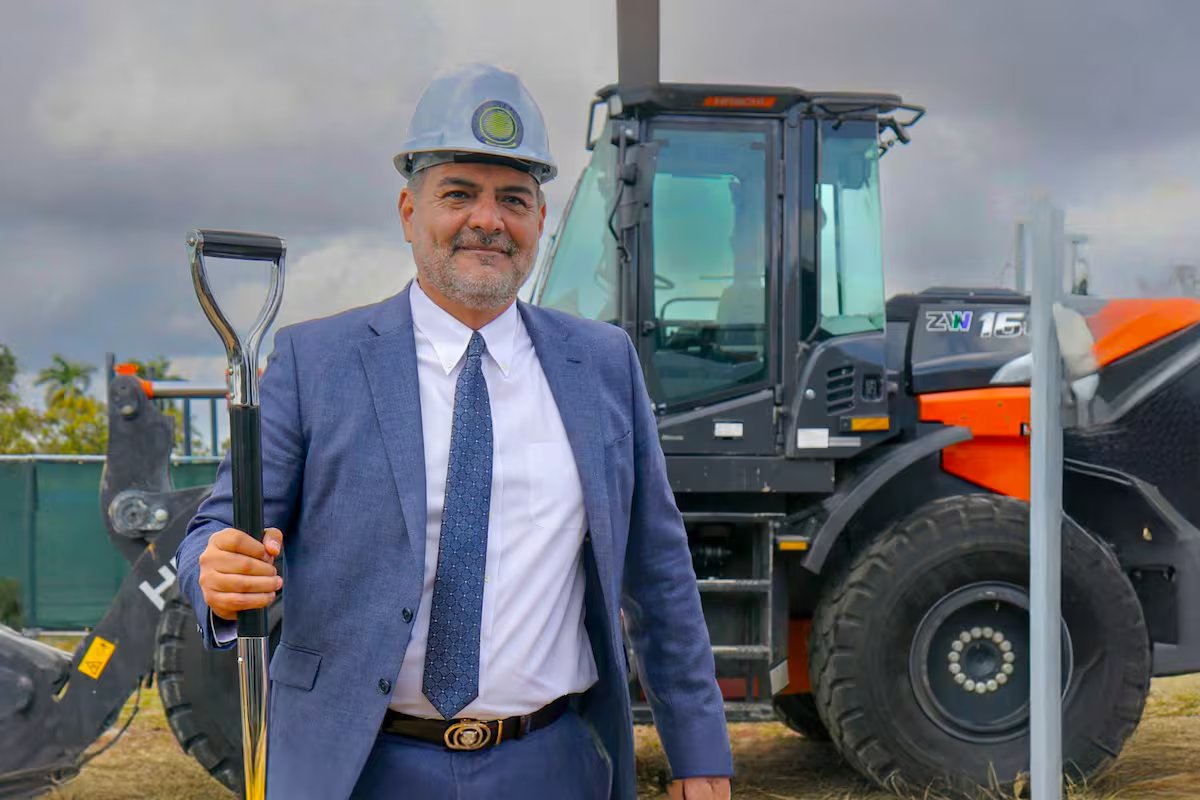
Today, it is dedicated to the execution and implementation of Sports Performance Huba high-performance campus for young people between 13 and 18 years old that will be built on a 37-hectare site in Miami-Dade, with a private investment of more than 280 million dollars. “It will be a space where students live, study and train: a city within another. Not only do they have the possibility of developing in sport and perhaps getting a university scholarship, but also of training in other areas, such as hospitality, marketing, video analysis and coaching“, he details. In addition, the initiative contemplates the construction of a stadium for 10,000 spectators where Miami FC, linked to the same holding company, will play its matches.
-How was the initiative born?
-We understood that a space of these characteristics did not exist and we set out to develop it from scratch. Only 1% of young people reach professionalism, so the rest must also be prepared. We brought together several athletes who were number one in their disciplines and, together, we tried to put together the best possible structure. We receive inquiries from all over the world, from the Middle East to Japan. We started the work on March 2 and there is already a waiting list to sign up. In 2027 there will be operational fields and a temporary stage for Miami FC, and then we will continue with the main stadium and the school, which will be ready for the 2028 school year.
-How do you see Argentina in the World Cup?
-Very good. It is a shame that the Finalissima could not be played because it would have been a good measure, beyond the debut. Today there are four or five teams at that level: France, Spain, Argentina, England, Brazil. Everything is very even, as was seen in the 2022 final. In the United States there is an impressive fever with Lionel Messi and the national team. You go to the supermarket wearing a t-shirt and they greet you as if you were a player. As an Argentine, I hope the title is repeated. As a coach, I know that it will be very difficult, although Argentina, in these instances, always delivers a plus and ends up making the difference.