A day after federal health officials tied an outbreak of cyclospora to shredded iceberg lettuce supplied by the large produce company Taylor Farms to Taco Bell, investigators are turning their attention to the farms in Mexico where it was grown and the facility that shredded it, according to administration officials.
Among their most urgent questions is whether contaminated lettuce from the growers and processor has been shipped to other food retailers in the United States. Investigators from the Food and Drug Administration were planning to travel to Mexico to visit the farms and shredding facility and scour their records, an official said.
They are also investigating how the lettuce was contaminated by cyclospora. The parasite, which lays eggs that embed in the intestines when they are consumed, can cause explosive diarrhea, cramping, bleeding and other symptoms that can last weeks.
More than 1,644 people reported eating at Taco Bell before becoming sick with the parasitic infection, and 94 have been hospitalized, according to the Centers for Disease Control and Prevention. But dozens of others who had not eaten at Taco Bell have fallen ill from the parasite too.
On Friday afternoon, Taylor Farms said on Facebook that none of their salads or kits were associated with the outbreak. They said they had removed all iceberg lettuce from the Central Mexico region from their products indefinitely.
As the investigation intensifies, Taylor Farms, among the nation’s largest producers of salad greens and vegetables, has hired a former Trump White House official.
In a meeting on Thursday evening with the White House and F.D.A. officials, company executives sought to distance the company from the outbreak and cast doubt on the officials’ conclusion, according to an administration official who was not cleared to discuss the matter.
A spokeswoman from Taylor Farms said that its representatives met with White House and F.D.A. officials to discuss what it viewed as “shortfalls in the F.D.A. and C.D.C.’s outbreak response process” and to focus on improving public health.
The spokeswoman said that federal officials had been investigating the outbreak for several weeks, but had only reached out to the company in recent days. The company said it was continuing to work cooperatively with the F.D.A. and the C.D.C. on the investigation.
The company recently hired Trent Morse, who was the deputy director of the White House Presidential Personnel Office until September, when he left to start a government relations firm called Morse Strategies.
Mr. Morse and the White House declined to comment.
The administration has not publicly named Taylor Farms. An official said that decision was related to legal concerns over confidential trade information about a company’s vendors.
F.D.A. officials are focusing on a large lettuce processing facility in northeastern Mexico called Taylor Farms de Mexico S. de R.L. de C.V. in the state of Guanajuato, according to an administration official.
Agency records show that the last inspection of the food processor was in 2019 and the prior inspection was in 2011. In 2013, records show that the F.D.A. refused to accept a shipment of greens from the facility because of concerns about a pesticide.
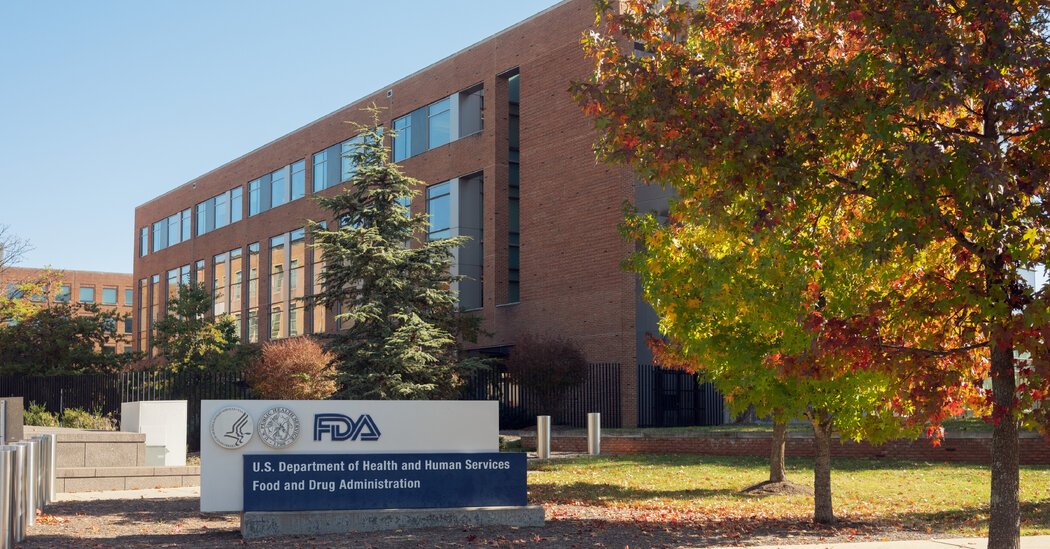
The F.D.A., which has a broad mandate to oversee many foods imported to the United States from around the globe, has been hit hard by staff cuts ordered by Elon Musk’s Department of Government Efficiency, or DOGE, and carried out by Health Secretary Robert F. Kennedy Jr., who oversees the agency. Though food safety inspectors were not directly targeted for cuts, many accepted an early retirement offer. There were reductions among foreign inspectors’ support staff who book overseas travel, attend to inspector safety and help obtain travel documents.
As a result, the number of foreign food inspections plummeted last year, to 1,122 in 2025 from 1,751 in 2019.
Brian Ronholm, director of food policy for Consumer Reports, a watchdog group, said the F.D.A. had already struggled to inspect foreign food facilities before the staffing cuts.
“That really put it further behind to the point where it’s virtually nonexistent,” he said.
In addition, he said, one of the agency’s most-cited violations was over U.S. food companies’ failing to vet the quality and safety of imported food.
“The cuts across food safety, in terms of public health, in terms of regulatory, in terms of research, have contributed to to this,” said Barbara Kowalcyk, director of the Institute for Food Safety and Nutrition Security at George Washington University. “I don’t think it’s a direct cause, but it’s been a contributing factor.”
The C.D.C. advised the public to not eat shredded iceberg lettuce at Taco Bell locations in Indiana, Kentucky, Michigan, Ohio and West Virginia.
While the government’s investigation is continuing, other forms of lettuce or greens appear to likely be safe based on what we know so far, said Keith R. Schneider, a professor of food safety at the University of Florida.
“There’s going to be a panic all over the country: ‘I’m not going to eat arugula, I’m not going to eat romaine.’ This has nothing to do with any other lettuce, any other varieties,” he said. “We see this, ‘Oh, lettuce, I’m not going to eat anything green for a month.’ No. That’s not the way this works.”
Food safety experts recommend rinsing all fresh produce before eating it.
Kenneth P. Vogel contributed reporting from Washington.