“WE pay homage to our cultural heritage, the source of our strength.” Sound familiar?
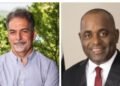
It’s a powerful section of our National Pledge and one that has sat well with the majority of Papua New Guineans for the past 50 years, with the exception of a few, like the Morobe Governor Rainbo Paita.
Yesterday during Question Time in parliament, Paita suggested an amendment to the country’s National Pledge.
Specifically, asking for the replacement of the “cultural heritage” clause just mentioned with “God” as the source of our strength.
Paita’s series of questions sparked an important conversation about identity, unity, and the role of the state.
While his intention may have stemmed from a sincere desire to acknowledge the source of faith, the proposal risks overlooking deeper truths that binds this country together.
Papua New Guinea is one of the most culturally diverse nations in the world.
With over 800 distinct languages, customs, and traditions, it is easy to understand Paita’s question: “which culture does the pledge refer to?”
But perhaps the answer lies not in a single culture, but in the collective tapestry formed by all of them.
It is precisely this merging of differences or this coexistence of tribes, languages, and traditions, that has forged our national identity.
Our “cultural heritage” is not a singular expression; it is a shared inheritance, a unifying force born from diversity.
To replace this with a singular reference to “God” as the source of our strength risks narrowing that identity.
PNG is undeniably a deeply spiritual country, and faith plays a profound role in the lives of many citizens.
However, faith is expressed in different ways across denominations and belief systems.
Elevating one expression in a national symbol may unintentionally exclude those whose beliefs differ or whose spirituality is expressed through culture and tradition rather than formal religion — which if we are being honest, are foreign.
God is spiritual, cultural heritage is physical.

The God we have adopted is of a foreign origin and remains Caucasian, with language, fashion and behaviour of humans of a distant part of the world.
Notably, the Prime Minister James Marape himself, in responding to Paita, remarked that the matter asked of him was “above his pay grade”.
Questions of personal belief, faith, and spiritual expression are not matters for government decree or parliamentary adjustment.
They belong to individuals, families, and communities.
Marape’s response reinforces an important principle: religion, while deeply respected, has no place being prioritised within the machinery of state.
Jesus Christ himself set this boundary (Mark 12:13-17).
Seeking to trap Jesus, some Pharisees asked him about paying taxes to Caesar.
Jesus answered them: “Give to Caesar the things that are Caesar’s and to God what are God’s.”
This separated forever the powers and responsibilities of the government of God and of man, ensuring that both are important but separate.
The National Pledge is not merely ceremonial, it reflects who we are as a nation.
It speaks to our collective journey and our unity in diversity.
Cultural heritage, in this context, is not a limitation; it is an inclusive foundation.
It acknowledges that our strength does not come from uniformity, but from our ability to stand together despite our differences.
That is the true strength of PNG.
Paita also introduced the suggestion to establish a government ministry dedicated to religion.
Such a move would blur an essential boundary in any functioning democracy: the separation between personal belief and public governance.
Religion is deeply personal.
It offers guidance, comfort, and identity, but it must remain a matter of individual choice, free from state influence or control – especially if a state claims to be democratic.
The role of government is clear. It is to serve the physical and practical needs of its people – delivering healthcare, education, security, infrastructure, and economic opportunity.
These are the responsibilities entrusted to public leaders, and these are the areas where government action has tangible impact.
Spiritual life, however, should remain in the hands of individuals and their chosen faith communities, where it can thrive authentically and without interference.
We already have a ministry catering for home affairs, women and religion.
Having one dedicated to religion alone might raise complex and potentially divisive questions.
Which faiths would it represent?
How would it ensure fairness in a country of immense religious diversity event those within the ambit of Christianity? Would it risk elevating some beliefs above others, or invite religion into the political arena?
History elsewhere has shown that when government and religion become entangled, the result is often division rather than unity.
In many ways, Paita’s purported problem with cultural heritage is no different to the proposed religious issue.
One could simply ask the same question; “which religion does the pledge refer to?”
This is not about diminishing faith; it is about protecting it. By keeping religion outside the formal structures of government, we safeguard its integrity and ensure it remains a source of personal conviction rather than public contention.