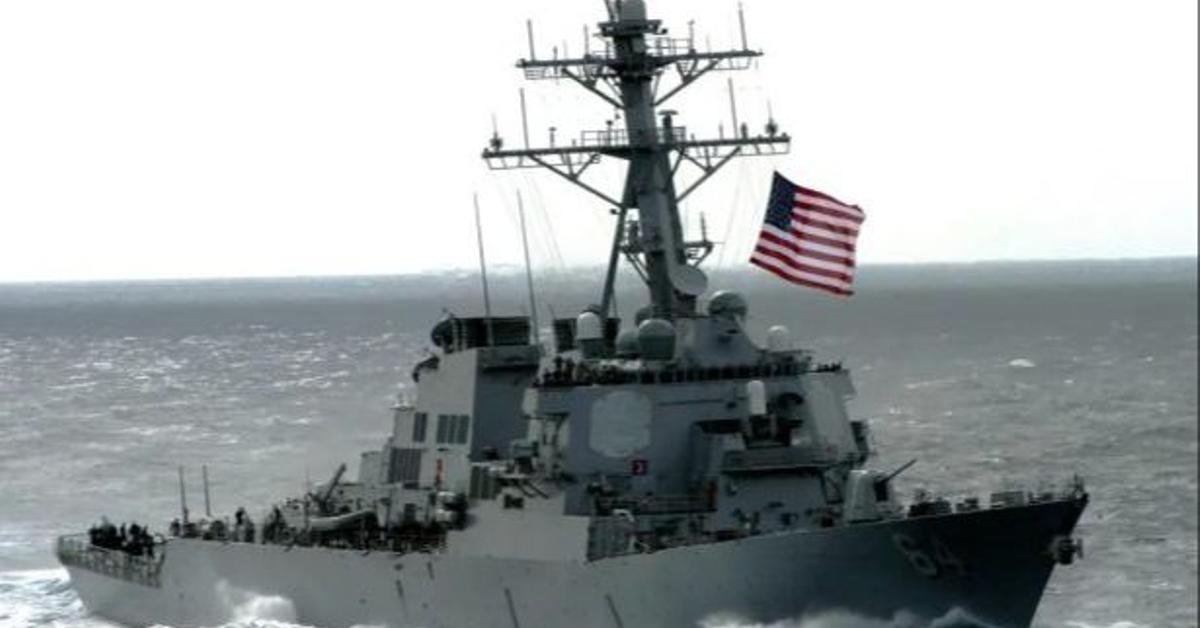
Havana/The US Army Reserve is evaluating which military police, medical, engineering and logistics units it could make available to Southern Command within 90 to 120 days, according to an internal message obtained by CBS News and published this friday.
The document, generated last week, does not expressly mention Cuba nor does it contain a deployment order. However, several US officials assured CBS under anonymity that the request is part of the planning that the US Armed Forces develop in relation to the Island.
Requested capabilities include a logistics support battalion, an engineer battalion, an expeditionary sustainment command, a medical brigade, an advanced surgical unit and a military police brigade. The deadline for the Reserve commanders to report on the availability of these forces expired precisely this Friday.
The US network emphasizes that none of these units have received mobilization orders and that neither Donald Trump nor the Pentagon have publicly authorized an operation against Cuba. The Southern Command also did not confirm the relationship of the request with the Island and responded that, for security reasons, it does not comment on military movements or schedules of possible deployments.
During this year, US forces have carried out reconnaissance operations of the maritime approaches and the seabed around Cuba
The revelation is part, however, of a sequence that the network itself has been documenting since May. That month he reported that the intelligence community analyzed How Havana could respond to possible military action by the United States. In July, CBS reported on options that were being studied by Pentagon planners, including a hypothetical air assault with thousands of troops from the 101st Airborne Division.
The information known this Friday adds a new element. According to several soldiers cited by the network, forces from that country have carried out reconnaissance operations of the maritime accesses and the seabed around Cuba this year.
In addition, components of the US military aviation were previously placed at a higher level of readiness and received instructions to preposition personnel for an eventual deployment, although those plans were ultimately not executed.
The new information comes three days after Trump raised his tone against Havana from the United Nations rostrum. In his speech on Tuesday, the president assured that the United States will not allow threats against its territory to “gain ground” in the Western Hemisphere and warned that, if necessary, it would use its “unparalleled military power” to defend its interests.
The chancellor insisted that Cuba “does not consider itself an enemy” of the United States nor does it wish to be one
Shortly after, he referred directly to the Island and stated that “freedom will come to Cuba,” described the country as a “failed state” and predicted the fall of the communist system. The Cuban delegation left the room of the General Assembly during his speech.
A day later, the Secretary of State, Marco Rubio, did not completely close the door either. to military action when asked about Cuba. Although he insisted that Washington preferred a political transformation through other means, he recalled that the president has the authority and obligation to act when he considers that there is a threat to national security.
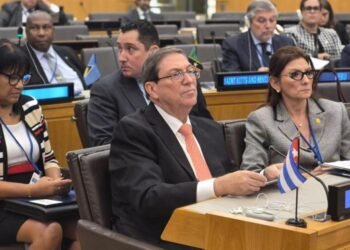
In an interview given on Thursday to Andrea Mitchell for NBC News, in New York, Cuban Foreign Minister Bruno Rodríguez Parrilla assured that Washington “will never be able to find justification” for a military attack against Cuba and affirmed that Havana takes US threats “very seriously.”
Rodríguez also revealed that the Cuban Government has adopted “measures to increase our defensive capacity with the participation of all the people.” Even so, he said he did not believe that Washington would try to repeat on the island an operation similar to the one that, in his words, culminated in Venezuela with the “kidnapping of a sitting president.”
The chancellor insisted that Cuba “does not consider itself an enemy” of the United States nor does it wish to be, and maintained that the US Government will not be able to find “any reason” to justify military action against a country that, he stated, does not represent a threat to its national security.
Despite the increase in tension, Rodríguez confirmed that there have been “some episodes of conversations” between Havana and Washington and reiterated Cuba’s willingness to maintain these contacts. He refused, however, to confirm that Raúl Guillermo Rodríguez Castro, grandson of Raúl Castro, will lead the negotiations on the Cuban side.