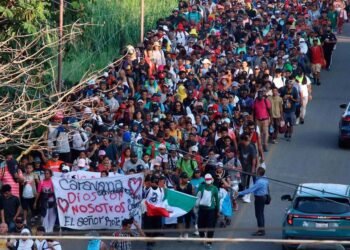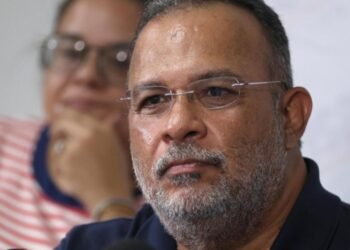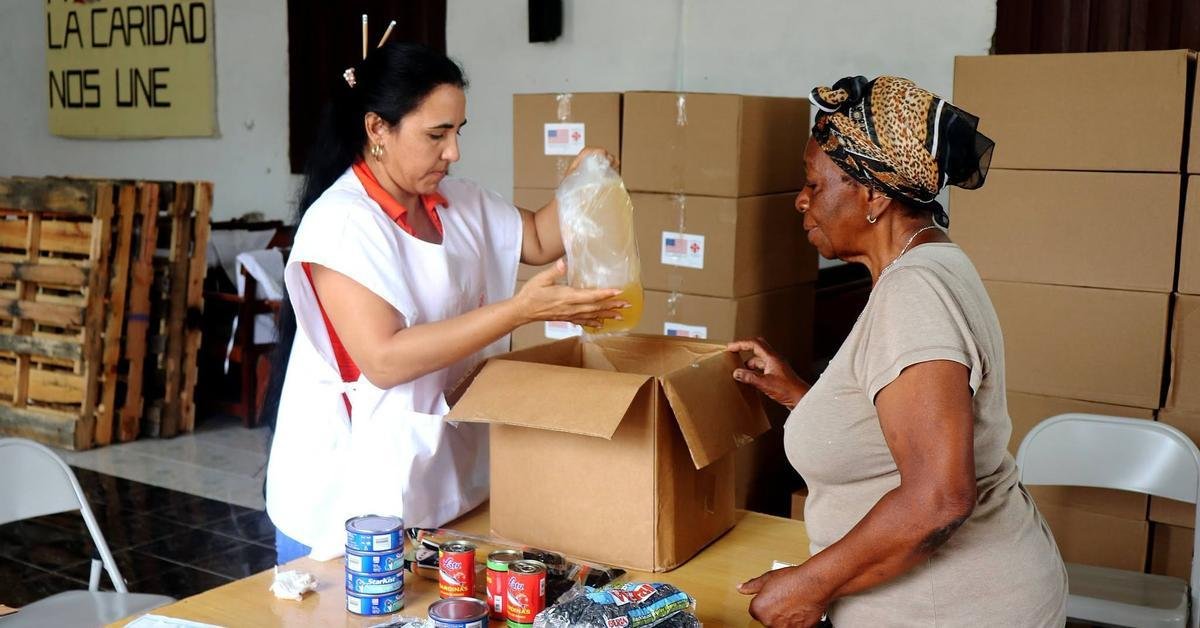
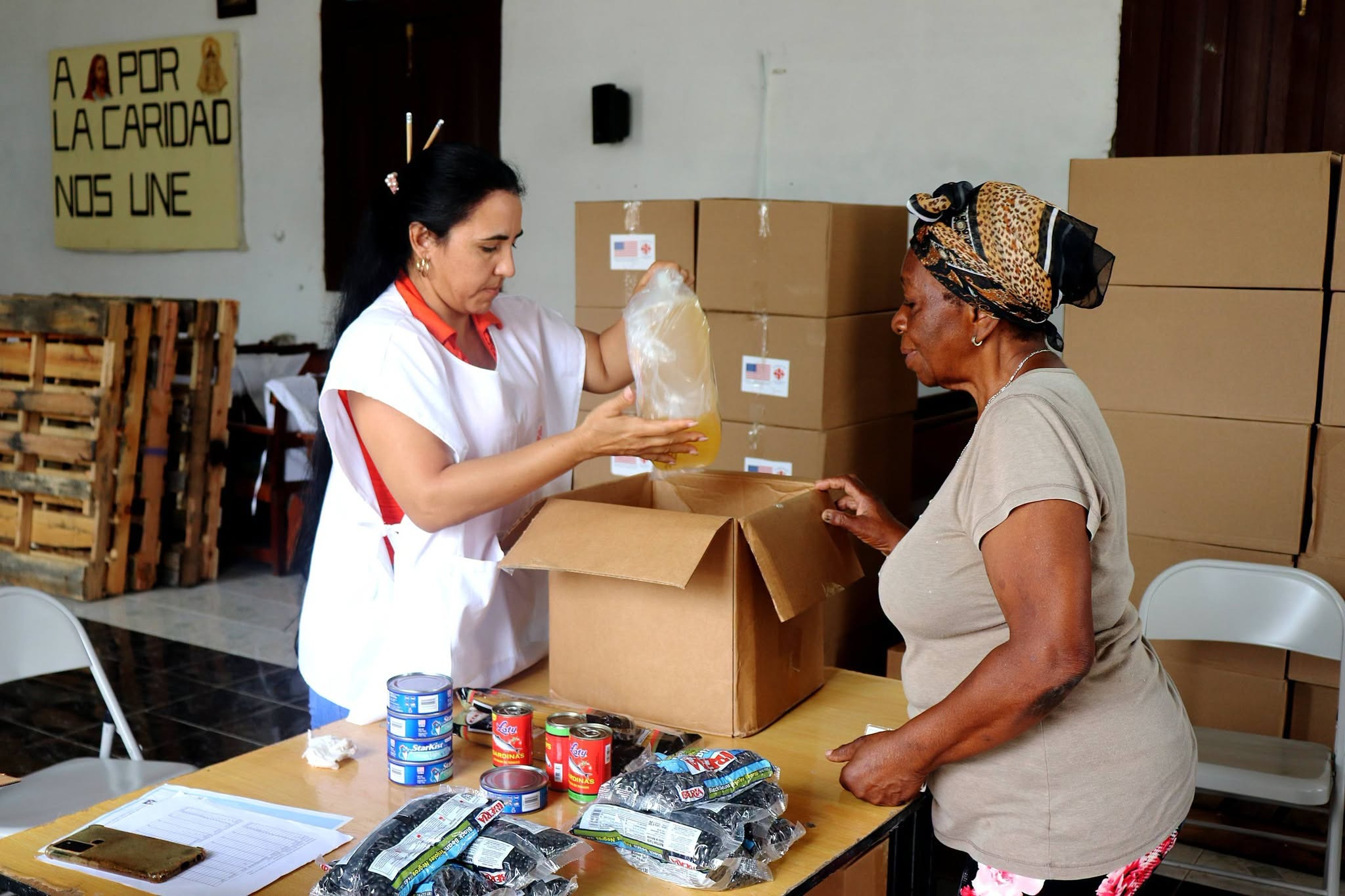
Madrid/The images of Cáritas volunteers distributing boxes of food throughout half the Island portray a change of era. The State that for decades boasted of protecting everyone, with the supply book as its emblem, is no longer able to support the poorest. In a crisis that independent economists judge worse than that of the Special Periodsocial protection no longer relies on the budget, but on remittances and foreign aid. Thus, for example, it states Pedro Monrealin an analysis published on Friday on its page.
The 2026 State Budget reserves 6,000 million pesos for social assistance. In dollars they are between 6.6 and 7.3 million, depending on the exchange rate. Opposite this item are remittances, without an official figure. Monreal conservatively estimates them at $1 billion a year, about 140 times the spending on state assistance. The true social protection system, he claims, is private and transnational, and in its current form deeply unequal. “The remittance protects, but it also excludes,” he summarizes. Only 37% of households receive money from abroad, and those who do not receive it are among the hardest hit by the crisis.
Public assistance remains for them, and Monreal clarifies: being vulnerable is not being a beneficiary. The vulnerable list is a diagnosis that does not require paying anything; that of beneficiaries, a budgetary commitment. The Government reported 883,436 vulnerable people, a figure that coincides with the “especially vulnerable“who were promised a food quota in October. The registered beneficiaries in 2025 were 303,298. Both figures are far from the two million people that the UN intends to assist, or the 6.45 million poor, two out of every three Cubans, estimated by sociologist Mayra Espina. Monreal calls it “imprecise vulnerability.”
In less than three days, what the State allocates to social assistance in a year arrives in remittances to Cuba
To collect, three conditions must be met at the same time: that no one in the home can work, that the income is not enough for food, medicine and basic services, and that there are no family members obliged to help. Vulnerability has no legal definition: the Ministry of Labor specifies it in each characterization process, with criteria such as an income of less than 4,000 pesos per month per person (less than five dollars), including remittances.
In less than three days, what the State allocates to social assistance in a year arrives in remittances to Cuba. The assistance “protects” 174,511 family units, about $40 a year for each one. But vulnerable households were 1,004,000 in Julyaccording to the same ministry: earns just over one in six. Covering them all, Monreal calculated in August, would require 24.3 billion pesos: less than 30 million dollars, not even 3% of a year’s remittances.
Behind this dependence is the countryside: the rice harvest fell from 304,000 tons in 2018 to 111,000 in 2025. The gap is filled by humanitarian aid. Until September, the UN had assisted 1.7 of those two million, 5.6 times the State beneficiaries. Adding to the Red Cross, the World Food Program, Russia, Japan and China, Monreal estimates about 250 million dollars committed, although not yet fully delivered.
At this point, according to the Cuban economist based in Spain, the official discourse is furthest from reality. The Government denies that there is a humanitarian crisis and assures that there never will be one. He adds that aid is not social assistance, and Monreal agrees with him technically: a food box, discretionary and dependent on donors, is not equivalent to a benefit financed by the budget. But when the benefit does not arrive or is not enough, more and more people live off the cash.
To the 250 million from international donors are added the food ships from Mexico and the 100 million dollars that the United States announced in May
Added to the 250 million from international donors are the food ships from Mexico and the 100 million dollars that the United States announced in Maya sum equivalent to fourteen years of social assistance from the Cuban State. Washington channels this aid outside the Government: according to Cáritas Cuba, 60 million go through the Catholic Church, whose volunteers distribute the boxes from parish to parish. Adding remittances and all that aid, the State contributes less than six out of every 1,000 dollars.
The most revealing case is Quisicuaba, a religious foundation in Havana in whose kitchen 700 kilos of rice are cooked every day for the 12,524 people who pass through its dining room, according to what its president, Enrique Alemán, told EFE in May. Before the pandemic it served about 700. Miguel Díaz-Canel has visited and supported it, and yet Alemán, who blames above all the US embargo, spoke of a “humanitarian crisis scenario”, exactly what the Government denies. Faced with this, the state network is short: its 1,461 canteens serve about 70,000 people. For rural areas, in February the Government created “community feeding homes”, houses that cook for up to ten residents: of the 325 planned, only 29 were functioning.
Monreal recognizes that US sanctions make life more expensive and reduce fiscal space, but highlights a previous structural insufficiency. If a State depends on donations to feed the poorest, he writes, arguing whether it should be called a humanitarian crisis is secondary. It proposes a protection floor guaranteed as a right, financed with own resources and supported by an economy that generates income, which gives back to the vulnerable the dignity of not depending on charity.
Although the economist does not see light at the end of the dark tunnel of social assistance, the latest distributions suggest some light. Cáritas arrived on November 13, for the first time, Taco Tacoin Artemisa, and its second shipment to Ciego de Ávila reached Majagua. But that light is not turned on by the State. The same one that, with its interventionist vision of the economy and its invasive presence in all matters of society and the market, withdraws from social assistance and leaves it in the hands of private charity.