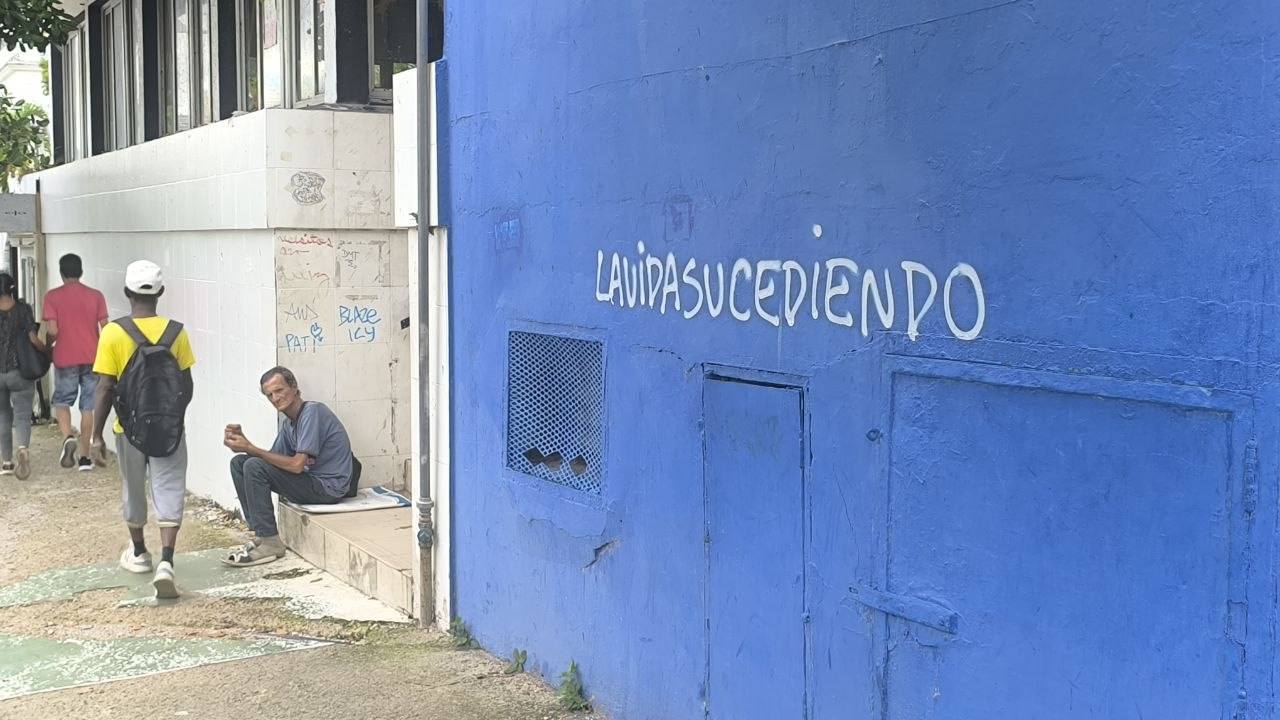
Madrid/My grandparents used to repeat two phrases that seemed to summarize all the wisdom of national pessimism. The first was: “Not even the Americans can fix this.” The second: “Hope was green and a goat ate it.” I grew up listening to them without imagining that, several decades later, they would continue to describe with such precision the state of mind of Cubans.
In Cuba everything seems to be falling apart, except the regime. The economy collapses, buildings collapse, hospitals collapse, public services disappear and the country empties. But power continues there, clinging to its privileges, floating, as if it had discovered the secret of political weightlessness.
For years we have repeated that the dictatorship is about to hit rock bottom. However, the bottom continues to recede. Perhaps because, as the regime falls, it is society that takes the hit. The Government has managed to survive the failure of absolutely everything it promised to save.
The capture of Nicolás Maduro in January unleashed a new wave of expectations. Many Cubans believed that our turn had arrived. Trump fueled those illusions with warnings about the future of the regime and statements that suggested a near end. But the months passed and the US strategy focused only on intensifying economic and energy pressure.
Two centuries later, the fruit is bruised, in debt, depopulated and needs a million-dollar investment to become edible again.
And the negotiations, announced with enthusiasm by some and relativized by others, also seemed like the chronicle of an announced failure.
Now Trump talks about solving the Cuban problem before the end of his term, in January 2029. Freedom is once again postponed, like a public work with no sure delivery date.
Perhaps we should update that caricature of the ripe fruit that John Quincy Adams imagined falling towards the United States. Two centuries later, the fruit is bruised, in debt, depopulated and needs a million-dollar investment to become edible again. It doesn’t exactly seem like a delicacy that Washington is in too much of a hurry to get.
But it would be unfair to place all our frustrations on the Americans. We must also look in the mirror.
I left Cuba in November 2021, after the repression against me and my family. I was not willing to spend more than twenty years in prison for trying to organize a peaceful march. Some compatriots called me a coward. And I don’t intend to present myself as a hero either. I know my fears, my limits and my contradictions.
However, I have seen how opponents who did endure years in Castro’s dungeons also end up lynched online by people who, supposedly, share their democratic aspirations.
There are plenty of Facebook prosecutors. There is a lack of citizens willing to assume even a small part of the risks they demand from others
They call anyone who leaves a coward. They demand results from those who stay. Those who are imprisoned are put on a scale all the time, to check if they have really lost weight. They look for some stain that discredits their sacrifice. We need perfect heroes, without fear, without mistakes, without family to protect and, preferably, with an unlimited capacity to withstand torture.
There are plenty of Facebook prosecutors. There is a lack of citizens willing to assume even a small part of the risks they demand from others.
And yet, within Cuba there are people who continue to resist. Anna Bensi, Alina Bárbara López, Yoani Sánchez, Camila Acosta and many others defy repression with admirable perseverance. They receive solidarity, especially from religious circles and activists, but that support rarely reaches the dimension on the streets that it acquires on the internet.
I don’t mean to judge those who are afraid. It would be unforgivable hypocrisy. The fear is legitimate. The repression is real. But we need to recognize that no viral publication replaces a civic organization, nor does a million insults bring down a dictatorship.
The greatest strength of an organized civil society lies not only in its ability to denounce, but also in its ability to gather will, maintain ties and mobilize.
Is there hope left? Yes, although it does not come wrapped in Trump’s promises nor does it depend on finding another martyr willing to sacrifice himself for everyone.
Hope begins when we stop demanding impossible heroes and learn to protect the imperfect human beings who still dare. When we manage to disagree without destroying each other, accompany without imposing and convert indignation into effective solidarity.
11J showed that there is one thing that the regime fears more than anything: losing the streets. Therefore, the greatest strength of an organized civil society lies not only in its ability to denounce, but also in its ability to gather wills, maintain ties and mobilize. The protests against the blackouts express needs that are as urgent as they are legitimate. But if the dispersed discontent finds a national expression, sustained and capable of transcending immediate demands, power will have to face a reality that cannot be solved by turning on an electrical circuit. The true depth of a political crisis is not measured by the depth of the economic disaster, but by the limits that an organized citizenry is capable of establishing against its rulers.
I don’t know when this fall will end. I distrust those who claim that freedom is always around the corner. But I also refuse to accept that resignation is our only destiny.
Maybe my grandparents were right: not even the Americans can fix this. We’ll have to fix it ourselves.