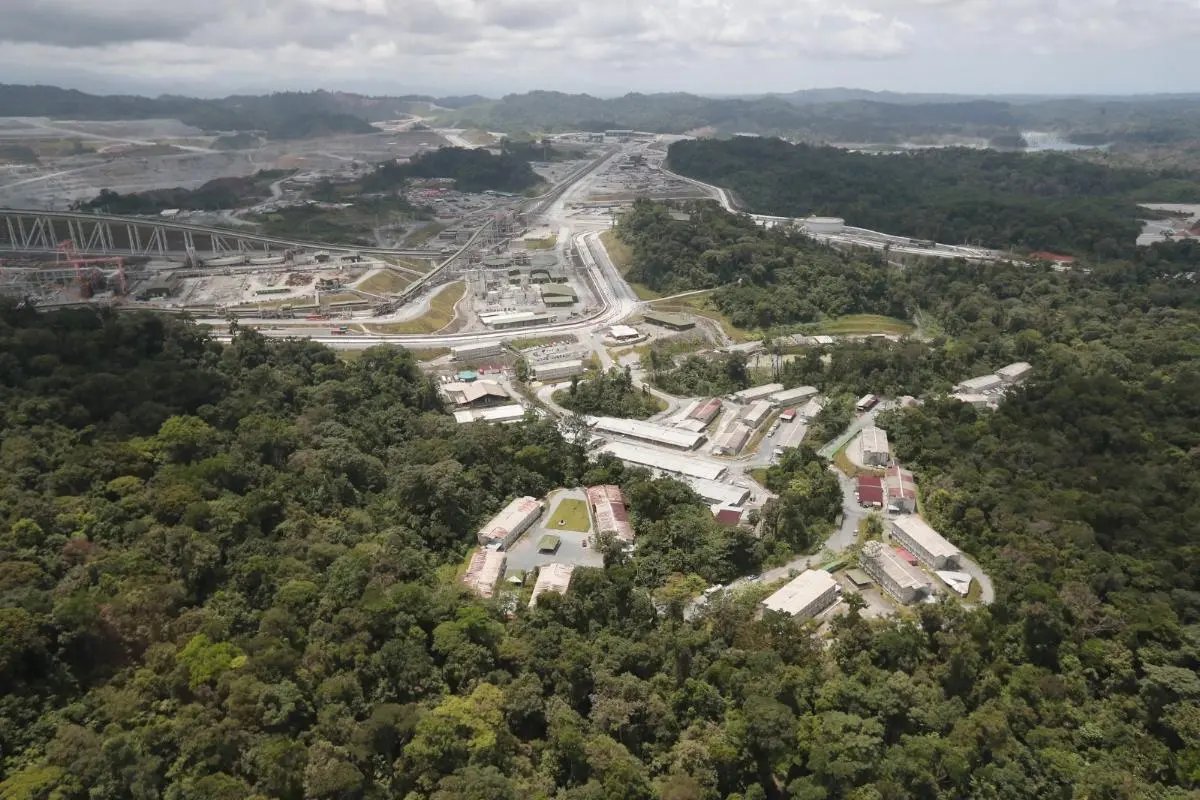
In the midst of the decision to negotiate with Cobre Panamá, the Government must prioritize the best benefits for the country, focusing especially on the communities directly impacted by the project, as stated the president of the Mining Chamber of Panama (Camipa), Severo Sousa.
These statements come after the important announcement made this Monday by the President of the Republic, José Raúl Mulino, who ordered the start of formal talks with Minera Panamá to explore an agreement focused on obtaining the maximum benefit for the nation and defining the future of the Donoso mine.
The president’s message, channeled through an inter-ministerial team, established that any understanding must ensure national sovereignty, strict compliance with the Constitutionthe cessation of international arbitration processes and the non-negotiable inclusion of an orderly and definitive closure plan, also contemplating citizen consultation processes under the guidelines of the Escazú Agreement.
Given this scenario, Sousa described the announcement as a “responsible and coherent step” by the government administration, although he insisted that the process must happen as quickly as possible.
The president of Camipa warned about the high economic cost of keeping the project stopped, pointing out that the country stops receiving millions in daily figures, in addition to depriving itself of the reactivation of nearly 40,000 direct and indirect jobs that would boost the supply chain, MSMEs and the economy of regions such as Colón and Coclé.
Regarding the legal channels under which a future contractual relationship could be structured – ruling out the direct operation of the State due to lack of capacity and avoiding going to the National Assembly -, Camipa indicated that there are viable antecedents in international comparative law, such as the formation of mixed companies or direct contracting schemes for specialized operators.
For Sousa, the fundamental thing is not to rigidly opt for one legal figure or another, but to choose the one that guarantees the greatest social and economic return for the Panamanian State.
Likewise, he stressed the imperative need to genuinely listen to the inhabitants of the areas surrounding the footprint of the mining project.
He argued that, during previous moments of crisis, attention was primarily focused on the urban centers of the capital, relegating the pressing needs of local communities that today resent the lack of sources of employment, development opportunities and community contributions in infrastructure and health.
The president of Camipa emphasized that modern mining can be developed under strict standards of sustainability and environmental responsibility.
He argued that the global transition towards green technologies exponentially increases international demand for critical minerals such as copper, a strategic resource of which Panama has immense deposits.
From this perspective, Camipa considers that the country is facing a historic opportunity to redefine its geopolitical position, transforming a complex situation into a transparent management model that reconciles economic growth with environmental preservation.