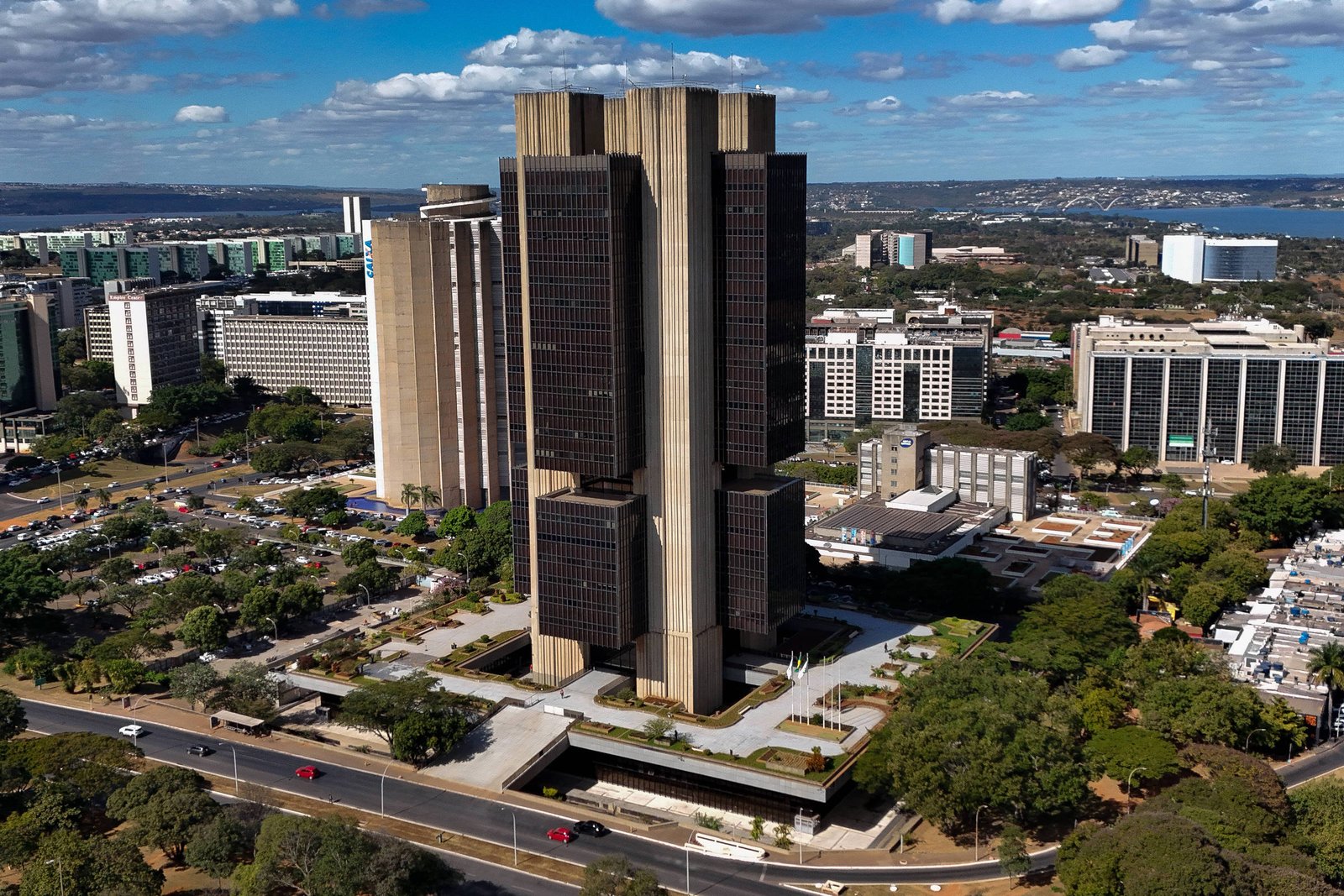
Given the uncertainty about the duration of the conflict in Middle East and from the perspective of pressure on fuel and food prices, the Copom (Monetary Policy Committee) should repeat the 0.25 percentage point cut in the basic interest rate feesreducing the Selic at 14.5% per year.
This is the consensus expectation of the financial market for this Wednesday’s meeting (29), which will have three absences.
In addition to the vacant seats in the Economic Policy and Organization of the Financial System directorates, with no new names indicated by the Lula (PT) government, the Director of Administration of Central BankRodrigo Teixeira, did not participate in the meeting due to the death of a family member. Thus, the next decision of the collegiate will be taken by the president, Gabriel Galípoloand five other directors.
In the assessment of economists interviewed by the Sheetthe behavior of inflation current situation, the worsening of expectations and the rise in prices of oil make the environment more challenging and require greater caution on the part of the Copom.
In practice, this should translate into a slower pace of interest cuts throughout the year and a shorter Selic fall cycle than projected by economic agents in February, when United States and Israel launched an offensive against the Iran.
Fernando Gonçalves, superintendent of Economic Research at Itaú Unibanco, says that the significant worsening of inflation expectations until 2028 reinforces the assessment that there will be less room for cutting interest rates than imagined before the war. The bank revised upwards its projection for the Selic rate at the end of the cycle, from 12.25% to 13%.
THE Focus bulletin released last Monday (27) registered an increase in expectations for the IPCA (Extended National Consumer Price Index) of 2026 for the seventh consecutive week, to 4.86% – above the ceiling of the target pursued by the BC (4.5%).
For 2027 – a deadline in Copom’s sights due to the lagged effects of interest rate policy on the economy – the inflation estimate reached 4% (compared to 3.84% four weeks earlier). There was also an increase in the IPCA projection for 2028, to 3.61%.
“The market puts into prices a view that (the Strait of) Hormuz will not return to pre-war normality. It is a region that will have a greater geopolitical risk than it used to have and, therefore, oil will have a risk premium (additional profitability charged by investors)”, he states.
The trajectory of current inflation, according to him, is another factor that requires prudence from the BC in easing interest rates. In the 12 months up to April, the IPCA-15 (Extended National Consumer Price Index 15) accelerated to 4.37%pressured by the rise in fuel prices with the war in Iran and the rise in food costs. The index signals a trend towards IPCAwhich measures the country’s official inflation.
At the same time, Gonçalves sees sense in a 0.25 percentage point cut now due to the exchange rate appreciation observed in recent weeks. THE dollar has been quoted below R$5with investors waiting for interest rate decisions from Brazil and the United States.
On this “super Wednesday”, as the date is called by the market, the Fed (Federal Reserve, US central bank) is expected to maintain its reference interest rate in the range of 3.50% to 3.75%, the same level since December.
Solange Srour, director of macroeconomics for Brazil at UBS Global Wealth Management and columnist for Sheetsees the BC moving in the direction of other central banks, with a “data-dependent” stance, seeking more clarity on the impacts of recent shocks before each decision.
“All the tension in the market is much more in communication. Whether the Copom will set the bar too high to stop (cutting interest rates) or to accelerate (the pace of Selic’s fall)”, he says.
For the economist, there is a risk of rising inflation. “The slowdown of the economy in Brazil will be delayed and more gradual because we have a fiscal policy that remains expansionist. We already have worse current inflation and unanchored medium and long-term expectations (far from the target)”, he states.
Srour states that, unlike the Brazilian case, the monetary authorities of other countries deal with expectations within the target. In her view, Brazil’s difficulty in maintaining projections is due to the lack of credibility in fiscal policy.
“When we don’t have a horizon for stabilizing (public) debt, we don’t have a horizon for obtaining primary surpluses that could bring some type of more benign trajectory, inflation expectations become unanchored (far from the target). Ultimately, when you don’t have a fiscal anchor, the inflationary scenario is much more likely,” he states.
It does not see how to move inflation expectations towards the target with the current pace of spending growth and without complying with the fiscal framework. “What the Central Bank has to do is prevent this de-anchoring (deterioration of expectations) from increasing due to a lack of credibility in monetary policy”, he states.
Another factor pointed out by the economist is the distrust of agents regarding meeting the target given the history marked by bursts of inflation. In the period from 1999 to 2024, inflation was outside the tolerance range for eight years.
Given this scenario, the economist sees no room for the BC to reduce interest rates much below 13.5% per year at the end of the Selic falling cycle. “If he (Copom) was, in fact, aiming at the center of the target of the relevant horizon (2027), he might have to interrupt the cycle after this meeting or soon”, he says.
Alexandre Schwartsman, former director of the BC and consultant at Pinotti & Schwartsman, is another who sees limitations in the BC’s performance ahead and estimates that the Selic will end 2026 at least 1 percentage point above what it projected before the war in Iran.
A change in scenario, in his view, is conditioned by the trajectory of oil prices – per barrel Brent closed this Tuesday (28) quoted at US$ 104.82.
“If there is relief in the price issue, the Central Bank will find space to accelerate (the cuts). But, without that, I think it will continue at a rate of 0.25 (percentage point), which means ending the year, not necessarily the cycle, with interest rates a little above 13%, 13.25%, 13.50% perhaps”, he states.