The Constitutional Court declared the economic emergency enforceablesocial and ecological that the Government decreed on August 19, 2026, after the magnitude 7.4 earthquake occurred ten days earlier. However, conditioned its application to prevent the extraordinary powers are used to address problems prior to the disaster or finance expenses that are not directly related to its consequences.
The high court also declared Decree 1348 enforceable of August 31, through which the Government modified the territorial scope of the emergency. However, he specified that the measures They will only be able to cover the municipalities that were affected by the earthquake and its aftershocks, according to the reports of the National Unit for Disaster Risk Management, or those in which a specific impact is technically demonstrated.
Three months after the earthquake in Cali. Photo:Samir Rojas
One of the main limits established by the Court is that emergency cannot be used to adopt structural measures or address problems that already existed before of the earthquake, particularly those related to the penitentiary and prison system.
Regarding extraordinary resources, ordered the Ministry of Finance, headed by Miguel Gómez, to recalculate, within 20 business days since the publication of the statement, the cost of the emergency and the necessary budget additions. Also required monitoring mechanisms to ensure that the money has an exclusive destination and that the control organizations can monitor its execution.
Finally, urged President Abelardo De La Espriella to adopt the recovery planwith a multi-year resource planning for rehabilitation and reconstruction work.
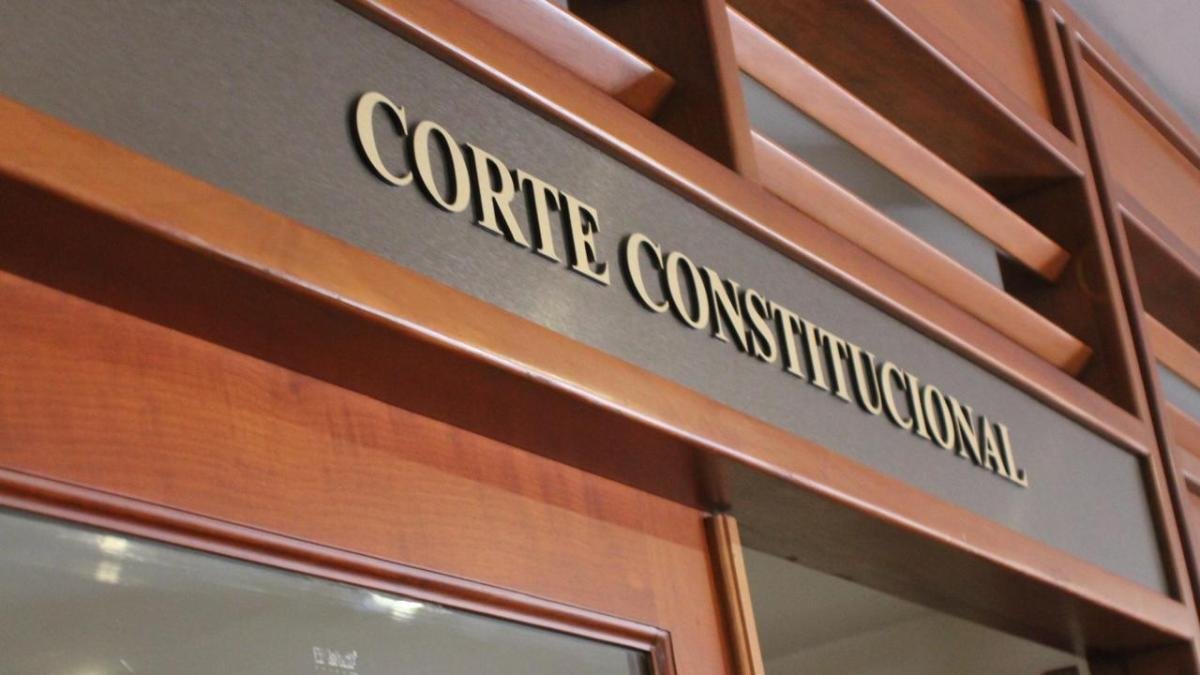
Constitutional Court Photo:Courtesy
The high court the emergency declaration was under review economic, social and ecological that was issued by the Government on August 19 of this year, after an earthquake that affected the southwest of the country. The file, whose Rapporteur magistrate is Juan Carlos Cortés González, studied whether the Executive met the requirements constitutional rights to resort to this exceptional mechanism.
This is Legislative Decree 1261, through which the President Abelardo De La Espriella declared the state emergency due to serious public calamity. The decision was taken after the 7.4 magnitude earthquake occurred on August 10, 2026, which led the Government to adopt extraordinary measures to address its consequences.
During the process, The Executive issued Decree 1348 of August 31, with which modified the territorial delimitation of the emergency. This new provision also reached the high court and its study was added to the initial file.
In the process, The Court requested information from the Government and advanced the practice of tests to examine the reasons that supported the declaration, the circumstances of the calamity and the need to use extraordinary powers.
One of the statements within the file was from the Attorney General’s Officeissued in October. The Public Ministry considered that the formal requirements were met of the declaration and that the earthquake constituted an extraordinary, unforeseeable and sudden event.
The Attorney General’s Office also supported the territorial modification introduced by Decree 1348, which excluded Putumayo and included Caquetá and Santander.
Justice Editorial