May Day celebrations across Finland drew large crowds and remained largely calm, though authorities reported isolated incidents and extensive cleanup operations in the aftermath.
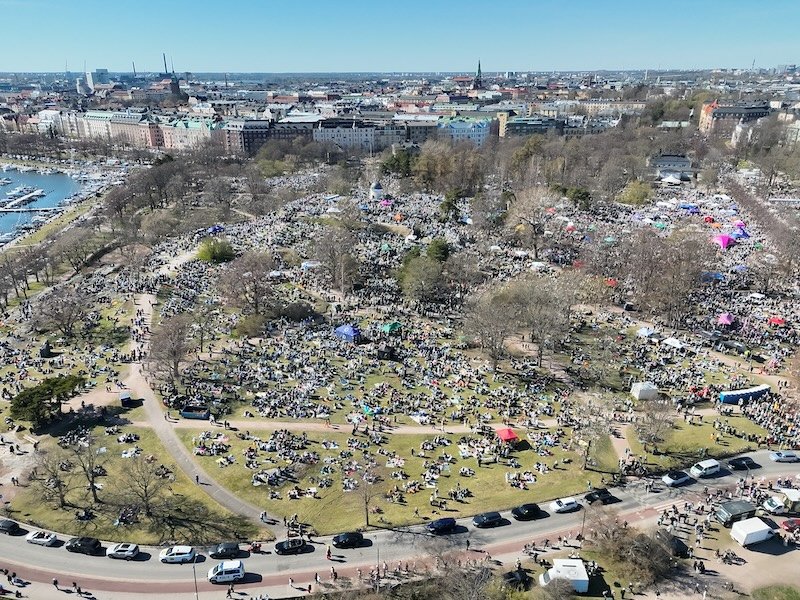
Police in Helsinki said May Day passed without major disruption despite tens of thousands gathering across the city. Warm weather drew large numbers to parks and public spaces, with Kaivopuisto among the main locations.
By Friday evening, officers described the situation as steady.
“The day has so far been peaceful,” Helsinki Police said in an update, adding that they hoped celebrations would continue in the same manner through the night.
Earlier in the day, tens of thousands visited Kaivopuisto, where police reported no significant disturbances despite the volume of people. Traffic arrangements remained in place, with road closures and one-way systems introduced to manage the flow of visitors.
A May Day march organised by the Central Organisation of Finnish Trade Unions and the Left Alliance moved through central streets, affecting traffic from late morning.
In Tampere, police reported a more complex situation linked to demonstrations. A far-right group held a “White May Day” event in the city centre, drawing between 100 and 150 participants, while around 200 counter-protesters gathered nearby.
Police said the events remained under control, with officers intervening early to prevent escalation. The march proceeded along its planned route, though some counter-protesters attempted to follow it.
Authorities detained seven people in connection with the events. Two were reported for resisting police, and one for possession of a dangerous object. Police also took a 13-year-old into social services after finding a knife in their possession in the city centre.
Despite these incidents, police said celebrations in Tampere overall proceeded without major disruption.
In Helsinki, attention shifted on Saturday morning to the scale of litter left behind.
Kaivopuisto was left with large amounts of waste covering the grass areas and pathways. City workers began cleanup operations early, using tools to gather waste into large piles.
Waste collection efforts included a bottle return scheme, where participants could exchange 20 sparkling wine bottles for a cinema ticket.
HT