Sunday, October 18, 2026
    The GeoStrategic Consensus
    No Result
    View All Result
    • Login
    • HOME
    • AMERICAS
      • Argentina
      • Brazil
      • Canada
      • Chile
      • Colombia
      • Costa Rica
      • Cuba
      • Dominican Republic
      • Ecuador
      • El Salvador
      • Greenland
      • Guatemala
      • Honduras
      • Mexico
      • Nicaragua
      • Panama
      • Paraguay
      • Peru
      • United States
      • Uruguay
      • Venezuela
    • ASIA-PACIFIC
      • Australia
      • Brunei Darussalam
      • Cambodia
      • China
      • Federated States of Micronesia
      • Fiji
      • Indonesia
      • Japan
      • Kiribati
      • Laos
      • Malaysia
      • Marshall Islands
      • Mongolia
      • Myanmar
      • Nauru
      • New Zealand
      • North Korea
      • Palau
      • Papua New Guinea
      • Philippines
      • Samoa
      • Singapore
      • Solomon Islands
      • South Korea
      • Taiwan
      • Thailand
      • Timor-Leste
      • Tonga
      • Tuvalu
      • Vanuatu
      • Vietnam
    • CARICOM
      • CARICOM – Non-English
        • Haiti
        • Suriname
      • CARICOM Associates
        • Anguilla
        • Bermuda
        • British-Virgin-Islands
        • Cayman-Islands
        • Curacao
        • Turks-and-Caicos
      • CARICOM English
        • Antigua and Barbuda
        • Barbados
        • Belize
        • Dominica
        • Grenada
        • Guyana
        • Jamaica
        • Montserrat
        • Saint Kitts and Nevis
        • Saint Lucia
        • Saint Vincent and the Grenadines
        • The Bahamas
        • Trinidad and Tobago
    • EURASIA
      • Armenia
      • Azerbaijan
      • Balarus
      • Georgia
      • Kazakhstan
      • Kyrgyzstan
      • Moldova
      • Russia
      • Tajikistan
      • Turkmenistan
      • Ukraine
      • Uzbekistan
    • EUROPE
      • Albania
      • Andorra
      • Austria
      • Bosnia and Herzegovina
      • Bulgaria
      • Croatia
      • Cyprus
      • Czech Republic
      • Denmark
      • Estonia
      • Finland
      • France
      • Germany
      • Greece
      • Holy See
      • Hungary
      • Iceland
      • Ireland
      • Italy
      • Kosovo
      • Latvia
      • Liechtenstein
      • Lithuania
      • Luxembourg
      • Malta
      • Monaco
      • Montenegro
      • Netherlands
      • North Macedonia
      • Norway
      • Poland
      • Portugal
      • Romania
      • San Marino
      • Serbia
      • Slovakia
      • Slovenia
      • Spain
      • Sweden
      • Switzerland
      • United Kingdom
    • MIDDLE EAST AND NORTH AFRICA
      • Algeria
      • Bahrain
      • Egypt
      • Iran
      • Iraq
      • Israel
      • Jordan
      • Kuwait
      • Lebanon
      • Lybia
      • Morocco
      • Oman
      • Palestinian Territories
      • Qatar
      • Saudi Arabia
      • Syria
      • Tunisia
      • Turkey
      • United Arab Emirates
      • Western Sahara
      • Yemen
    • SOUTH ASIA
      • Afghanistan
      • Bangladesh
      • Bhutan
      • India
      • Maldives
      • Nepal
      • Pakistan
      • Sri Lanka
    • SUB-SAHARAN AFRICA
      • Angola
      • Benin
      • Botswana
      • Burkina Faso
      • Burundi
      • Cabo Verde
      • Cameroon
      • Central African Republic
      • Chad
      • Comoros
      • Cote d’Ivoire
      • Democratic Republic of the Congo
      • Djibouti
      • Equatorial Guinea
      • Eritrea
      • Eswatini
      • Ethiopia
      • Gabon
      • Gambia
      • Ghana
      • Guinea
      • Guinea Bissau
      • Kenya
      • Lesotho
      • Liberia
      • Madagascar
      • Malawi
      • Mali
      • Mauritania
      • Mauritius
      • Mozambique
      • Namibia
      • Niger
      • Nigeria
      • Republic of the Congo
      • Rwanda
      • Sao Tome and Principe
      • Senegal
      • Seychelles
      • Sierra Leone
      • Somalia
      • South Africa
      • South Sudan
      • Sudan
      • Tanzania
      • Togo
      • Uganda
      • Zambia
      • Zimbabwe
    No Result
    View All Result
    Agentially
    No Result
    View All Result
    Home AMERICAS Cuba

    Blackouts: Cuba produces less electricity today than 20 years ago

    The Analyst by The Analyst
    October 18, 2026
    in Cuba
    Blackouts: Cuba produces less electricity today than 20 years ago


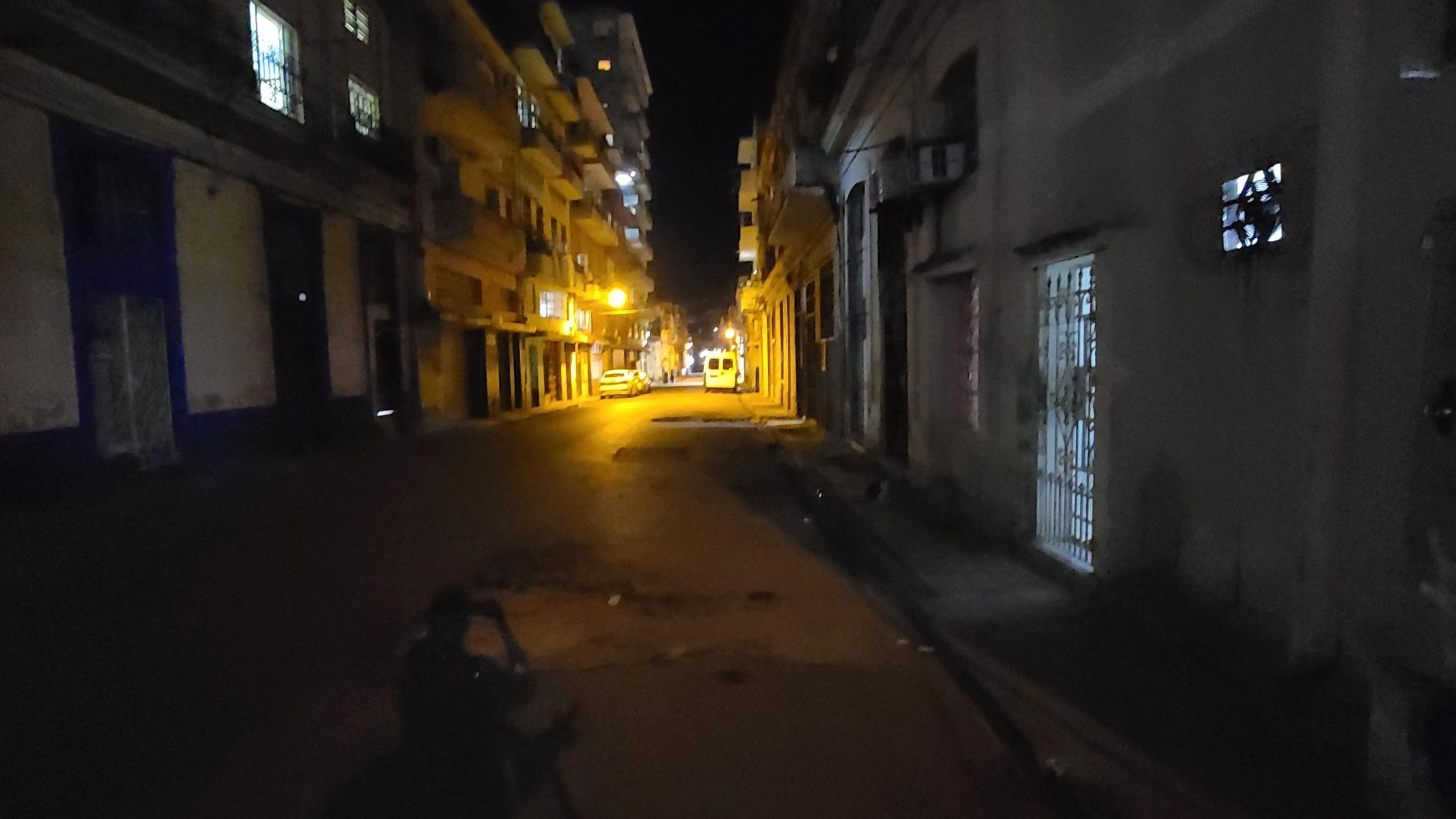
    Havana/A factory that stops producing, a hotel without guests and a home where half of the family no longer lives have something in common: they consume less electricity. Cuba has been losing industries, tourists and inhabitants for years, so it should have a large surplus of electrical energy. However, the opposite occurs.

    READ ALSO

    Tourism: Cienfuegos seeks national and foreign private capital

    The clock that only works when there is no power

    Today the country generates less energy than 20 years ago. In 2006, thermoelectric plants produced 15,511 gigawatt-hours (GWh): in 2015, 20,000 GWh were reached thanks to the expansion of “distributed generation” with plants powered by diesel or fuel oil. Five years later, the decline began and, in 2025, consumption fell to 14,100 GWh, when the Island was still receiving oil from Venezuela. The data for 2026 can only be worse.

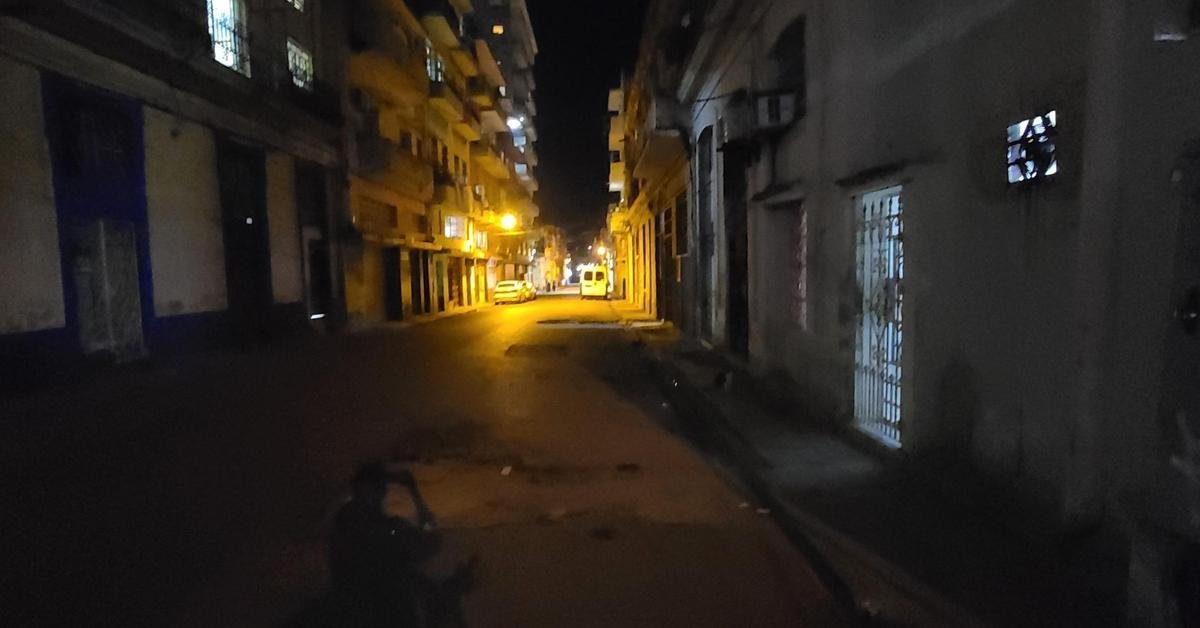
    Despite consuming much less due to the effects of economic paralysis, Cubans suffer more blackouts than ever and this trend worsens week after week, with power outages lasting several days in a row throughout the country.

    With an installed capacity between 6,600 and 7,200 megawatts (MW), Cuba has much more energy than it needs, up to twice more than the demand of just over 3,000 MW at peak times. In theory. The reality is very different, since thermoelectric plants, almost all fueled by national oil, are obsolete and suffer breakdowns due to lack of maintenance for decades.


    Homes have thus become the main destination of billed electricity, while economic activity faces an unprecedented contraction

    The collapse of generation capacity due to technical failures or lack of fuel has had an effect on demand. If Cuba needed today the 3,500 megawatts (MW) that the authorities identified as historical levels of maximum demand, the deficit would be much greater. With just 920 MW of availability provided by the UNE For this October 18, there would be 2,580 MW missing, instead of the 1,880 announced. That is, the deficit would be 37% higher. The comparison reveals to what extent the contraction in demand helps to disguise the deterioration in generation capacity.

    In 2019, electricity consumption per inhabitant was around 1,541 kilowatt hours annual. Five years later it had decreased to 1,435, a drop of nearly 7%. That is, not only was the number of consumers reduced: the electricity used per person also decreased.

    There is another piece of information that allows us to understand the electrical system transformation Cuban. According to the report Electricity in Cuba. Selected indicators 2024from the National Office of Statistics and Information (Onei), residential consumers used 8,843 GWh during that year. This represents approximately 63% of all electricity billed in the country, which amounted to 13,985 GWh. State entities, on the other hand, consumed 4,570 GWh, less than a third of that total.

    Homes have thus become the main destination for billed electricity, while economic activity faces an unprecedented contraction. The distribution alone does not demonstrate how much industrial consumption has fallen, but it does raise the question: what proportion of the energy once used by factories has disappeared along with their output?


    According to Onei, Cuba produced 20,837 GWh in 2018, its best year, while in 2025 national generation had dropped to 14,100, a loss of 32%

    Manufacturing data offers some clues. According to the official statisticsnumerous industrial products registered drops of between 65% and 98% between 2021 and 2025. A paralyzed cement factory stops consuming electricity, but also stops manufacturing the cement necessary to build homes. A closed food industry reduces your electricity bill, although it worsens shortages in the markets. In these cases, the decrease in energy consumption does not constitute a gain in efficiency, but rather a clear sign of lower productive activity.

    The situation has been aggravated by administrative limitations. From the end of 2025, the Government extended mandatory savings plans to the private sector. In March 2026, more than 110,000 entities had already received notifications about their consumption limits. In this way, statistics can record a contained demand precisely because companies are prohibited from using all the electricity they need.

    The other side of the equation is even more worrying. According to Onei, Cuba produced 20,837 GWh in 2018, its best year, while in 2025 national generation had dropped to 14,100, a loss of 32%.

    And there is another difficulty: a plant can have a high nominal power and produce very little energy throughout the year if it remains continually broken down. The megawatts that the UNE announces for peak hour do not reveal how many gigawatt hours it actually manages to deliver over the months.


    To evaluate the Cuban crisis it is not enough to know the maximum deficit announced each day

    Distributed generation illustrates the problem. According to official statistics, the generating sets produced more than 5,900 GWh in 2021 and just 2,095 in 2024. The drop exceeds 64%, due to the deterioration of equipment and fuel restrictions, when the regime resold on the international market a part of the crude oil that Venezuela gave it. The system has thus lost one of its main backups precisely when the large thermoelectric plants go through frequent interruptions due to breakdowns.

    The daily reports avoid telling the real size of the catastrophe. If a country needs 3,500 MW and has 2,000, it has a deficit of 1,500 MW, but it can cover 57% of its demand. If later it needs only 2,500 MW and has 1,000, the deficit continues to be 1,500 MW, although now it can barely cover 40%. The number of missing megawatts is identical, but the deterioration in supply is much greater.

    Therefore, to evaluate the Cuban crisis it is not enough to know the maximum deficit announced each day. Public and comparable series of electricity actually delivered, consumption by sectors and energy that stopped being supplied due to interruptions are needed.

    The decisive question is not only how much electricity Cuba has stopped consuming, but how much it would have consumed if its factories, hotels, public lighting systems, businesses and homes had been able to function normally. Without that answer, it is impossible to distinguish what part of the decline corresponds to the economic collapse and what part to the electricity shortage itself.


    Between 2019 and 2024, close to 40% of national investment was concentrated in hotels, restaurants and real estate activities linked to tourism

    US sanctions and the loss of oil supplies from traditional allies have aggravated the crisis, but they alone do not explain the generation’s collapse. The main Cuban thermoelectric plants were adapted to consume national crude oil, whose production, according to the Minister of Energy and Mines himself, Vicente de la O Levy, remains stable. The problem is that these facilities, aging and subjected to highly corrosive fuel, require investments and maintenance that were neglected for years.

    Between 2019 and 2024, around 40% of national investment was concentrated in hotels, restaurants and real estate activities linked to tourism. In 2020 alone, this sector absorbed 47.6% of investments, compared to 9.4% allocated jointly to electricity, gas and water.

    The paradox is completed with fuel imports from the United States. In July 2026, the US exports to Cuba They reached a record of 3,222,000 barrels, mainly diesel and gasoline, a volume higher than the daily average of Venezuelan supplies in some stages of the alliance between Fidel Castro and Hugo Chávez. And in August the record was broken againwith 74.86 million dollars, 22.4% more than in July.

    Although these derivatives, imported mainly for the private sector, cannot replace the crude oil used by thermoelectric plants, the figures reveal that the fuel continues to enter the Island in extraordinary quantities. What remains unclear is who actually receives these shipments, how they are distributed and what proportion ends up contributing to the functioning of the economy and the electrical system.
    Source link

    Related Posts

    Tourism: Cienfuegos seeks national and foreign private capital
    Cuba

    Tourism: Cienfuegos seeks national and foreign private capital

    October 18, 2026
    The clock that only works when there is no power
    Cuba

    The clock that only works when there is no power

    October 18, 2026
    Protests: The instigator of the violent demonstrations in France stands out
    Cuba

    Protests: The instigator of the violent demonstrations in France stands out

    October 18, 2026
    UN: Havana protests UN event on repression
    Cuba

    UN: Havana protests UN event on repression

    October 17, 2026
    Crimes: In Guantanamo, even the solar panels from the funeral home have been stolen
    Cuba

    Crimes: In Guantanamo, even the solar panels from the funeral home have been stolen

    October 17, 2026
    "how I felt" from October 17, 2026
    Cuba

    "how I felt" from October 17, 2026

    October 17, 2026
    Next Post

    Dealing with depressionOctober 15, 2026

    POPULAR NEWS

    2026 Regional and International Conventions of Jehovah’s Witnesses

    2026 Regional and International Conventions of Jehovah’s Witnesses

    July 7, 2026

    All posts

    July 23, 2026
    Thaksin, Yingluck and Paetongtarn meet Indonesian President Prabowo for investment talks

    Thaksin, Yingluck and Paetongtarn meet Indonesian President Prabowo for investment talks

    July 13, 2026
    This is how Nicolás Maduro and Cilia Flores reappeared in their hearing

    This is how Nicolás Maduro and Cilia Flores reappeared in their hearing

    July 24, 2026
    No deliverance: when gig workers fall prey to road accidents

    No deliverance: when gig workers fall prey to road accidents

    July 25, 2026

    EDITOR'S PICK

    People making end-of-life decisions skyrocket in six years and reach 187 records by 2025

    People making end-of-life decisions skyrocket in six years and reach 187 records by 2025

    October 10, 2026
    Al Shabab-Al Nahda clash headlines Jindal League round two

    Al Shabab-Al Nahda clash headlines Jindal League round two

    September 5, 2026
    Manhattan High-Rise at Risk of Collapse, Prompting Evacuations

    Manhattan High-Rise at Risk of Collapse, Prompting Evacuations

    July 7, 2026
    STATEMENT: CARICOM Secretary-General on International Day of the World’s Indigenous Peoples

    STATEMENT: CARICOM Secretary-General on International Day of the World’s Indigenous Peoples

    August 9, 2026

    Recent Posts

    • The appeal of religious leaders after the meeting with President Begaj: Citizens should be heard, the parties should choose dialogue on the conflict
    • Competitor Ittihad Al-Capital withdraws from the African Confederation Cup – Al-Shorouk Online
    • HM begins state visit to UK today
    • More than four tons of smuggled drugs were burned in Nimroz

      © 2026 Agentially - Navigating shifting sovereignties and global risk .

      Welcome Back!

      Login to your account below

      Forgotten Password?

      Retrieve your password

      Please enter your username or email address to reset your password.

      Log In
      No Result
      View All Result
      • HOME
      • AMERICAS
        • Argentina
        • Brazil
        • Canada
        • Chile
        • Colombia
        • Costa Rica
        • Cuba
        • Dominican Republic
        • Ecuador
        • El Salvador
        • Greenland
        • Guatemala
        • Honduras
        • Mexico
        • Nicaragua
        • Panama
        • Paraguay
        • Peru
        • United States
        • Uruguay
        • Venezuela
      • ASIA-PACIFIC
        • Australia
        • Brunei Darussalam
        • Cambodia
        • China
        • Federated States of Micronesia
        • Fiji
        • Indonesia
        • Japan
        • Kiribati
        • Laos
        • Malaysia
        • Marshall Islands
        • Mongolia
        • Myanmar
        • Nauru
        • New Zealand
        • North Korea
        • Palau
        • Papua New Guinea
        • Philippines
        • Samoa
        • Singapore
        • Solomon Islands
        • South Korea
        • Taiwan
        • Thailand
        • Timor-Leste
        • Tonga
        • Tuvalu
        • Vanuatu
        • Vietnam
      • CARICOM
        • CARICOM – Non-English
          • Haiti
          • Suriname
        • CARICOM Associates
          • Anguilla
          • Bermuda
          • British-Virgin-Islands
          • Cayman-Islands
          • Curacao
          • Turks-and-Caicos
        • CARICOM English
          • Antigua and Barbuda
          • Barbados
          • Belize
          • Dominica
          • Grenada
          • Guyana
          • Jamaica
          • Montserrat
          • Saint Kitts and Nevis
          • Saint Lucia
          • Saint Vincent and the Grenadines
          • The Bahamas
          • Trinidad and Tobago
      • EURASIA
        • Armenia
        • Azerbaijan
        • Balarus
        • Georgia
        • Kazakhstan
        • Kyrgyzstan
        • Moldova
        • Russia
        • Tajikistan
        • Turkmenistan
        • Ukraine
        • Uzbekistan
      • EUROPE
        • Albania
        • Andorra
        • Austria
        • Bosnia and Herzegovina
        • Bulgaria
        • Croatia
        • Cyprus
        • Czech Republic
        • Denmark
        • Estonia
        • Finland
        • France
        • Germany
        • Greece
        • Holy See
        • Hungary
        • Iceland
        • Ireland
        • Italy
        • Kosovo
        • Latvia
        • Liechtenstein
        • Lithuania
        • Luxembourg
        • Malta
        • Monaco
        • Montenegro
        • Netherlands
        • North Macedonia
        • Norway
        • Poland
        • Portugal
        • Romania
        • San Marino
        • Serbia
        • Slovakia
        • Slovenia
        • Spain
        • Sweden
        • Switzerland
        • United Kingdom
      • MIDDLE EAST AND NORTH AFRICA
        • Algeria
        • Bahrain
        • Egypt
        • Iran
        • Iraq
        • Israel
        • Jordan
        • Kuwait
        • Lebanon
        • Lybia
        • Morocco
        • Oman
        • Palestinian Territories
        • Qatar
        • Saudi Arabia
        • Syria
        • Tunisia
        • Turkey
        • United Arab Emirates
        • Western Sahara
        • Yemen
      • SOUTH ASIA
        • Afghanistan
        • Bangladesh
        • Bhutan
        • India
        • Maldives
        • Nepal
        • Pakistan
        • Sri Lanka
      • SUB-SAHARAN AFRICA
        • Angola
        • Benin
        • Botswana
        • Burkina Faso
        • Burundi
        • Cabo Verde
        • Cameroon
        • Central African Republic
        • Chad
        • Comoros
        • Cote d’Ivoire
        • Democratic Republic of the Congo
        • Djibouti
        • Equatorial Guinea
        • Eritrea
        • Eswatini
        • Ethiopia
        • Gabon
        • Gambia
        • Ghana
        • Guinea
        • Guinea Bissau
        • Kenya
        • Lesotho
        • Liberia
        • Madagascar
        • Malawi
        • Mali
        • Mauritania
        • Mauritius
        • Mozambique
        • Namibia
        • Niger
        • Nigeria
        • Republic of the Congo
        • Rwanda
        • Sao Tome and Principe
        • Senegal
        • Seychelles
        • Sierra Leone
        • Somalia
        • South Africa
        • South Sudan
        • Sudan
        • Tanzania
        • Togo
        • Uganda
        • Zambia
        • Zimbabwe

      © 2026 Agentially - Navigating shifting sovereignties and global risk .

      This website uses cookies. By continuing to use this website you are giving consent to cookies being used. Visit our Privacy and Cookie Policy.