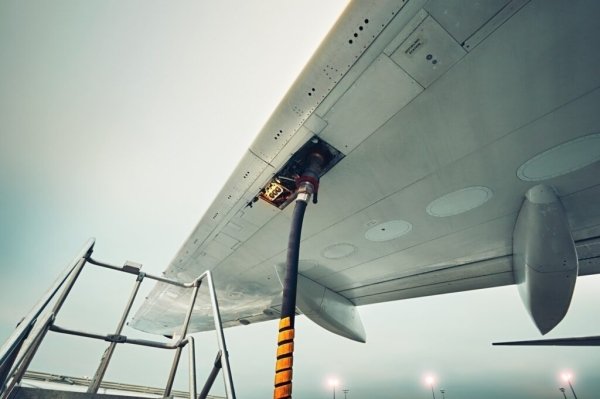
Aviation fuel prices surged last week as the shipping blockade of the Strait of Hormuz continued and the hopes of an immediate peace deal faded.
According to the Jet Fuel Price Monitor, the global average jet fuel price rose 8.2% from the previous week to $159.08/bbl for the week ending August 14, 2026.
The aviation fuel prices had dropped to $146.93 over the possibility of a deal on the opening of the Strait of Hormuz.
The Aviation fuel price is the lowest in the Middle East at $148.7 and the highest in Latin America and the Carribean at $165.02.
Amid these market shifts, the Sultanate of Oman recorded a 9.2% surge in aviation fuel production and a 20.9% increase in exports during the first six months of 2026.
For comparison, aviation fuel prices stood at $127.06/bbl for the week ending July 10, $119.13 for the week ending July 3, and $116.63 for the week ending June 26.
On a year-to-year basis, jet fuel prices have surged by 77.8% since 2025. The sharpest regional price increases occurred in Europe and the CIS (8.7%), followed by the Middle East (8.4%), Africa (8.3%), Asia and Oceania (7.5%), and North America (5.6%).
Middle Eastern carriers saw a 14% year-on-year decrease in demand. Capacity fell 11% year-on-year, and the load factor was 76.3% (-2.6 ppt compared to June 2025). The impacts of the Iran war continue to cause a highly negative year-on-year traffic comparison, but the rate of decline halved month-to-month since April.
This reflects both the gradual normalization of airline operations across the region and the lower comparison base as traffic in June 2025 was impacted by the military strikes that month.
According to International Air Transport Association, Fuel has always been one of the airline industry’s largest costs. However, with war in the Middle East raising both prices and volatility in energy markets, buying the fuel to keep planes flying now consumes almost a third of operating costs. That will amount to a $350 billion spent by airlines in 2026, according to the financial outlook for airlines.
While airlines in the aggregate are expected to remain profitable in 2026, the pressure on margins is clear. They were a paltry 4.2% in 2025. With the rise in fuel prices, they will shrink to 2.0%.
In these circumstances, airlines have no choice but to try to pass higher fuel costs on to their customers. But that is never a permanent remedy. While demand remains solid, tolerance for higher travel costs is also likely to have its limits, said IATA.