Labo will go to the committee on Monday evening and 14 ministers are expected within the program:
Housing, investment, economic real estate, and mining taxes are heavy files on the table
232 articles that outline the features of financial policy and programming for all financial directorate officials
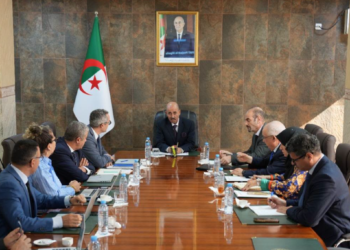
On Monday evening, attention turns to the Finance and Budget Committee of the National People’s Assembly, where Finance Minister Mohamed Lamine Labou presents the draft finance law for the year 2027, in a station whose importance goes beyond presenting government numbers and measures, to place the state’s financial policy before a broad legislative debate regarding spending priorities, sources of revenue, and ways to finance development and continue social commitments during the coming year.
This date gains additional importance because it comes at the beginning of a new parliamentary term, and in front of a finance committee that begins its work under a new composition, which makes the study of the project an early test of the ability of the legislative institution to absorb the details of the text and discuss its economic and social effects efficiently. The importance of this test becomes clear given the size of the document itself, which extends to 275 pages and includes 236 articles, dealing with multiple areas, from taxes, fees, and customs to investment, economic real estate, and the mining sector, through public accounting and fiscal control. And the management of some public funds and resources.
The matter is not, therefore, a technical financial text with limited impact, but rather a legislative framework whose provisions overlap with the activity of institutions, the obligations of taxpayers, treasury resources, and the mechanisms for implementing public policies, which makes understanding its content require careful reading that does not limit itself to presenting its articles, but rather examines its objectives and the results expected from them.
In order to inform the representatives of the various aspects of the project, the committee’s work will continue through hearing sessions that include 14 ministers and officials from the sectors and bodies concerned with finance, allowing for a deeper dive into the details of the text from its technical and sectoral aspects. These meetings will also include officials from the management of state property and the General Directorate of Taxes, along with budget officials and other relevant frameworks and bodies, with the aim of clarifying the proposed measures, explaining their implications for revenues and expenditures, and answering the concerns of the representatives regarding the mechanisms for their implementation. This stage is particularly important, because it allows the transition from a general reading of the project materials to a discussion of its financial and legal backgrounds, and an understanding of its direct impact on institutions and citizens, which helps the committee prepare a discussion based on accurate data and sectoral experience before completing the study of the text and preparing its report.
This legislative appointment comes shortly after Mohamed Lamine Labou assumed the finance portfolio, as he assumed his duties on September 2nd, succeeding Abdelkarim Bouzard, after serving as Governor of the Bank of Algeria since February 2026. This career path carries an important significance, given that the transition from leading the monetary institution to supervising the Ministry of Finance combines experience in the banking and monetary field with direct responsibility for the state’s budgetary and fiscal policy. However, the challenge facing the new minister is not related to his previous experience alone. Rather, it is capable of translating financial trends into clear implementation mechanisms, and achieving harmony between mobilizing resources, rationalizing spending, and accompanying economic activity.
The draft finance law for the year 2027 comes in a context in which record numbers for the Algerian budget are renewed from year to year, with the expansion of the state’s needs and the increasing requirements for financing public services, housing, health, education, infrastructure, and investment. What is recorded in one year as an unprecedented financial envelope soon becomes exceedable in the following year, due to the expansion of government programs, the rise in management costs, the completion of projects, and the continuation of social obligations. This path reflects the expansion of the state’s financial role, but at the same time it raises a fundamental question, which is how The continued increase in credits can be transformed into a tangible improvement in services and the level of development and production.
Therefore, reading the budget is not complete by simply comparing it to the previous year, but rather requires considering the nature of expenditures, their sources of funding, the level of project implementation, and the results they achieve. From this standpoint, the importance of Project 2027 does not lie in the magnitude of its financial cover alone, but rather in the extent of its ability to respond to growing needs while enhancing the effectiveness of spending and the sustainability of resources.
The numbers contained in the project’s preliminary data indicate expected revenues amounting to 9.251 billion dinars, compared to payment appropriations estimated in the version being read at about 17.883 billion dinars. The arithmetic difference between the two numbers reflects the size of the financing needs associated with implementing the budget. However, determining the budget deficit requires referring to the approved official tables and the methodology for calculating it, instead of automatically equating this difference with the final deficit. This point gains special importance in the parliamentary debate, because understanding the structure of revenues and expenditures. Funding sources are the basic input for evaluating the sustainability of financial options.
At the level of social and investment spending, the importance of reconciling between protecting purchasing power and financing projects that support economic activity in the long term is highlighted. Social transfers contribute to supporting families and beneficiary groups, while public investment allows the development of infrastructure and the mobilization of broad sectors, from public works and transportation to industry and services. When projects are implemented on time and the management of funds is improved, public spending can generate impacts that go beyond its direct value, through creating job opportunities, expanding the activity of institutions, and enhancing fiscal resources in the future. In this context, the project is based. There are economic growth expectations of 4.2 percent in 2027, rising to 5 percent outside hydrocarbons, with industrial growth expected at 6 percent. These hypotheses highlight the importance of continuing to diversify the national economy and expanding the contribution of productive sectors to wealth creation, in a way that supports the state’s ability to mobilize more sustainable resources. The more economic activity expands outside hydrocarbons, the greater the chances of expanding the fiscal base and reducing the sensitivity of public revenues to fluctuations in energy markets.
The project maintains the social dimension through measures related to supporting the housing program in the rental sale format, and extending some tax exemptions and reductions related to food supplies, production inputs, and fixed Internet services. These measures fall within the framework of continuing to accompany families and economic activities, in addition to the presidential directives related to including wage increases and not imposing taxes that affect the purchasing power of the middle class and people with limited income, according to the Cabinet statement issued on October 4, 2026. On the other hand, the project aims to enhance resource mobilization and modernize collection tools. And oversight, by reviewing some tax provisions and expanding obligations related to digital activities and electronic transactions. Provisions are also highlighted related to expanding the mandatory appointment of bookkeepers, and developing the framework regulating investment, economic real estate, and the mining sector. These measures reflect an effort to improve financial transparency, keep pace with economic transformations, and provide more appropriate conditions for the implementation of projects, with the importance of clarity of legal rules and proportionality of compliance obligations with the nature and size of institutions.