The country is offering one of the world’s cheapest citizenship-by-investment programmes at a time when the European Union is increasing pressure on Caribbean schemes long used by wealthy Africans.
Under the programme, foreign investors and eligible family members can obtain citizenship without living in the country or buying property. Applicants must contribute at least $90,000 to the National Transformation Fund and pay additional processing fees.
Economic pressures drive the scheme
The government introduced the programme to attract foreign currency and create a new source of public revenue.
Specifically, the money is intended to support education, healthcare, energy and infrastructure in an economy that remains vulnerable to external shocks.
São Tomé and Príncipe depends heavily on imports, tourism, remittances, foreign assistance and agricultural exports, particularly cocoa and palm oil, which together accounted for more than half of the country’s exports in 2024.
However, volatile commodity prices and persistent electricity shortages have weakened export earnings, disrupted businesses and slowed economic activity.
The IMF expects economic growth to slow to just 0.4 per cent in 2026, largely because of the prolonged energy crisis and other external shocks.
Consequently, the passport programme gives the government another potential revenue source as it tries to fund development projects and ease pressure on public finances.
How the programme works
The island nation launched the programme on August 1, 2025, and is still promoting it as a new source of foreign currency and development funding.
A single applicant must contribute $90,000 and pay a reported $5,750 processing fee, while an additional $5,000 allows the inclusion of up to three eligible family members.
Applicants do not need to relocate, pass a language test or purchase property, as the process can instead be completed remotely, subject to financial and criminal background checks.
The passport offers visa-free or simplified access to more than 60 destinations, including South Africa, Singapore and Hong Kong. However, it does not provide visa-free entry to the Schengen area.
Early demand for the programme
Notably, São Tomé and Príncipe received 98 applications in the programme’s first five months, according to citizenship advisory firm Immigrant Invest.
Of these, 27 were approved, with processing taking an average of two and a half months, while the country issued its first passport under the scheme in January 2026 and continues to seek more applicants.
African demand for second passports
The programme could appeal to wealthy Africans who face repeated visa applications, high rejection rates and limited business mobility, especially as the continent lacks a widely accessible common passport or an EU-style visa system.
More broadly, African applicants lost an estimated €60 million in non-refundable fees from rejected Schengen visa applications in 2024, while several African countries recorded rejection rates above 45 per cent.
These barriers have pushed some African investors towards Caribbean citizenship programmes. In 2025, Nigerians accounted for about 16 per cent of applications to Grenada’s scheme, while South Africans and Egyptians each represented 3 per cent.
In the fourth quarter alone, Grenada received 128 applications and processed 161, approving 154 and rejecting seven.
EU pressure creates an opening
Meanwhile, São Tomé and Príncipe’s programme is gaining attention as the European Union increases pressure on Caribbean citizenship schemes.
The EU has warned Antigua and Barbuda, Dominica, Grenada, Saint Kitts and Nevis, and Saint Lucia to end their programmes by 2028 or risk losing visa-free access to the Schengen area.
Brussels has raised concerns about weak screening, money laundering, identity fraud and limited links between applicants and the countries granting citizenship.
Caribbean programmes are also more expensive, with minimum contributions generally starting at about $200,000 and reaching $250,000.
Against this backdrop, São Tomé and Príncipe is offering an African alternative at less than half the cost, although without Schengen access.
Nauru offers a similar alternative
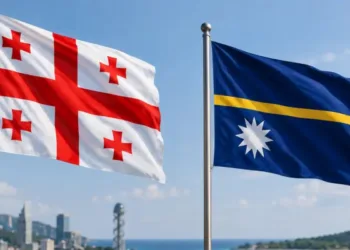
The scheme places São Tomé and Príncipe alongside Nauru, which is offering citizenship from $90,000 until December 2026 to fund climate adaptation as rising seas threaten coastal communities.
While Nauru is raising money to relocate people and infrastructure damaged by climate risks and past phosphate mining, São Tomé and Príncipe is seeking revenue to address weak growth, energy shortages and limited export earnings.
However, São Tomé and Príncipe will still face scrutiny over whether its screening system can prevent money laundering, sanctions evasion and identity fraud.