Airbnb faces its second great metamorphosis, a change that definitively distances it from the principle of the collaborative economy with which it was born in 2008. On that date Brian Chesky, Joe Gebbia and Nathan Blecharczyk, the three co-founders of the company, decided to share their house in San Francisco to get extra money and alleviate the lack of accommodation in the city, offering three inflatable mattresses in their apartment. None of them assumed that this gesture would end up becoming, 18 years later, a business colossus with 9 million ads and a market capitalization close to 80,000 million dollars (68,719 million euros). The first metamorphosis was completed: from the collaborative economy to capitalism without complexes, with a significant part of the ads in the hands of a few owners since 2018.
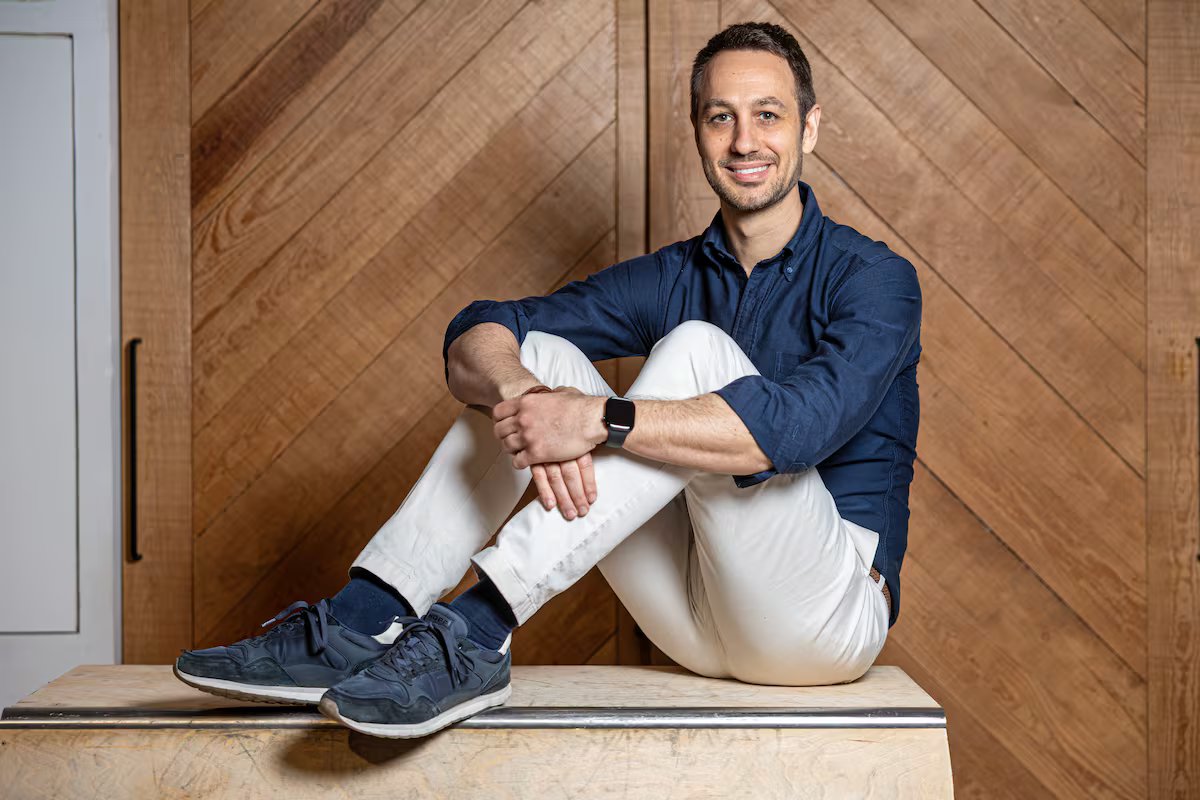
In the latest summer release, made public on May 21Airbnb announced that it would add “thousands of boutique and independent hotels” in 20 destinations, selected for their location, design and hospitality. Was Jaime Rodríguez de Santiago, general director of Airbnb in Spain and Portugalwho provided more details of the start of this new strategy in a speech at the South Summit last Thursday. “Madrid has been selected along with Los Angeles, San Francisco, New York and Paris as one of the first strategic destinations for this deployment,” he noted during his speech.
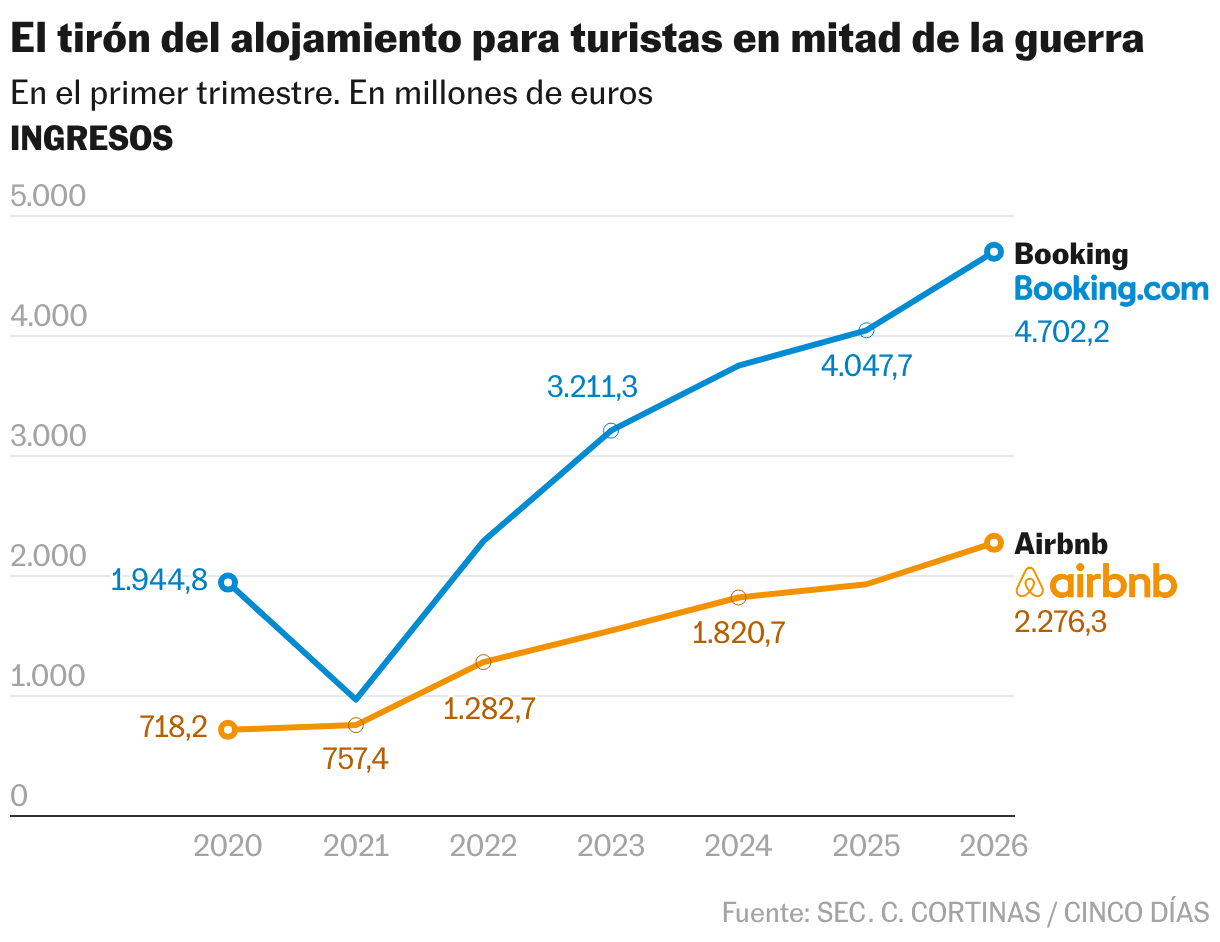
The choice of these cities, with restrictive if not prohibitive legislation (In September 2023, New York became the first city in the world to ban it) against short-term accommodation, is not coincidental. And it clearly marks what the company’s future will be: a slow but continuous transition from tourist apartments to hotels, approaching the Booking model, which combines both types of accommodation. At the end of the first quarter, Booking had 28 million listings worldwide (21.4 million were hotels and 6.6 million were houses and apartments), triple that of Airbnb.
Rural tourism and events
Regardless of size, the profitability of the hotel business exceeds that of tourist apartments and this can be seen in the income statement of both companies. Booking closed the first quarter with revenues of 4,702 million euros, 16% more than in the same quarter of 2025, and a net profit of 920 million euros, triple the 283 million recorded twelve months earlier. In the same period, Airbnb’s revenue grew by 18% to 2,276 million, a new all-time high, while net profit increased 3.8% to 136 million, far from the 224 million reached in the same period of 2024.
Rodríguez de Santiago, however, placed emphasis on other aspects. “The hotels incorporated into Airbnb seek to respond to a very specific demand: short stays, professional trips, weekend getaways and last minute reservations.” The first deployment in Madrid will take place with 79 hotels, of which at least 37 were already active this weekend, with a prominent role of the NH brand (Minor Hotels), with 18 properties available, and Vincci, with 6. Far behind are Sercotel, Barceló or the Dutch The Social Hub, with 2, and then Catalonia, Grupotel Ocean Drive or Zenit, with 1, among others.
Another turn of the company has been its commitment to large events and rural tourism. In the first case, Airbnb became the official accommodation of the summer Olympic games in Paris in 2024 and the winter Olympic games in Milan in 2026 and it will also be the same for the next soccer World Cup that will be held starting next June 11 between the United States, Mexico and Canada: “The events act as a magnet to attract clients who had never used the platform. Only in the last two Olympic games held in Paris and Milan, the campaigns generated close to 1,000 million global impressions.” In the case of rural tourism will invest 40 million euros in a three-year plan for projects to promote new tourist destinations, aid for local commerce and projects to revitalize towns in emptied Spain.