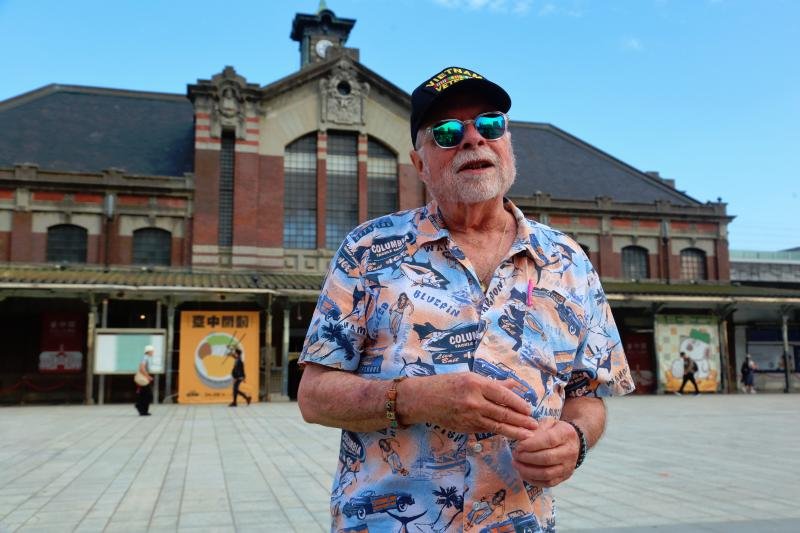
Back for the first time since 1973, TC Brown revisits old memories and discovers how much the nation has been remade
-
By TC Brown / Contributing writer
I was 18 and a naive US Air Force airman when I first set foot on Taiwan in 1968. I left as a more mature, somewhat wiser 23-year-old.
Despite transitioning to an adult in those important, formative years, I didn’t think much about coming back. Until recently. Last month, I returned to Taiwan for the first time in 53 years. It was not even remotely like the country I left in 1973.
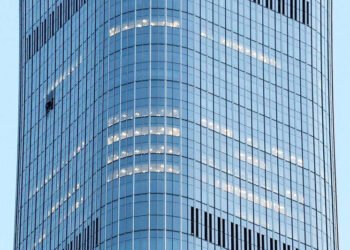
When I departed, Taiwan was a slow-moving, impoverished developing nation under martial law. Outside of the cities, people in conical bamboo hats hand-tilled expansive rice fields that dominated the countryside. Few city buildings, even in Taipei, stretched higher than 10 stories. The Grand Hotel on a hill dominated the capital then, but now hundreds of buildings at least 100 meters or more tall, plus Taipei 101 at 509 meters, create a once-unimagined, contemporary world-class skyline.
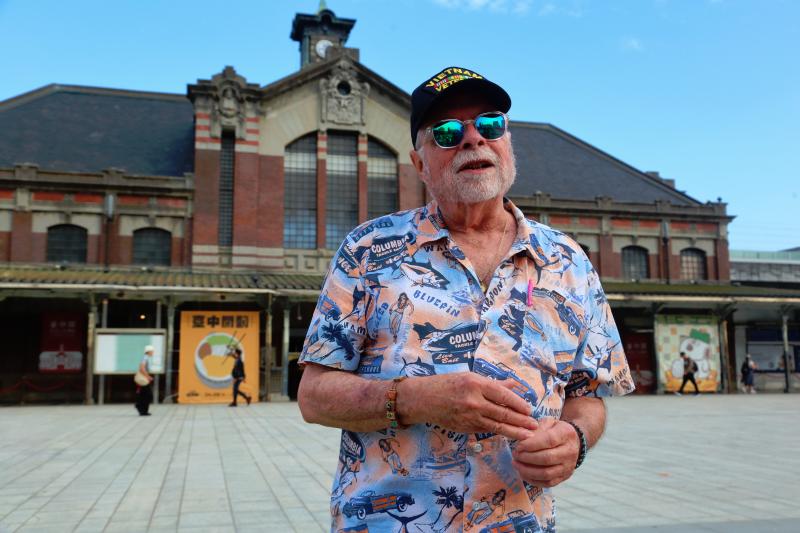
Photo: David Frazier
In 1968, bicycles, scooters, taxis, smoke-spewing buses, some automobiles, hand-pulled-and-bicycle pedicabs and the occasional water buffalo towing a cart competed for space on city streets.
THE ‘DIRTY DOZEN’
Many of us American servicemen stationed at Ching Chuan Kang Airbase (清泉崗空軍基地) hopped one of those buses we called the “CCK Smoker,” named for its propensity to spew tailpipe clouds, to go into Taichung and the “Dirty Dozen.” The Dozen referred to a couple of blocks on Wuchuan Road (五權路) that offered escape in the form of bars, booze, and, well, broads, if you’ll excuse the expression.
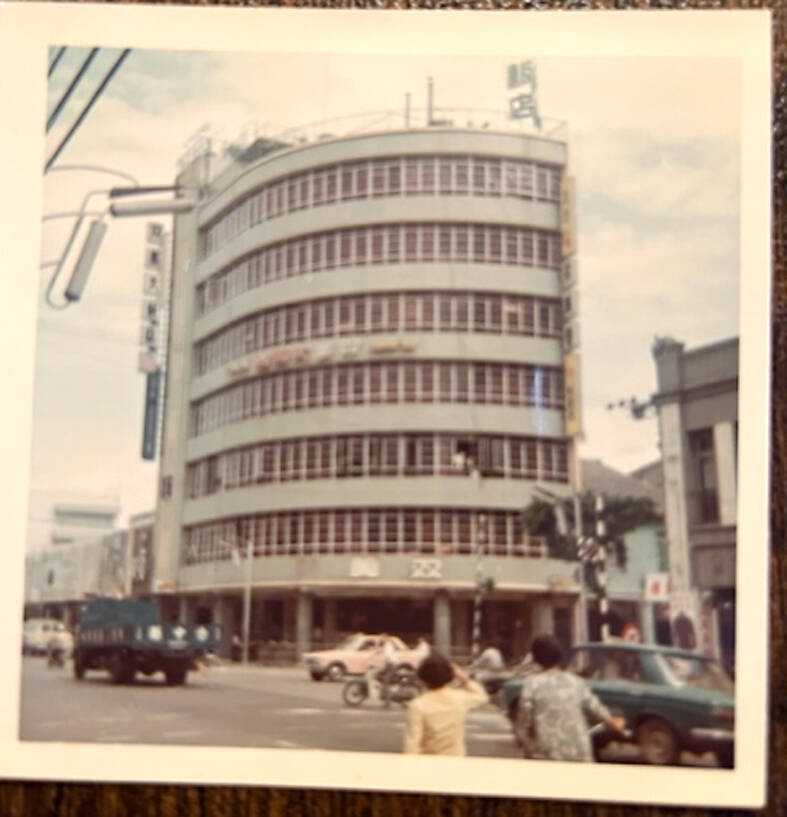
Photo: TC Brown
That neighborhood is a hallowed place for many American memories, both good and bad. I was a military policeman who worked on the Dozen for two years. I got chills revisiting and remembering the many nights I walked those streets, but memories are all that remain today. The boulevard is now wider with a median and the buildings have become shops and restaurants.
In those days, many people lived in unsteady looking shanties, precariously perched high over benjo ditches fouled by tainted water. The bathrooms in these homes were often simple holes in the floor. Fires kicked up small plumes of curling smoke everywhere, burning garbage, charcoal and human waste, adding pollutants to air already dirty with contaminates.
As it was in 1968, my mind was blown again on my recent trip, but for far different reasons. As I looked out over Taipei’s skyline from the top floor of Taipei 101 on my first day back, I could hardly digest what I saw.
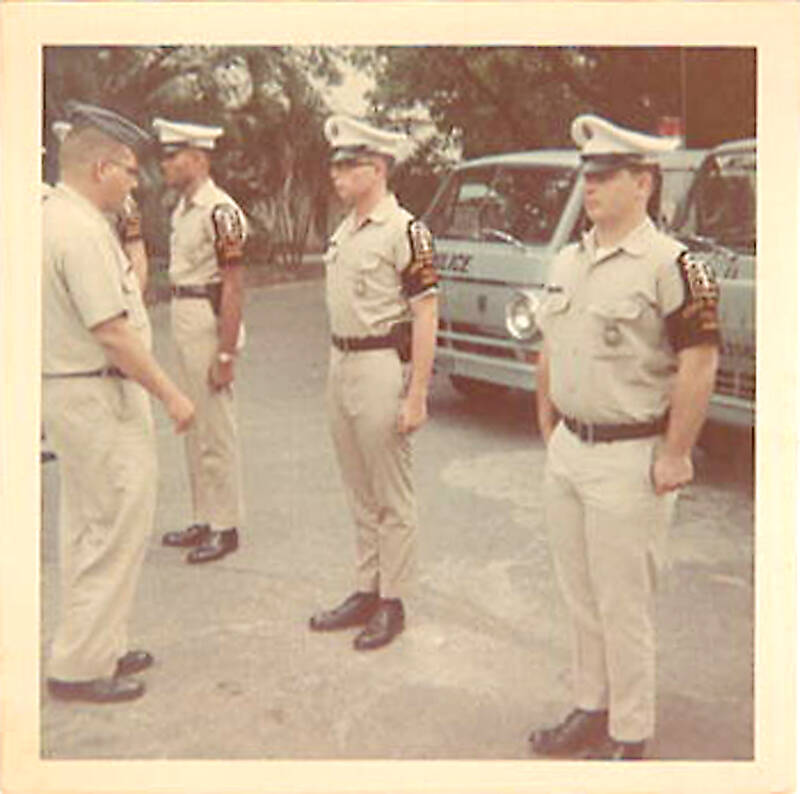
Photo: TC Brown
The city stretches seemingly to the distant mountains from all sides with structures too numerous to count. One particular catchphrase on the inside of one of Taipei 101’s windows seemed particularly pertinent: “Stay rooted but aim high.”
Over three weeks, as I traveled down the west coast to Taichung and Kaohsiung and then up the east coast to Taitung and Yilan County’s Jiaosi Township (礁溪) before heading back to Taipei, I came to believe that window slogan was actually a bedrock principle for Taiwan.
MODERNIZED, YET ROOTED
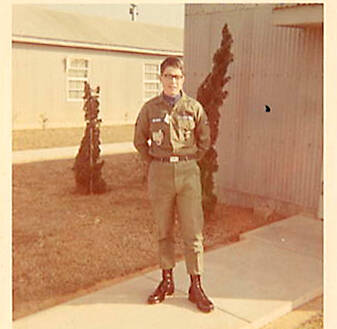
Photo: TC Brown
Movement 50 years ago was much slower. A bus from Taipei to Taichung traveled over unpaved or crumbling rural roads that were sometimes only one-lane, competing with herds of zig-zagging scooters and motorcycles, along with the occasional ox cart. It took at least three hours.
Trains were a preferred method of travel and cheap, but often stopped at every backwater community along the way, adding hours to a long journey.
Today, Taiwan is a worldwide “foodie” destination, a claim it could definitely not make in 1968. Decent restaurants existed in Taipei and elsewhere, but many people grabbed grub from street vendors’ carts that we called “noodle stands.”
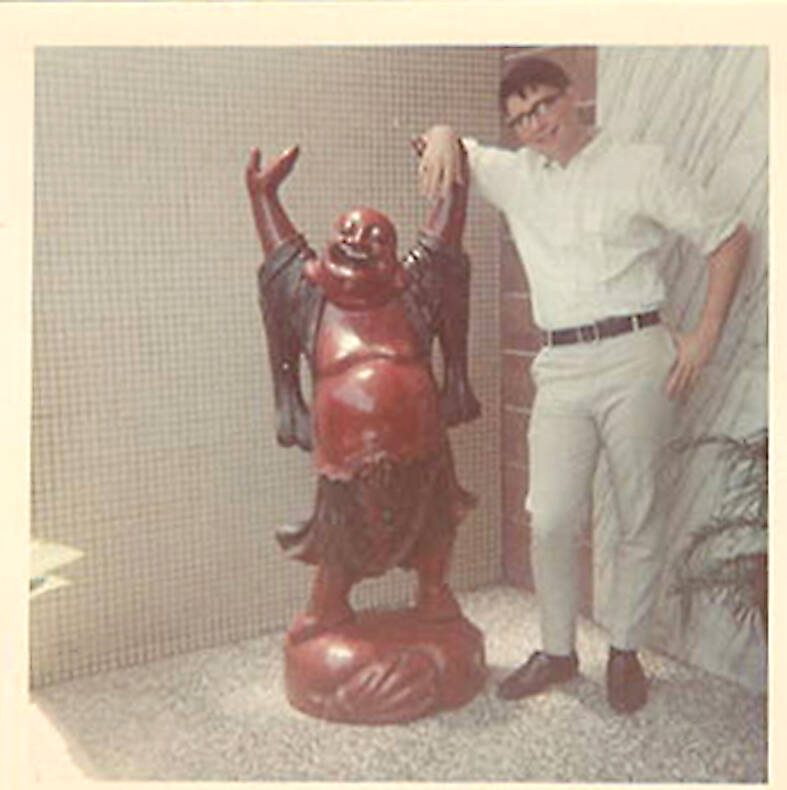
Photo: TC Brown
The locals loved this food, but Americans were more skeptical. Hanging chicken feet always made me pause, as did “delicacies” like small chewy jet-black eggs, pig’s blood cake, duck tongue, braised intestines and a soup with floating tadpoles.
Another common food was biandang, an affordable, filling meal in a tin box sold at train stations — now popular in the US as bento boxes, using the Japanese spelling. They are still around.
Something that was not around, but is now on nearly every corner, are convenience stores like 7-Eleven. In earlier times folks shopped daily at wet markets for fresh food because very little refrigeration or air conditioning existed. Small mom-and-pop shops sold staples like rice, cooking oil, cigarettes and candy. There were no McDonalds, Starbucks or Pizza Huts. On this trip, I saw these American fast-food joints were popular, but I was happy to see fewer obese people than in the US. I ate more vegetables and fruit on my visit than I do in a couple of months back home.
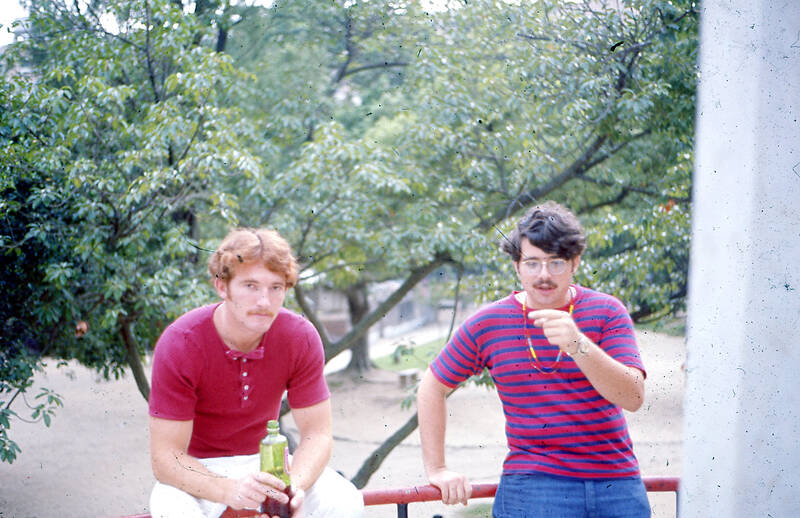
Photo: TC Brown
Taiwan’s transformation was breathtaking. The country is thoroughly modern, but a few things have not changed. Certainly the air is much cleaner now, but on occasion my nose picked up odd, foul smells — often in market areas — that took me back 50 years.
At the same time, I saw a people who remain rooted. Rooted in their religious and cultural beliefs, familial values and compassion and kindness, all traits I remembered from my first time around. I was impressed when I visited Longshan Temple and saw the enormous spread of offerings and people reverently kneeling and praying to their deities. That scene seemed to have changed little from decades ago.
And the generosity that I remembered was repeated again and again on this trip, with countless folks offering small gifts of appreciation or going out of their way to help. One man, after briefly meeting my friend Rick Mountain and I, gave us a giant bag of pineapple that he had just purchased for himself.
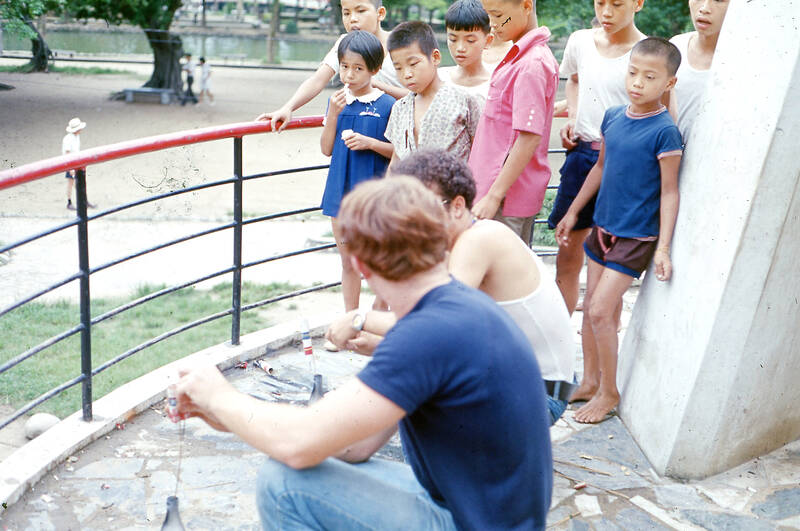
Photo: TC Brown
LASTING AMERICAN INFLUENCE
The theme of “roots” emerged in other ways during my trip, too. During the Vietnam War, about 10,000 US servicemen were stationed in Taiwan, with the majority at CCK in Taichung. Meanwhile, 5,000 American military troops a month came to Taiwan on R&R from Vietnam.
That widespread American presence ended in 1979, leaving behind multi-layered cultural influences that rippled across the land. Because my memoir Made in Taiwan about my early days on the island was published last year, historical researchers contacted me for interviews. In part, that prompted my return to Taiwan.
It turns out I was not the only one looking backward. Taiwanese academics have spent years trying to recover that American presence, such as the music locals heard over Armed Forces Radio Network Taiwan, which left long-lasting societal impressions.
Chu Meng-tze (朱夢慈) of Tainan National University of the Arts has studied the influence of American music for 10 years.
“So far there is not one document which can describe the whole US military coalition in Taiwan,” she says. “Basic work like this is missing.”
Lin Hao-li (林浩立) of National Tsing Hua University found over 200 disco tunes created by Taiwanese. That discovery revealed an American cultural influence that martial law censorship had nearly erased from the historical record.
I am elated by this research. The study of the past helps define the future, which for Taiwan is as important as ever and is constantly in today’s headlines.
I spoke to many people about the future, and frankly I found no one overly worried about China, which surprised me some. But Taiwanese pointed to their strong military, regional allies including America and the “Silicon Shield,” a reference to the island’s dominance with microchip production, as reasons they remain confident.
I know that the 18-year-old who first stepped onto Taiwan soil in 1968 would not recognize this Taiwan. He would not recognize himself, either.
Taiwan and I grew up separately over the ensuing years, shaped by different cultures.
But by once again walking these streets so far from home after 53 years, I felt something familiar. I discovered that it was a comprehensive connection to a culture I’ve long admired but had lost touch with. And I relearned that we are all the same, but different.