Monday, May 4, 2026
    The GeoStrategic Consensus
    No Result
    View All Result
    • Login
    • HOME
    • AMERICAS
      • Argentina
      • Brazil
      • Canada
      • Chile
      • Colombia
      • Costa Rica
      • Cuba
      • Dominican Republic
      • Ecuador
      • El Salvador
      • Greenland
      • Guatemala
      • Honduras
      • Mexico
      • Nicaragua
      • Panama
      • Paraguay
      • Peru
      • United States
      • Uruguay
      • Venezuela
    • ASIA-PACIFIC
      • Australia
      • Brunei Darussalam
      • Cambodia
      • China
      • Federated States of Micronesia
      • Fiji
      • Indonesia
      • Japan
      • Kiribati
      • Laos
      • Malaysia
      • Marshall Islands
      • Mongolia
      • Myanmar
      • Nauru
      • New Zealand
      • North Korea
      • Palau
      • Papua New Guinea
      • Philippines
      • Samoa
      • Singapore
      • Solomon Islands
      • South Korea
      • Taiwan
      • Thailand
      • Timor-Leste
      • Tonga
      • Tuvalu
      • Vanuatu
      • Vietnam
    • CARICOM
      • CARICOM – Non-English
        • Haiti
        • Suriname
      • CARICOM Associates
        • Anguilla
        • Bermuda
        • British-Virgin-Islands
        • Cayman-Islands
        • Curacao
        • Turks-and-Caicos
      • CARICOM English
        • Antigua and Barbuda
        • Barbados
        • Belize
        • Dominica
        • Grenada
        • Guyana
        • Jamaica
        • Montserrat
        • Saint Kitts and Nevis
        • Saint Lucia
        • Saint Vincent and the Grenadines
        • The Bahamas
        • Trinidad and Tobago
    • EURASIA
      • Armenia
      • Azerbaijan
      • Balarus
      • Georgia
      • Kazakhstan
      • Kyrgyzstan
      • Moldova
      • Russia
      • Tajikistan
      • Turkmenistan
      • Ukraine
      • Uzbekistan
    • EUROPE
      • Albania
      • Andorra
      • Austria
      • Bosnia and Herzegovina
      • Bulgaria
      • Croatia
      • Cyprus
      • Czech Republic
      • Denmark
      • Estonia
      • Finland
      • France
      • Germany
      • Greece
      • Holy See
      • Hungary
      • Iceland
      • Ireland
      • Italy
      • Kosovo
      • Latvia
      • Liechtenstein
      • Lithuania
      • Luxembourg
      • Malta
      • Monaco
      • Montenegro
      • Netherlands
      • North Macedonia
      • Norway
      • Poland
      • Portugal
      • Romania
      • San Marino
      • Serbia
      • Slovakia
      • Slovenia
      • Spain
      • Sweden
      • Switzerland
      • United Kingdom
    • MIDDLE EAST AND NORTH AFRICA
      • Algeria
      • Bahrain
      • Egypt
      • Iran
      • Iraq
      • Israel
      • Jordan
      • Kuwait
      • Lebanon
      • Lybia
      • Morocco
      • Oman
      • Palestinian Territories
      • Qatar
      • Saudi Arabia
      • Syria
      • Tunisia
      • Turkey
      • United Arab Emirates
      • Western Sahara
      • Yemen
    • SOUTH ASIA
      • Afghanistan
      • Bangladesh
      • Bhutan
      • India
      • Maldives
      • Nepal
      • Pakistan
      • Sri Lanka
    • SUB-SAHARAN AFRICA
      • Angola
      • Benin
      • Botswana
      • Burkina Faso
      • Burundi
      • Cabo Verde
      • Cameroon
      • Central African Republic
      • Chad
      • Comoros
      • Cote d’Ivoire
      • Democratic Republic of the Congo
      • Djibouti
      • Equatorial Guinea
      • Eritrea
      • Eswatini
      • Ethiopia
      • Gabon
      • Gambia
      • Ghana
      • Guinea
      • Guinea Bissau
      • Kenya
      • Lesotho
      • Liberia
      • Madagascar
      • Malawi
      • Mali
      • Mauritania
      • Mauritius
      • Mozambique
      • Namibia
      • Niger
      • Nigeria
      • Republic of the Congo
      • Rwanda
      • Sao Tome and Principe
      • Senegal
      • Seychelles
      • Sierra Leone
      • Somalia
      • South Africa
      • South Sudan
      • Sudan
      • Tanzania
      • Togo
      • Uganda
      • Zambia
      • Zimbabwe
    • HOME
    • AMERICAS
      • Argentina
      • Brazil
      • Canada
      • Chile
      • Colombia
      • Costa Rica
      • Cuba
      • Dominican Republic
      • Ecuador
      • El Salvador
      • Greenland
      • Guatemala
      • Honduras
      • Mexico
      • Nicaragua
      • Panama
      • Paraguay
      • Peru
      • United States
      • Uruguay
      • Venezuela
    • ASIA-PACIFIC
      • Australia
      • Brunei Darussalam
      • Cambodia
      • China
      • Federated States of Micronesia
      • Fiji
      • Indonesia
      • Japan
      • Kiribati
      • Laos
      • Malaysia
      • Marshall Islands
      • Mongolia
      • Myanmar
      • Nauru
      • New Zealand
      • North Korea
      • Palau
      • Papua New Guinea
      • Philippines
      • Samoa
      • Singapore
      • Solomon Islands
      • South Korea
      • Taiwan
      • Thailand
      • Timor-Leste
      • Tonga
      • Tuvalu
      • Vanuatu
      • Vietnam
    • CARICOM
      • CARICOM – Non-English
        • Haiti
        • Suriname
      • CARICOM Associates
        • Anguilla
        • Bermuda
        • British-Virgin-Islands
        • Cayman-Islands
        • Curacao
        • Turks-and-Caicos
      • CARICOM English
        • Antigua and Barbuda
        • Barbados
        • Belize
        • Dominica
        • Grenada
        • Guyana
        • Jamaica
        • Montserrat
        • Saint Kitts and Nevis
        • Saint Lucia
        • Saint Vincent and the Grenadines
        • The Bahamas
        • Trinidad and Tobago
    • EURASIA
      • Armenia
      • Azerbaijan
      • Balarus
      • Georgia
      • Kazakhstan
      • Kyrgyzstan
      • Moldova
      • Russia
      • Tajikistan
      • Turkmenistan
      • Ukraine
      • Uzbekistan
    • EUROPE
      • Albania
      • Andorra
      • Austria
      • Bosnia and Herzegovina
      • Bulgaria
      • Croatia
      • Cyprus
      • Czech Republic
      • Denmark
      • Estonia
      • Finland
      • France
      • Germany
      • Greece
      • Holy See
      • Hungary
      • Iceland
      • Ireland
      • Italy
      • Kosovo
      • Latvia
      • Liechtenstein
      • Lithuania
      • Luxembourg
      • Malta
      • Monaco
      • Montenegro
      • Netherlands
      • North Macedonia
      • Norway
      • Poland
      • Portugal
      • Romania
      • San Marino
      • Serbia
      • Slovakia
      • Slovenia
      • Spain
      • Sweden
      • Switzerland
      • United Kingdom
    • MIDDLE EAST AND NORTH AFRICA
      • Algeria
      • Bahrain
      • Egypt
      • Iran
      • Iraq
      • Israel
      • Jordan
      • Kuwait
      • Lebanon
      • Lybia
      • Morocco
      • Oman
      • Palestinian Territories
      • Qatar
      • Saudi Arabia
      • Syria
      • Tunisia
      • Turkey
      • United Arab Emirates
      • Western Sahara
      • Yemen
    • SOUTH ASIA
      • Afghanistan
      • Bangladesh
      • Bhutan
      • India
      • Maldives
      • Nepal
      • Pakistan
      • Sri Lanka
    • SUB-SAHARAN AFRICA
      • Angola
      • Benin
      • Botswana
      • Burkina Faso
      • Burundi
      • Cabo Verde
      • Cameroon
      • Central African Republic
      • Chad
      • Comoros
      • Cote d’Ivoire
      • Democratic Republic of the Congo
      • Djibouti
      • Equatorial Guinea
      • Eritrea
      • Eswatini
      • Ethiopia
      • Gabon
      • Gambia
      • Ghana
      • Guinea
      • Guinea Bissau
      • Kenya
      • Lesotho
      • Liberia
      • Madagascar
      • Malawi
      • Mali
      • Mauritania
      • Mauritius
      • Mozambique
      • Namibia
      • Niger
      • Nigeria
      • Republic of the Congo
      • Rwanda
      • Sao Tome and Principe
      • Senegal
      • Seychelles
      • Sierra Leone
      • Somalia
      • South Africa
      • South Sudan
      • Sudan
      • Tanzania
      • Togo
      • Uganda
      • Zambia
      • Zimbabwe
    No Result
    View All Result
    Agentially
    No Result
    View All Result
    Home AMERICAS Cuba

    Digital currency and Cuban economy: new ways to circumvent financial restrictions

    The Analyst by The Analyst
    April 15, 2026
    in Cuba
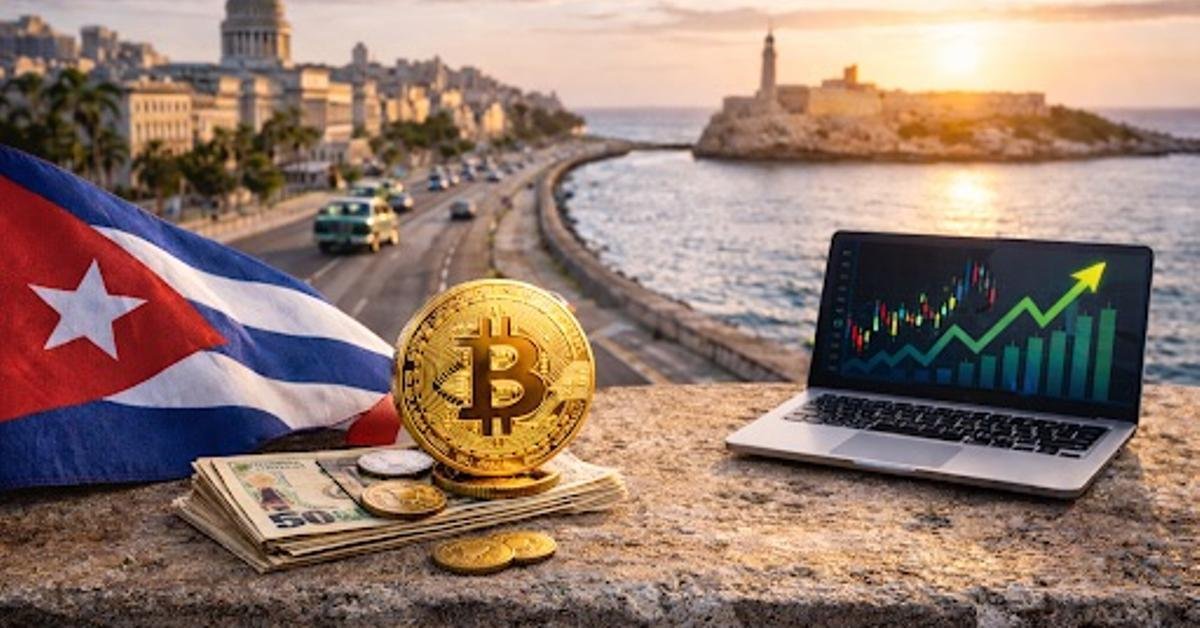
    Digital currency and Cuban economy: new ways to circumvent financial restrictions


    A monetary system under structural pressure

    The Cuban economy operates in an environment of prolonged currency restrictions, with limited access to international financial markets and a strong dependence on internal foreign currency allocation mechanisms. This tension has been one of the factors that has driven monetary adjustments and a growing fragmentation of the payment system.

    READ ALSO

    ‘Feeling Positive: The Cuban Box Project’

    Venezuela: Venezuelans demand release of political prisoners after Machado’s call

    In recent years, the country has moved towards de facto partial dollarization schemes, with a greater presence of foreign currency in key sectors of domestic trade and in operations linked to imports. This phenomenon has not replaced the Cuban peso as the official currency, but it has reduced its functional role in certain economic transactions.

    Exchange restrictions and expansion of parallel circuits

    Since 2021, the Central Bank of Cuba recognizes virtual assets and establishes a specific regulatory framework for their use, including the possibility of authorizing and licensing service providers linked to cryptocurrencies. This step placed digital assets within a regulated category, differentiating them from completely informal financial flows and opening a legal space for their operation in the country.

    Beyond the control focus, the measure can also be interpreted as an implicit recognition of the functional role that these technologies can play in environments with restrictions on access to currencies and limitations in the international payments infrastructure. In practice, the regulatory framework introduces a path of progressive integration of digital tools that operate on decentralized systems, but that can be adapted to specific transfer and settlement needs.

    In this scheme, cryptocurrencies cease to be a peripheral phenomenon completely unrelated to the formal financial system and become part of a hybrid environment where traditional mechanisms and solutions based on blockchain technology coexist. This type of approach has allowed, at least in regulatory terms, to explore more flexible models of financial interoperability in contexts of high external restriction.

    The evolution of the regulatory framework in subsequent years points to a selective opening towards specific uses of digital assets, especially in cross-border operations, where speed, technical traceability and the reduction of intermediaries can provide operational efficiency compared to conventional banking channels.

    Legal recognition of digital assets

    Since 2021, the Central Bank of Cuba recognizes virtual assets and regulates their use under a specific framework, including the possibility of licensing service providers related to cryptocurrencies. The stated objective has been to frame these operations within a state financial control scheme rather than leaving them completely outside the regulated system.

    More recently in 2026, licenses have been authorized for a limited number of entities to use digital assets in cross-border payments in an attempt to facilitate international operations in a context of currency shortages.

    Limited and functional use of cryptocurrencies

    Despite the existing regulatory framework, the use of cryptocurrencies in Cuba shows a gradual and functional evolution within certain economic circuits. Although it is not a massive or uniform adoption, in practice they have been incorporated as an operational solution in specific contexts linked to digital payments and international transfers.

    Expanded access to mobile internet since 2018 has been a determining factor in this process, allowing greater connectivity and facilitating the use of digital financial services. This change has opened the door to new forms of money management that do not depend exclusively on traditional banking infrastructure.

    In parallel, the analysis of the evolution of digital assets and their behavior in different market cycles has generated a growing production of studies and projections on their possible future development. An example of this type of approach can be found in research on the stablecoin ecosystem, such as the USDC price predictionwhich serve as a reference to understand stability and demand dynamics within the crypto market.

    Privacy and niche digital assets

    Within the cryptocurrency ecosystem, certain privacy-focused assets have generated interest in specific segments of users. Monero is one of the most cited cases in this area due to its design aimed at the confidentiality of transactions.

    Unlike more transparent networks, its architecture reduces the traceability of operations, which has contributed to its discussion in contexts where financial exposure can be perceived as a risk. However, this same feature places these technologies in a global regulatory debate that has not yet been resolved.

    In this environment, non-custodial exchange solutions have also emerged that allow the conversion of assets within the crypto ecosystem without traditional account intermediation or centralized storage of funds. These options include services such as change monero coinwhich facilitate the conversion of Monero to other digital assets within automated exchange platforms, cryptocurrency exchange.

    Structural limitations of adoption

    The impact of digital currencies on the Cuban economy is conditioned by specific material factors such as availability of devices, connection stability, access to exchange platforms and technical knowledge.

    Added to this is the general fragility of the energy and digital system, which directly affects the possibility of sustaining infrastructures dependent on constant connectivity. This limits its use to specific niches without evidence of systemic integration.

    Conclusion

    The development of digital currencies in Cuba can be interpreted as a process of progressive adaptation of the economic system to new financial tools. In this context, its role has been to provide operational alternatives that expand the options available in an environment of persistent restrictions.

    More than an isolated phenomenon, its evolution is integrated into a broader dynamic of gradual transformation of the mechanisms of exchange and transfer of value. In this sense, its relevance is increasingly linked to the ability of the economic system to incorporate technological solutions that provide flexibility, especially in an environment where currency management and payment efficiency continue to be key factors.


    Source link

    Related Posts

    ‘Feeling Positive: The Cuban Box Project’
    Cuba

    ‘Feeling Positive: The Cuban Box Project’

    May 4, 2026
    Venezuela: Venezuelans demand release of political prisoners after Machado’s call
    Cuba

    Venezuela: Venezuelans demand release of political prisoners after Machado’s call

    May 4, 2026
    Tell the reality, despite everything
    Cuba

    Tell the reality, despite everything

    May 3, 2026
    An NGO committed to freedom
    Cuba

    An NGO committed to freedom

    May 3, 2026
    Accidents: A bus accident on the National Highway leaves 48 injured
    Cuba

    Accidents: A bus accident on the National Highway leaves 48 injured

    May 3, 2026
    Russia: Sweden boards another tanker suspected of being a ghost fleet
    Cuba

    Russia: Sweden boards another tanker suspected of being a ghost fleet

    May 3, 2026
    Next Post
    UPP highlights concerns over IMF report on Dominica’s economic outlook

    UPP highlights concerns over IMF report on Dominica’s economic outlook

    POPULAR NEWS

    Justin Bieber fans flood Coachella festival for headlining show – Entertainment

    Justin Bieber fans flood Coachella festival for headlining show – Entertainment

    April 20, 2026

    Over 600 flee homes as Army, NPA clash in Negros Occidental

    April 21, 2026

    Ex-DPWH exec recalls P800-M ‘delivery’ to Zaldy Co 

    April 20, 2026

    Former PM Paluckas suspends party membership, to waive immunity over criminal probe

    April 24, 2026
    Pres. Ali challenges CARICOM to transform into health research powerhouse

    Pres. Ali challenges CARICOM to transform into health research powerhouse

    April 23, 2026

    EDITOR'S PICK

    Phillip defends $3.4b housing deal

    April 16, 2026

    14:33 Belarusian MTZ more than doubles output of high-horsepower tractors Economy

    April 21, 2026
    The most stronghold is called Schellenberg

    The most stronghold is called Schellenberg

    April 24, 2026
    Vance travels to Hungary to support Orbán before crucial election

    Vance travels to Hungary to support Orbán before crucial election

    April 22, 2026

    Recent Posts

    • Drunk-driving crash at east-coast beach town kills teen passenger
    • China denounces Japan, EU over South China Sea
    • Rising number of young people engaged in gang violence reflects systemic failures, says expert
    • More than just PR problem – Editorial

      © 2026 Agentially - Navigating shifting sovereignties and global risk .

      Welcome Back!

      Login to your account below

      Forgotten Password?

      Retrieve your password

      Please enter your username or email address to reset your password.

      Log In
      No Result
      View All Result

        © 2026 Agentially - Navigating shifting sovereignties and global risk .

        This website uses cookies. By continuing to use this website you are giving consent to cookies being used. Visit our Privacy and Cookie Policy.