Most people think that lung cancer is a disease that only happens to people who smoke. But cardiothoracic and vascular surgeon, Dr. Duane Sands, says people can get lung cancer even if they don’t smoke.
“Generally, we associate lung cancer with people who smoke. In The Bahamas, more people get lung cancer than those that do smoke,” said Sands.
People who smoke, the doctor said should “stop”. He said people should also be wary of second-hand smoke, as well.
“Second hand smoke is a concern for people who work in an environment where smoke is in the air,” he told The Nassau Guardian. He said that the risk is higher than a non-smoker.
Lung cancer is caused by harmful cells in a person’s lungs that grow, unchecked. There are many cancers that affect the lungs, but the term “lung cancer” is used for two main kinds – non-small cell lung cancer, and small cell lung cancer.
Sands said lung cancer affects the lining of the airways or small air sacs.
“Lung cancer is one of these cancers that historically tends to not carry the best prognosis, although some of the new diagnostic and treatment options have changed that outlook.”
In determining lung cancer, the surgeon said for people that do smoke, a screening program using low dose CT scans as opposed to chest x-rays would be in order, but he encourages people to talk to their doctor.
Sands said in general, as with most issues in medicine, alignment with a competent, compassionate, capable technician is the way to get timely diagnosis and appropriate diagnosis.
Some of the symptoms he said include a cough that does not go away, unexplained weight loss, coughing blood. As well as trouble breathing or shortness of breath, chest pain or discomfort, and hoarseness.
“The assumption that every cough is the cold or flu is not an accurate assessment,” said Sands. “If you have a persistent cough, are losing weight, or coughing blood, you need to see your doctor.”
Sands said some people have no symptoms.
“Sometimes, it’s fortuitous. They’ve having something else done, have a chest x-ray done and it turns out to be cancer.”
He said he diagnoses a significant number of lung cancer cases, yearly, at least a dozen, and sometimes up to 20 cases.
Treatment for lung cancer Sands said varies from surgery for early-stage lung cancer, to surgery and chemotherapy and radiation for more advanced stages.
The general staging for lung cancer is Stage 0 (in-situ) – cancer is in the top lining of the lung or bronchus; it hasn’t spread to other parts of the lung or outside of the lung. Stage 1 cancer hasn’t spread outside the lung. Stage II cancer is larger than Stage 1, has spread to lymph nodes inside the lung, or there’s more than one tumor in the same lobe of the lung. Stage III cancer is larger than Stage II, has spread to nearby lymph nodes or structures or there’s more than one tumor in a different lobe of the same lung. Stage IV cancer has spread to the other lung, the fluid around the lung, the fluid around the heart or distant organs.
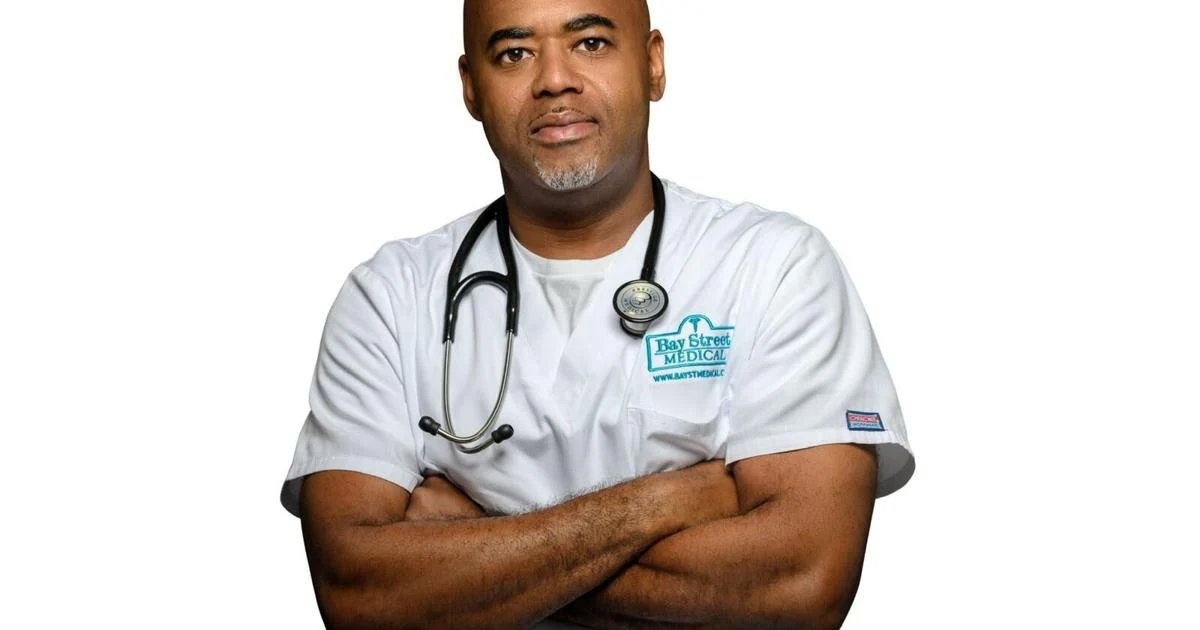
Dr. Tyneil Cargill’s lung cancer diagnosis was the news that resonated over the weekend, as it made the rounds on a crowdfunding site with request for assistance to help in Cargill’s fight against lung cancer.
The organizer, Jayla Cargill, the doctor’s daughter, said her dad received “life-shattering news” on Tuesday, April 7, diagnosed with multiple cancer lesions on his left lung, one of which she wrote was obstructing the airways of his lower lung.
Her dad had surgery on Monday, April 13, performed by Sands and his team. She wrote that the aim was to remove any cancerous invasion of the lung and surrounding rib tissue within his chest cavity.
Cargill’s brother, Tony Cargill, told The Nassau Guardian that the surgery was successful as far as removing the lesions, which he said had to be tested. But he said his brother had a long way ahead of him, as far as his recovery.
“It’s heavy,” said Tony of his brother’s diagnosis. “It’s a heavy load … as if you got hit with something hard and you never saw it coming. When things like this happen to a loved one, it makes it difficult to handle.”
Tony said his brother had recently experienced flu-like symptoms which triggered him to do further testing and a pneumonia diagnosis. The x-rays, he said, showed something “suspicious” as he continued to seek answers.
In the GoFundMe, Cargill’s daughter said her dad’s surgery marked only the beginning of his “life-saving journey.”
“The road ahead, including home care, rehabilitative management, and monthly intravenous immunotherapy, is anticipated to exceed $30,000 per month for an estimated two years, until he reaches full remission and a cancer-free recovery.”
Three days after the crowdfund went live, $114,356 had been raised of the $300,00 goal.
Sands, who did not speak to Dr. Cargill’s case, said the most common cancer in The Bahamas for men is prostate cancer, and for women, it’s breast cancer.