The adjustment to public spending that the federal government is preparing to avoid the gasoline explosion derived from high oil prices due to the conflict in the Middle East could come from current spending and physical investment, considered analysts consulted by THE UNIVERSAL.
They agreed that there is room for belt-tightening in salaries and other items without putting the social programs and the operation of the public sector.
Furthermore, they highlighted that, unlike the previous six-year period, when Andrés Manuel López Obrador The savings that were in the stabilization funds were exhausted by more than 253 billion pesos, now there is a cushion of 127 billion pesos.
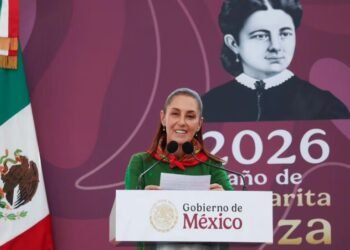
The president Claudia Sheinbaum He said yesterday in the morning conference that each week they are reviewing income and expenses with projections at the end of 2026 to evaluate where to make spending cuts to continue applying fuel stimuli in order to soften the price for consumers. consumers of gasoline and diesel.
This subsidy has an estimated weekly cost of 5 billion pesos, an amount equivalent to what was spent just last February by the Ministry of Health wave Secretariat of Security and Citizen Protection.
In the update of the 2026 macroeconomic framework contained in the General Precriteria for Economic Policy (PGPE) of 2027, the Ministry of Finance and Public Credit (SHCP) had already announced an adjustment.
He reported that net budget spending would go from 10 trillion 193 billion pesos to 10 trillion 140 billion, that is, 100 billion pesos below the amount approved by the Chamber of Deputies for this year.
The Ministry of Finance indicated that this reduction will come from both programmable and non-programmable spending.
The director of Economic and Financial Analysis at Banco Base, Gabriela Siller, stated that the government does have room to make adjustments without affecting social programs, while making spending more efficient.
“Unfortunately, they always tend to sacrifice resources intended for infrastructure of public spending and that is where they usually cut,” he lamented.
On the other hand, they announced more scholarships, which, although it is something positive, there is no longer any source, he pointed out.
Gabriela Siller warned that this adds up to putting more pressure on the public financeswhich may lead to the deterioration of the sovereign risk rating of Mexico’s debt.
For his part, Gabriel Pérez del Peral, professor at the Pan American Universitypointed out that the spending cut could occur in chapter 1000 of salaries and wages of the Federation Expenditure Budget (PEF) from 2026.
He said that, according to data from the SHCP as of the first two months of this year, this item of current spending of the federal government brings an increase of 10.6% in general compared to the same period last year.
Inside, the academic noted, in personal services there is an increase of 14.8%.
For this reason, he assured that there is room to cut in salaries and wages, since they are incurring the same thing, since current spending is “eating” the spending of physical investment direct, which had a drop of 48.7%.
“With a stagnant economy, investment can no longer be cut; it is already in the bones,” he emphasized.
All this in a context in which there is no economic growth, without sustainable income and in a geopolitical context of tensions, which reveals the impact on public finances.
Read also Anaya celebrates opening to fracking in Mexico; criticizes López Obrador’s “ideological cobwebs”
“There is a very significant deterioration in public finances, since only last January-February the fiscal deficit it rose 12 billion pesos,” he stated.
If unproductive spending continues to grow more, he warned, the fiscal deficit will continue to increase further, which will make it difficult to achieve the goals aimed at the consolidation that was promised at the end of the previous six-year term, when the country was put into more debt to complete López Obrador’s emblematic works.
Analysts of BBVA noted that the causes of the fall in investment are mainly internal and are explained by the deterioration in confidence within the framework of the rule of lawespecially as a result of the judicial reform.
Read also Businessmen from the gas sector meet with Sheinbaum; seeks to avoid increase in fuel prices
Hence, they established that an effective implementation of the Infrastructure Investment Plan could be the first trigger for this necessary greater trust to achieve higher rates of economic growth.
The president Claudia Sheinbaum reported that there will be cuts to various expenses of the federal government to maintain the subsidy to gasoline and diesel, which is approximately 5 billion pesos a week.
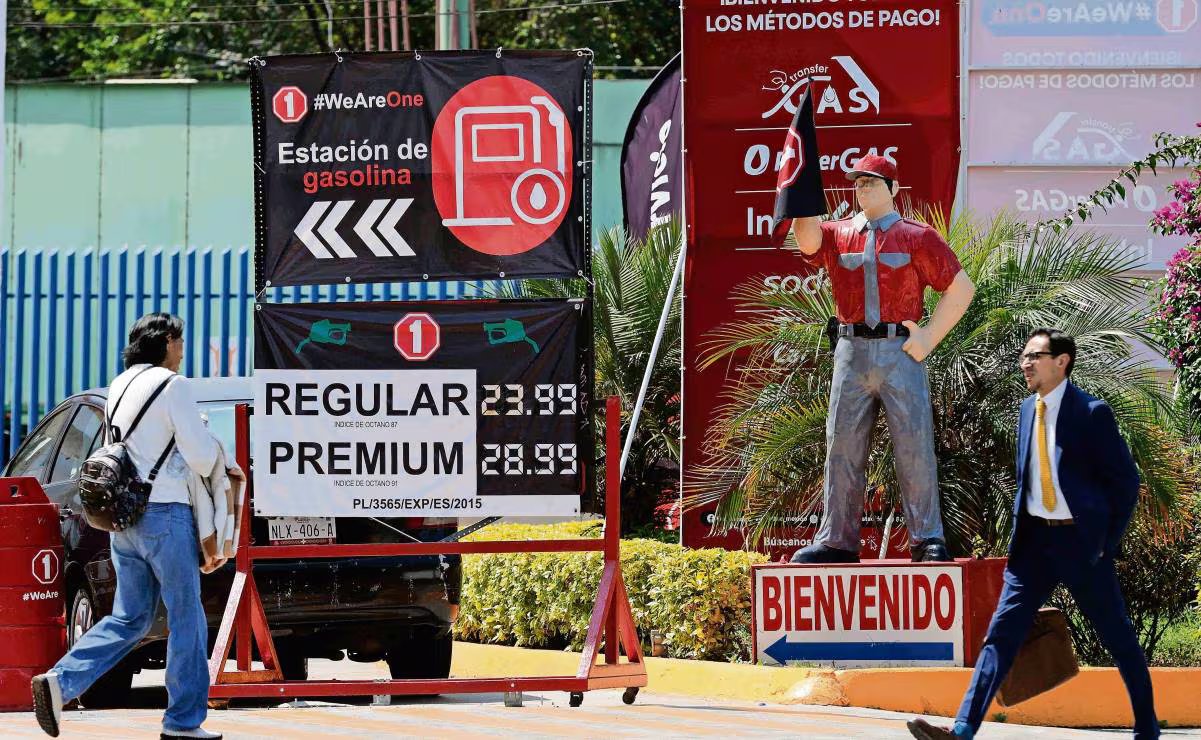
At a press conference, the federal president was asked what period will be in which said subsidy will be valid so that gasoline and diesel do not rise more than 24 and 28 pesos, respectively, per liter.
Sheinbaum Pardo said that this policy will be maintained without giving an end date and stated that the resources will be taken from budgets approved by the Congress of the Union for other purposes, without specifying any specific federal agency or program.
“(The gasoline subsidy) we have to maintain, and that means more austerity. We are still closing many billswho said we are more than Franciscans here, because expenses have to be reduced, we are reviewing all expenses,” he said.
However, he said that he does not contemplate making cuts to the budget for the school scholarships or to the social programs delivered by the federal government, exceeding one billion pesos for this year.
“We have to guarantee Welfare programs, education support, health support, housing programs and investment. Every week we are reviewing income, expenses and projections towards the end of 2026,” he commented.
Read also Sheinbaum projects cuts to maintain gasoline subsidies; “We are more than Franciscans,” he assures
He explained that approximately half of the gasoline subsidy comes from a tax paid by Petróleos Mexicanos (Pemex) for the sale of hydrocarbon.
“They are around 5 billion pesos. They are offset by what Pemex still exports, which obviously since the price of oil is higher, it earns more from that part of the export and Pemex pays a tax to the treasury, which corresponds to 30% of production times the price. So, as the price increases there is also an increase in what is called the right for well-being that Pemex pays. If one compensates everything, it is around 2,500 million pesos per week,” he explained.
On March 20, the federal government reactivated the gasoline subsidy, after more than a year without applying said policy. The President stated that without the subsidy the price of gasoline would exceed 30 pesos.
Read also Tortilla rises to 35 pesos in the north of the country; they foresee a rise of 4 pesos
“If we were not intervening to support the price of gasoline and diesel, gasoline would be more than 30 pesos per liter; diesel would be over 32, 33 pesos per liter,” he stated.
He explained that the increase in the price of oil, derived from the conflict between the United States and Irandirectly impacted the price of gasoline in Mexico.
“Yesterday the barrel of oil rose again due to the situation in Iran, and it is above 102, 103 dollars per barrel; then, like the prices of gasoline and diesel are set internationally for all countries, even though we produce most of what we consume, the price is set by a international price“, said.
Sheinbaum Pardo reported that the agreement with the gas stations is that gasoline does not exceed 24 pesos and diesel 28, and announced that this week he will meet again with businessmen to continue it.
“The price of magna gasoline cannot exceed 24 pesos, which is what it has been since last year… there we are supporting almost six, seven pesos per liter of gasoline. In the case of diesel, until now an agreement was reached of 28, but we want to lower it further because diesel impacts the prices of gasoline. goods. So, this week I am going to have a meeting with all the gas stations,” he said.
He announced meetings this week with the businessmen who signed the Package Against Inflation and Famine (Pacic) to ask them not to raise the price of products due to the rise in fuel prices.
Join our channel EL UNIVERSAL is now on Whatsapp! From your mobile device, find out about the most relevant news of the day, opinion articles, entertainment, trends and more.