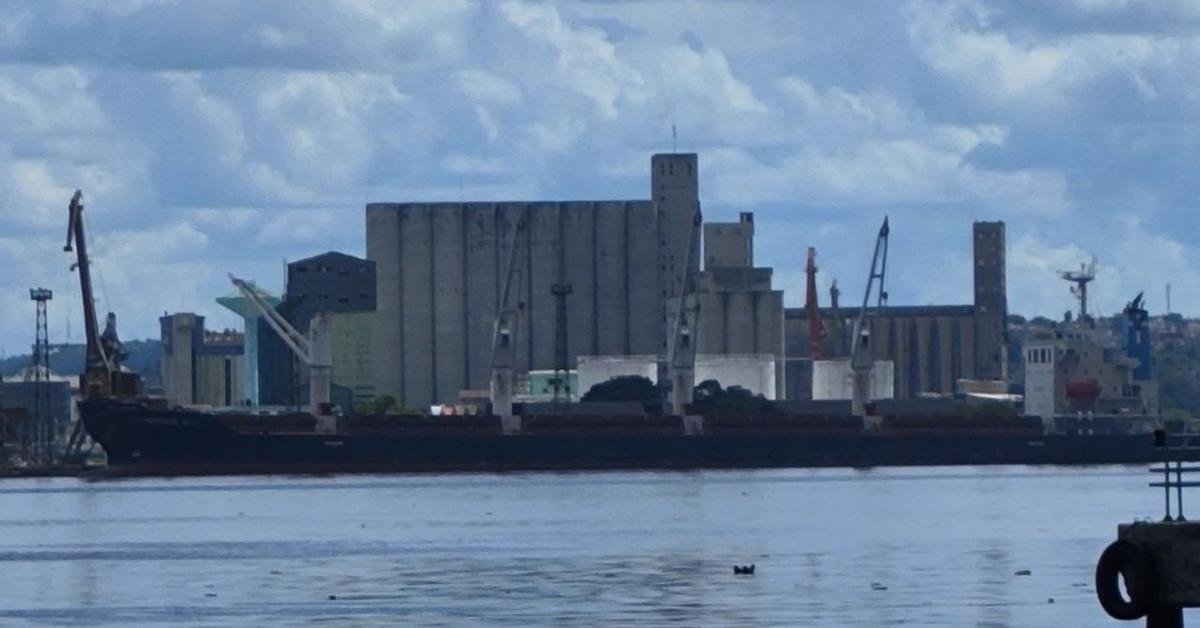

Havana/An economic bridge between Cuba and the United States has been consolidated in the shadows despite the fact that in 2026 the tension between both countries has reached its highest point in recent years. Driven by the private sector of the Island and companies in Miami, especially those of the Cuban-American community, between 2021 and 2025, US exports to the Island grew by 148%, going from 327 million to 810.8 million dollars, indicates the consulting firm Auge. in its most recent report.
“This growth did not occur by chance. It coincides directly with the expansion of the Cuban private sector, which requires inputs, equipment and merchandise that national production cannot cover,” says the text, signed by Oniel Díaz Castellanos, founder of the consulting firm.
In 2024, the United States reported exports to Cuba worth 585.2 million dollars, while the Island estimates them at only 51.7 million. Far from being an error or a falsehood, the gap – of 533.5 million dollars – is explained, says Auge, because there is an “invisible channel” that the statistics do not include.
American products arrive in Cuba through three routes: “re-exports through third countries (Panama, Mexico, Spain); donations and family shipments, which are not classified as commercial imports; and direct supply to the private sector, which operates through non-formal channels.”
“The Cuban private sector, financed largely by remittances from the US, has demanded specific products that the Cuban state does not import”
The analysis of this data, the consultant reasons, explains that although imports fall, exports rise, since “the Cuban private sector, financed largely by remittances from the United States, has demanded specific products that the Cuban state does not import in significant quantities. This has created a parallel import channel that does not depend on public currencies.”
Vehicles and auto parts (18.9%), along with processed foods and beverages (18.8%), represent more than a third of everything the US exported to Cuba last year. “These are exactly the two critical inputs needed by an expanding private sector dedicated to transportation (taxis, delivery, cargo) and commerce/gastronomy (shops, restaurants, cafes, catering services),” the document states.
In 2025, “in vehicles alone, the most dynamic sector,” 149.4 million dollars were imported, “a growth of 122% compared to the previous year.” Regarding agricultural products, meat chicken and pork account for 90% of purchases, which confirms that the Island “critically depends of imports of animal protein from the United States to supply both the state and private sectors.”
To understand this economic dynamism, the study highlights the sending of remittances and the supply chains that have been established in both countries. Money transfers “are an important fuel for the Cuban economy. They not only support family consumption, but have become a great driver of investment in the private sector,” the text says.
The consulting firm predicts that US exports to Cuba could reach up to 1.3 billion dollars in 2028
“They function as seed capital for the creation of new MSMEs, as financing of working capital for businesses in operation and as loans between family and friends that promote ventures, but, in addition, remittances feed the purchasing power of Cuban residents on the Island, who, increasingly, acquire their basic products in the private sector, either in the retail network or through online commerce platforms, generating a cycle that sustains the Cuban business ecosystem,” the report highlights.
To achieve this, a key actor is the remittance and parcel agencies, particularly those that operate in Florida. “What started as simple services for sending money and packages through muleshas been transformed into complex logistics operations that use air and sea transportation, offering an increasingly wide range of products,” says Auge.
The participation of the diaspora in the Cuban private sector, which has operated almost silently, could expand based on the reform of last March, through which the investment of Cuban Americans is legalized, is “a reality that already existed,” says Auge, although there is reluctance about whether it can be carried out, as shown on the ground.
“The announcement, although historic, faces obstacles that come from far away. The slowness in the approval of MSMEs, the banking and exchange disorder aggravated by the energy crisis, the lack of confidence in the regulatory framework and, above all, the weight of US sanctions, which especially affect Cuban Americans with US citizenship. For this investor profile, any operation must be analyzed with a magnifying glass so as not to violate the regulations of the Ofac (Office of Foreign Assets Control),” warns Auge.
However, if the conditions that are given on paper are maintained, the consultancy predicts that US exports to Cuba could reach up to 1.3 billion dollars in 2028, “consolidating the US as one of the main suppliers to the Island.” The text even points out that, in “an optimistic scenario, with flexibility of Ofac licenses and Cuban economic recovery, it could take that figure to 2,000 million dollars,” but warns that, if the reforms announced by the regime do not materialize or if the United States toughens sanctions, “bilateral trade could contract to levels of 400-500 million dollars annually.”