Suriname takes strategic step towards food security
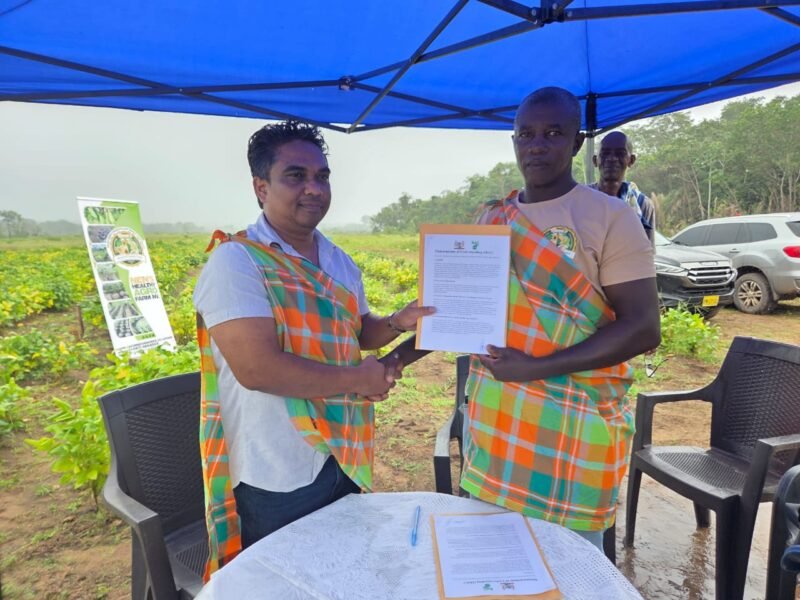
PARAMARIBO – The Surinamese agricultural sector is on the eve of an important transformation now that a small-scale pilot in the Phedra area has grown into a strategic project of national significance. On March 27, the viability of local soy cultivation was officially sealed with a cooperation agreement that should significantly reduce dependence on imports.
Sustainable partnership
The initiative, led by entrepreneur Glenn Pinas of NENE’s Healthy Agro Farm, has shown that Surinamese soil is extremely suitable for soy production. The convincing results of this trial period were the direct reason for signing a Memorandum of Understanding (MoU) with the Ministry of Agriculture, Livestock and Fisheries (LVV). Minister Mike Noersalim and Pinas have laid a foundation for a collaboration that will extend over the next five years. Within this partnership, the ministry will provide the necessary technical guidance and training, while the farm focuses on the actual implementation, expansion and further professionalization of the production processes.
Although the focus is currently very much on soy, the project’s vision is not limited to a single crop. The plans also include the further development of watermelon and ginger cultivation, and preparations are currently being made for the start of chicken farming on the farm. However, the strategic value of soy cultivation lies mainly in the link with the livestock sector. Because soy is a crucial raw material for the production of poultry and fish feed worldwide, local production offers Suriname the unique opportunity to create a more self-sufficient food system.
Economic opportunity and local value
The economic implications of this development are promising for Surinamese consumers and the labor market. Integrating soy farming with future chicken and fish feed production could lead to a significant reduction in feed costs, ultimately resulting in more affordable retail chicken and fish prices. Moreover, the creation of this new value chain stimulates local employment and provides greater added value within our own national borders. The project in Phedra thus functions as a model for an integrated approach to agricultural development.
International cooperation and vision
According to the initiators, the success of this pilot is partly due to strong international ties. The necessary soy seeds were donated by Global Executive Agro Solutions (GEAS) from Ghana, led by Professor Emmanuel Lanz. This business-to-business collaboration was facilitated by the Surinamese ambassador to Ghana, Fidelia Graand-Galon, who played a crucial role in linking Surinamese entrepreneurs with Ghanaian expertise. This knowledge exchange underlines the importance of international partnerships for the progress of the local agricultural sector. With this structural approach, Suriname is taking a decisive step towards sustainable and strengthened national food security.