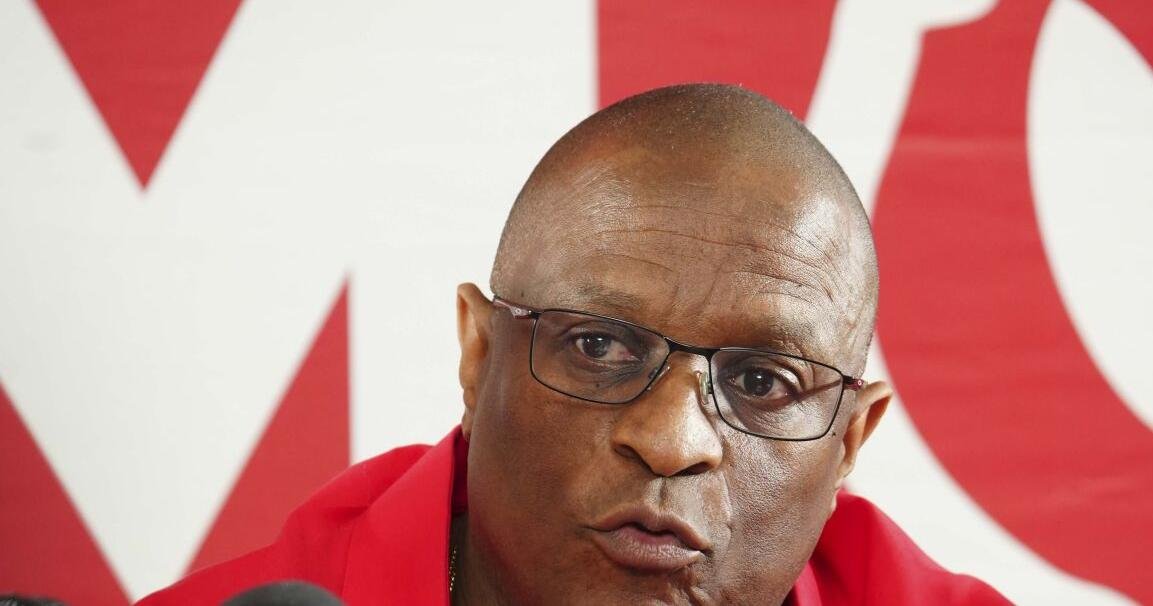
In front of a crowd of supporters gathered at Breezes Resort on New Providence, the Free National Movement (FNM) last night unveiled its manifesto ahead of next month’s general election, making pledges related to the economy, transparency, immigration and social security measures, among others.
The promise of the introduction of a national lottery was cited by FNM Leader Michael Pintard as a key measure intended to bring in the revenue required to finance the country’s development.
“We will introduce a national lottery for the benefit of the people of The Bahamas, a public initiative designed to generate dedicated funding for the advancement of education, sports, youth development, social intervention and culture,” he said.
“These are areas that have too often struggled for consistent and adequate resources.
“The national lottery will change that by providing millions of dollars over time to support the development of our young people and the enrichment of national identity.”
Pintard said the proceeds of the lottery would not go into the consolidated fund, but into a legal structure established specifically for that purpose that will “make sure that there are strong accountability mechanisms” and will be governed by a board.
Pintard said the lottery would offer prizes in the hundreds of thousands of dollars and “even millions”, as he assured it can coexist with private operators.
“Countries as diverse as the Dominican Republic, Curacao, Saint Martin and Ghana have shown that a well-regulated public lottery can coexist harmoniously with private operators,” he said.
“We will follow a similar model, and we will do so responsibly, transparently and with the public interest always at the center of our considerations.”
Also among Pintard’s most prominent promises was the promise that the Freedom of Information Act (FOIA) would be “implemented as soon as we take over”.
The lack of movement on the implementation of the act, which was passed nearly 10 years ago, has been a consistent source of frustration for those who await a full suite of legislation to ensure government transparency.
The FNM’s written manifesto said the rollout of FOIA would begin within the first 90 days of a Pintard government and be completed within the first year.
Also among the transparency pledges was the full implementation of the Ombudsman Act; strengthening of whistleblower protections; and the introduction of a complete suite of anti-corruption legislation to include the Public Anti-Corruption Bill, the Public Officials’ Code of Conduct Bill, and the Independent Commission of Investigations Act.
There was also a prominent focus on economic measures and fiscal responsibility, with the FNM pledging to “build a stronger, more resilient economy”.
Key measures under this goal included creating a “statutory footing” for the national development plan; defining annual growth targets; the introduction of a fiscal rule to mandate a balanced budget “under normal circumstances”; and a plan to move to a debt-to-GDP ratio of 50 percent.
The FNM also pledged the establishment of a sovereign wealth fund.
“We will repeal the ineffective National Investment Fund Act and replace it with an independently managed and fully accountable sovereign wealth fund to deliver tangible benefits for Bahamians,” the manifesto said.
It noted that the fund to benefit various sectors, including the orange, blue and green economies”.
“This will include partnering with Bahamian entrepreneurs and investors to develop commercial infrastructure, large-scale agricultural and fisheries initiatives, solar and renewable energy projects and more affordable housing,” it said.
The FNM also pledged to cut wasteful government spending, citing, among other things, plans to introduce shared corporate services, requiring government agencies and state-owned enterprises to share back-office resources to improve efficiency and reduce costs.
As it relates to taxation, the FNM pledged it would create a “fairer tax system to help reduce the cost of living”, noting plans to ensure there is no VAT on “all everyday essentials, all medical supplies and educational supplies”.
It also noted plans to introduce a child support program of $200 per month per child for the first two months of the child’s life, and other reforms to reduce the burden on taxpayers.
Immigration was a prominent area of concern identified within the manifesto, with the party pledging to initiate “Operation SHIELD”, which it says would ensure a “ fair, transparent and lawful immigration system”.
Among the most aggressive components of the plan were stronger penalties for immigration offenses, one of which would bar individuals found to have entered The Bahamas illegally from ever gaining citizenship.
It noted that maritime enforcement would be bolstered, and biometric tracking would be expanded for deportations.
The FNM also noted plans to address illegal land occupation by launching a national audit of public and private land occupation, “pursuing swift legal action to remove unauthorized developments”.
Concerning the tourism industry, the FNM pledged to reform the cruise industry in The Bahamas, requiring that destinations “include meaningful Bahamian ownership”.
It also noted plans to address and revitalize Downtown Nassau, through the creation of a new Downtown Authority, in partnership with The Bahamas Chamber of Commerce and Employers’ Confederation and the Downtown Nassau Partnership.
It noted plans to “reinvigorate” Bay Street as a “vibrant commercial hub with greater pedestrian access”.
The party also noted plans to develop a central park, which would be in the area from Marcus Bethel Way to Chippingham Road, including the Botanical Gardens.
Other broader tourism efforts cited included the revision of “uncompetitive yachting fees and regulations” and the revision of the foreign yacht charter regime “to ensure fairness, equity, and simplicity, to bring more commerce and economic opportunities to those communities across The Bahamas”.
On Grand Bahama, the FNM pledged to redevelop Grand Bahama International Airport and to energize the island’s tourism with the “Building Opportunities and Optimizing Momentum (BOOM) Initiative”, which would “revive local tourism and rebrand the island for global markets”, making use of festivals, and eco and heritage tours to “boost tourism and cultural vibrancy”.
The FNM also pledged action as it relates to the Grand Bahama Port Authority (GBPA), noting it would require the GBPA to expand direct participation of Freeport licensees in decision-making of the port area. It said it would also require the GBPA to redevelop derelict and run-down buildings in the port area, as part of their contractual obligations.
On the Family Islands, the FNM promised to create new free economic zones; bring commercial banking services to the unbanked islands; continue the redevelopment of Family Island airports; ensure essential services “for basic health, survival, growth and stability”; and to empower local government to make decisions around economic growth, development and governance.
The manifesto also pledged the introduction of local governance for New Providence, which was a key pledge for the last FNM government as well, but was never implemented.
Food security was also identified as a pressing issue in the manifesto, with pledges to increase efforts to “substitute food imports with locally grown and made items”.
“This will include supporting agribusiness innovation, improving distribution networks, and encouraging greater use of Bahamian produce in hotels, restaurants, and schools,” the manifesto read.
“It will include a target to become self-sufficient in poultry meat and eggs within two years.”
It noted plans to provide resources to empower farmers, making land available through lease agreements and crown land grants, as well as the establishment of six “agro villages” on different islands.
“Investment in training, modern equipment, and access to affordable financing will ensure they can increase yields, improve quality, and compete effectively, and to inspire the next generation of farmers, we will establish agriculture and aquaculture initiatives in schools,” the manifesto read.
It also noted plans for a “Buy Bahamian” police, which would require that 40 per cent of the food used by every hotel, food store and restaurant be purchased from Bahamian producers, where available.
Other prominent pledges included efforts to address the housing shortages, the implementation of a 10-point plan to address crime, energy reform to ensure Bahamian ownership, and amendments to the business license tax regime.