(SUMMARY) Folha report had access to an unreleased album by Johnny Alf, one of the great names in Brazilian music, recorded in the USA in 2001 and never released due to financial and health obstacles. Project partners recall the production of the 13-song album, new versions of classics from the repertoire of the musician who died in 2010, whose talent has not yet been properly recognized.
In the years 1953 and 1954, in Rio de Janeiro, anyone curious about musical innovations went to the piano bar at the Plaza hotel, in Leme. Guys in their early 20s, like Tom Jobim, João GilbertoNewton Mendonça and Carlos Lyraattended those presentations. Others who had not even reached the age of majority, such as Roberto Menescal, They found a way to get into the club to watch the shows.
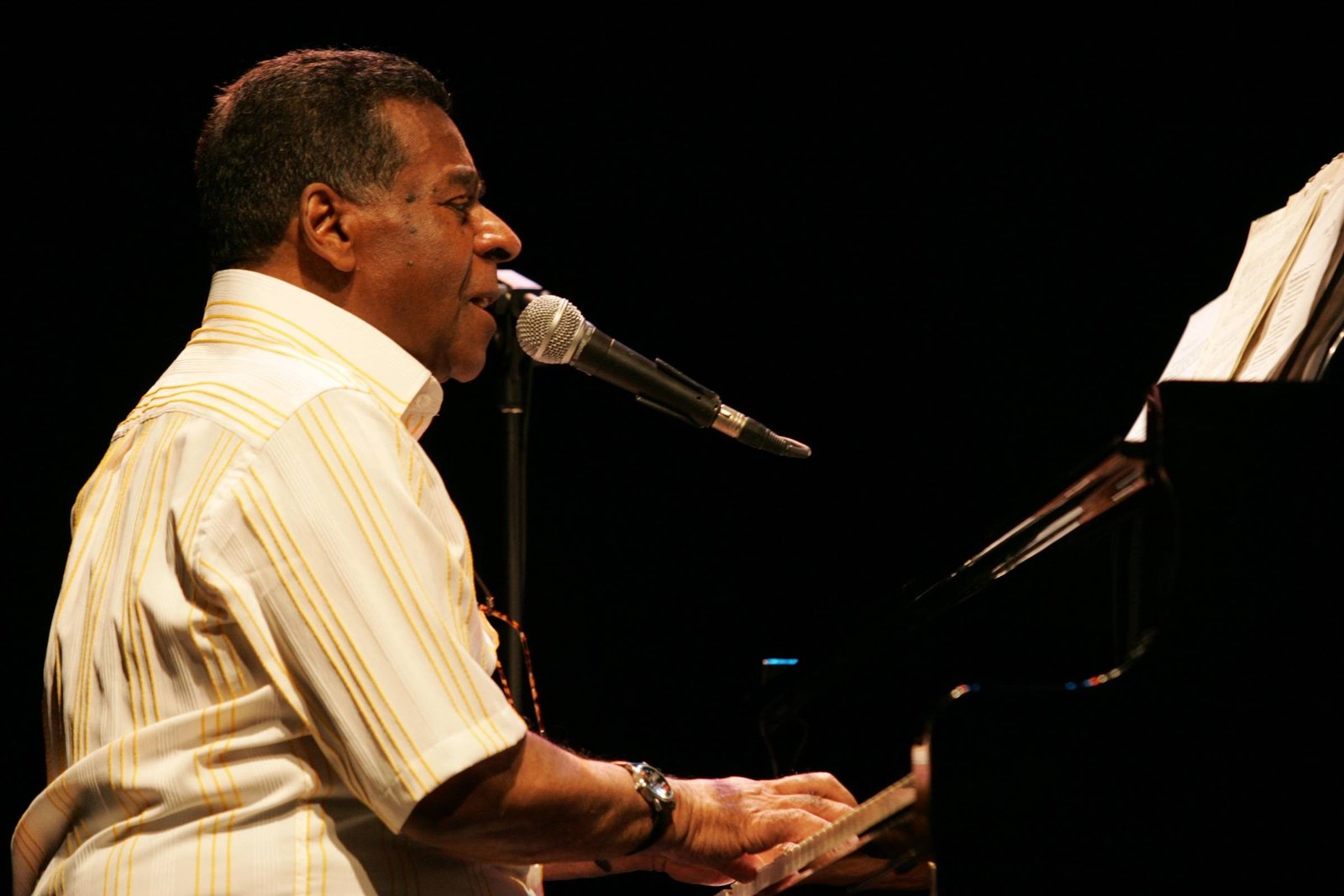
Everyone wanted to hear Alfredo José da Silva, who a few years before had adopted the artistic name of Johnny Alf.
The life of that young singer, composer and pianist from Rio was not easy. Born in Vila Isabel, in 1929, he faced shyness and prejudice for being black and gay. Furthermore, he came from a poor family — his mother was a maid; His father, an Army corporal, died when he was just three years old.
None of this, however, was able to curb Alf’s talent, so extraordinary that he soon became a model of creativity for those young singers and composers who wanted to take risks in music that escaped the conventions of samba-canção. Tom, one of his admirers, invented a nickname for his friend, Genialf.
A talent that was preserved throughout life, as evidenced by listening to an unreleased album by Alf, recorded in 2001 in the USA and discovered by Sheet in the archives of sound engineer Homero Lotitowho lives in São Paulo.
However, before detailing the saga of this never-released album, it is worth going back to the 1950s. In the first half of that decade, Alf anticipated some of the characteristics that made bossa nova known worldwide a few years later.
An attentive jazz listener, he brought harmonic sequences to samba that surprised listeners, as seen in “Rapaz de Bem”, composed in 1953 and recorded two years later. His songs were performed without the need to speak his voice, as was common at the time.
“When my generation arrived, he had already sown the seeds: modern samba-canção, jazz influence, colloquial lyrics to whisper in the ear. They were less spilled, cooler compositions”, said Lyra in March 2010, when Alf died, aged 80.
Although he is a fundamental name for the emergence of bossa nova, he benefited little when the movement gained prominence at the turn of the 1950s and 1960s, largely due to the fact that he moved to São Paulo. Rio was the epicenter of bossa nova, and the pianist had been at the other end of via Dutra since 1955.
Alf changed cities because he was looking for new audiences and opportunities. Furthermore, his family in Rio didn’t like him working nights. He then stayed in the capital of São Paulo and, decades later, went to Santo André, in Greater São Paulo.
He recorded LPs such as “nós”, from 1974, and “Olhos Negros”, from 1990, in which Caetano Veloso sings the song that gives the album its title, composed by Alf and Ronaldo Bastos. The Brazilian music industry never gave him due recognition, which is proven with “Mais um Som”. Recorded in 2002, the album was released in Japan two years later and only arrived in Brazil in 2006. It was his first album with new songs since “Desbunde Total”, from 1978.
On the other hand, Alf cultivated a loyal audience, who accompanied him to shows in bars and nightclubs, as well as small and medium-sized auditoriums. He was a musician loved by other musicians, fascinated by the inventiveness of creations such as “Ilusão à Toa” and “Eu e a Brisa”.
In 2001, although weakened due to treatment for prostate cancer, a disease that would lead to his death nine years later, Alf, aged 72, was enthusiastic. He would record an album for the first time in a studio in the USA.
For him, an admirer of musicians like the singer Sarah Vaughan and the singer and pianist Nat King Colethe trip represented a kind of reunion with the jazz that had enchanted him since he was a boy — in truth, not only the North American genre resonated with Alf, who loved the sambas and choros of Custódio Mesquita and Boy, between others.
Recording in the USA became viable thanks to an initiative by São Paulo double bassist and producer Nilson Matta, who has lived in the country since 1985. Matta suggested an album with reinterpretations of Alf’s classics to the American Rick Warm, who ran Malandro Records, a small record label. Warm liked the idea and decided to support the initiative.
Aged 51 at that point, Matta had been friends with Alf for more than three decades. Still a teenager, the double bassist had his first chat with Alf in a nightclub at the Metrópole gallery, in the center of São Paulo.
In November 2001, a few weeks after the attack on the Twin Towers, Alf and his manager, Nelson Valencia, arrived in the USA. Staying in a hotel in New York, they went every day to New Jersey, a neighboring city, where Knoop Studios was located.
Matta gathered a group of experienced instrumentalists to accompany Alf. On piano and organ, Cesar Camargo Mariano; on the guitar, Romero Lubambo; and on guitar, Guilherme Monteiro. In addition to them, Hélio Alves on piano and Paulo Braga on drums participated in the recordings, as well as Matta himself on double bass.
The trumpeter Randy Breckera connoisseur of Brazilian music, was the only North American among them.
The wear and tear due to cancer was evident, but Alf, who did not play the piano on these recordings, showed satisfaction. “I never had the opportunity to record in the USA, and you are giving me this happiness”, he said, as the producer recalls.
Furthermore, the atmosphere during the recordings was as light as a meeting of friends. “We were in love with Johnny”, says Matta, highlighting the singer’s generosity in accepting suggestions regarding arrangements, for example.
For Romero Lubambo, everyone felt honored playing alongside one of the masters of Brazilian music. “It was my uncle (Ilvamar Magalhães) who inspired me to play the guitar. He sang Johnny Alf’s songs and I, who was 13, 14 years old, accompanied him.”
Of the 13 songs recorded at Knoop, one of the best moments is the duo of Alf on vocals and Lubambo on guitar in “O Tempo e o Vento”, arranged by Lubambo. Another duo appears in “Ilusão à Toa”, this one with Alf and César Camargo Mariano (piano and also the arrangement). “Johnny was next to César, sitting on a stool, with his hands on his legs. They looked at each other and they made, in their own time, this wonderful ballad”, says Matta.
In “Fim de Semana em Eldorado”, Randy Brecker’s trumpet solo stands out and then the way in which Alf’s voice appears harmoniously amidst the other instruments, such as Paulo Braga’s drums.
These songs, all written by Alf, had already been recorded on previous albums, but gained new arrangements at that time, revealing other nuances of the musician’s sensitivity.
“Eu e a Brisa” and “O que É Amar” appear in two versions, in Portuguese and in English. According to Matta, it was the first time that Alf recorded these songs in English, which reinforced the historical character of the album.
Not everything, however, went as planned. “It was very cold in those days and I believe that this caused a clearing of the throat, a kind of hoarseness, to appear in Johnny’s voice. So we decided, after a while, to redo his voice, in São Paulo”, says Nelson Valencia, Alf’s manager during the last 20 years of the composer’s life.
In 2003, Matta came from the USA and went to a studio in Vila Mariana, in São Paulo, with Alf to redo some parts of the interpretations, not all the songs. Alongside them was sound engineer Homero Lotito, responsible for remastering the album.
Matta remembers that Alf was a little more downcast at this reunion. “I remember him saying that life was fun: when you are very healthy, you don’t have many opportunities; when you reach your peak, your health no longer follows you”, says the producer.
Even after completing his part of the work, Alf went to the studio to monitor the completion of the album under Lotito’s responsibility. On one of those days, the power went out, work was interrupted, and the two spent hours talking. Lotito asked Alf about the lyrics to “Your Chopin, Sorry”, which, in addition to the polish composertalks about George Sand, pseudonym of Aurore Lucile Dupin, a French novelist also from the 19th century.
“Johnny told me that, when he was little, his mother worked in a family home and he stayed in the library there. He ended up reading a lot”, recalls Lotito.
The album was finally ready. After sending the master (the matrix from which copies will be made) to Rick Warm, Matta learned that the record company, which had been accumulating negative numbers, had closed its doors. “Rick was an inexperienced guy, he thought it was easy to maintain a record label. I asked him: ‘What are we going to do with this record?’ And he: ‘I don’t know, I’ll think about it'”, says Matta.
“As Johnny’s voice wasn’t good, we decided not to release the album. If I’m not mistaken, I returned the master to Johnny. But, honestly, I don’t know what happened afterwards, maybe Nilson remembers”, Warm told the report.
Years passed, Alf died in 2010 and the record, which never had a name, was kept as a closely guarded relic. Until Lotito presented the 13 songs to the Sheet.
Nelson Valencia, the composer’s former manager and one of Alf’s appointed heirs, says he is considering the possibility of releasing the album, after a reevaluation carried out with Nilson Matta. “My interest is in publicizing Johnny’s work. Everything I do as heir is in this sense”, he states. There is currently no expected release date.
Complex equation
Friends of Alf and scholars of his musical work are unanimous in pointing out that he did not receive the recognition he deserved. And they also assess that it is not possible to explain this low appreciation by a single key.
It’s a complex equation, according to Vitor Mafra, director of a documentary series about Alf and singer Alaíde Costa, which should premiere in the second half of this year on Canal Brasil. The fact of living in São Paulo when bossa nova was gaining enormous visibility in Rio is just one of the factors mentioned.
“His music is quite sophisticated, it’s music for beginners”, says Mafra, who wrote the script for the series with Léo Madeira. “And he was very shy, he liked to play the piano in the corner of the club.”
Furthermore, recalls the director, “in addition to being black, he was gay. There was a lot of prejudice against him. In our series, journalist Nelson Motta says that black people couldn’t sing romantic songs, they could only sing samba.”
As a black composer, Alf was harmed throughout his career, agrees Romero Lubambo, who also remembers that he was “very reserved”.
“It’s sad that Johnny Alf doesn’t have the space he deserves in the pantheon. Among artists, he has that space, but not among the general public”, says the director, screenwriter and actor Miguel Falabellawhich plans to put on a show about the pianist. The idea, according to Falabella, should be matured next year. For now, there is a desire to prepare “a welcoming, chamber musical”.
Who knows, perhaps in 2029, when Alf would celebrate his centenary, the author of “Rapaz de Bem” will be rediscovered by new generations. Or is it just an illusion?