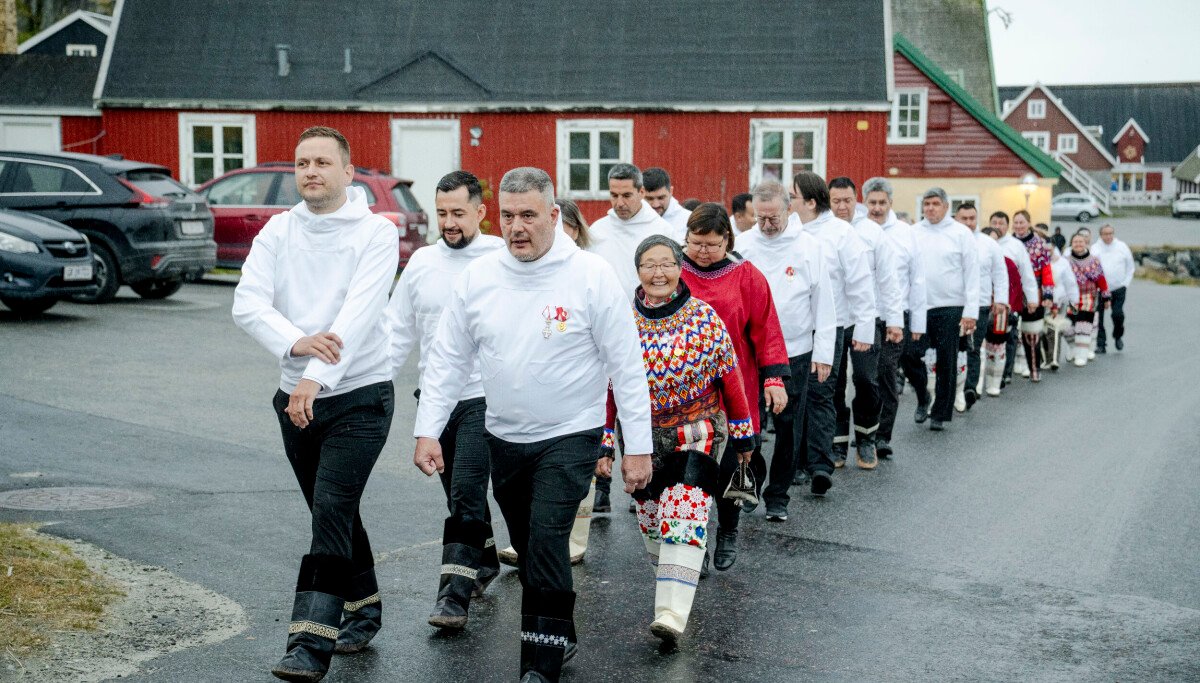
April 14 is coming Inatsisartut together for the Spring Collection. A long collection which, according to the plan, must run until 18 June.
48 new items from members of Inatsisartut have been taken up, 33 new items from Naalakkersuisut and then 66 postponed items from the Autumn Meeting 2025 must be dealt with. A total of 147 points, writes the chairman of Inatsisartut, Kim Kielsen, in a press release.
Sermitsiaq has reviewed the items and compiled an overview of some of the legislative proposals on the agenda.
New name for Sikuki Nuuk Harbour
Naalakkersuisoq for Social Affairs, Labor Market, Housing, Infrastructure and Outlying Districts, Aqqaluaq B. Egede (IA), proposes that SIKUKI Nuuk Harbor be renamed and authorized to acquire and operate ports outside Nuuk.
It might sound familiar. The item was also on the agenda for the Autumn Meeting 2025, but was unexplained on the day it was to be discussed.
Now the proposal is back. As it is now, it is only in Nuuk that self-governing Nuuk Sikuki Harbor operates a port on commercial terms, but if the bill is implemented, this could be extended to the rest of the country.
By introducing commercial port operations, Sikuki can introduce user payments in the form of port charges in the ports to finance operation and maintenance.
According to the presentation memorandum for the proposal, there was a maintenance backlog of 270 million kroner per 2021 at the self-governing ports. The idea of operating ports commercially in the rest of the country is also that it will not burden the national treasury.
“One advantage of giving Sikuki Ports A/S the right to acquire and operate ports outside Nuuk is that everyone can benefit from Sikuki Ports A/S’ experience and expertise in port management. This advantage will benefit all citizens.
By handing over selected autonomously owned ports to Sikuki, it will be possible to realize the maintenance backlog, as Sikuki will be able to operate the selected ports on commercial terms,” it says.
At the same time, the company must be renamed Sikuki Ports A/S.
The item must 1. be dealt with in the chamber on 30 April.
Decriminalize cannabis
Chairman of Atassut Aqqalu C. Jerimiassen has also come up with a number of proposals, including that cannabis should be decriminalized.
The idea is for cannabis to be sold through state-owned or state-approved sales outlets. A bit like a pub, he writes.
In the proposed resolution, he states that this is not to increase drug use in the country – quite the opposite, in fact.
“By decriminalizing cannabis and restricting its use to specially approved places, we can ensure that the money generated goes directly to the health service and treatment services. It must be seen as part of the fight against abuse – not an acceptance of it,” it says.
Aqqalu C. Jerimiassen points out that data from other places that have legalized cannabis show that drug-related crime has decreased and the number of stronger drugs in circulation has been reduced.
The item must first be dealt with in the chamber on 6 May.
Registration of the original population in Greenland
Of the total of 147 points, Naleraq accounts for 41 of them.
Among these points is a proposal that sounds familiar. Chairman of the party Pele Broberg wants Inatsisartut to instruct Naalakkersuisut to carry out a data-based registration of the original population in Greenland.
Pele Broberg has previously proposed an Inuit registry. In 2023, he put forward a proposal that Naalakkersuisut should create a Greenlandic register of Inuit based on voluntary registration and an associated electoral register.
It ended with IA and Siumut putting forward an amendment which obliged Naalakkersuisut to make a report on the consequences of and the need for a Greenlandic register of Inuit.
In his new proposal, Pele Broberg writes that if Inatsisartut is to live up to current law and rights, they are forced to make a record of Inuit in Greenland.
He refers to ILO Convention No. 169, which deals with the rights of indigenous peoples. However, no record or register is mentioned here, but it is stated that self-identification as belonging to an indigenous people must be considered a basic criterion for determining the groups that the convention deals with. Furthermore, one must be descended from people who inhabited the country when it was colonized.
Pele Broberg’s proposal does not directly state what the data collection is to be used for or how the registration is to take place.
“In order for us to secure the rights, it is time to establish a systematic data collection for the indigenous people “Inuit” in Greenland. That’s what the world says. That’s what our law says. That’s what the institutions say. We owe it to our people,” writes Pele Broberg.
Provision of the time, pension scheme and gun law
As I said, there are 66 items that were dealt with at the autumn meeting last year and must now be finalized.
Among these is the statement that the majority of Greenland must return to the old time zone UTC-3. Both Naleraq and Siumut have suggested this. The item was sent for consideration in the Law Committee after the first reading on 14 October 2025.
Another proposal is to change the mandatory pension scheme, which was a major issue in the election campaign last year. Naalakkersuisut is now proposing a reduction in civil servants’ savings obligation and the temporary suspension of collection via tax card and tax ticket. The item was first considered on 11 November and referred to the Finance and Tax Committee.
Last but not least, the proposal for a new weapons law must be considered. It has been over 30 years since Greenland last adopted a new gun law. This proposal includes, among other things, raising the age limit for possession of firearms to 15 years and introducing stricter requirements for how weapons and ammunition must be stored. The proposal was put forward by naalakkersuisoq for fishing, catching, agriculture and self-sufficiency, Peter Borg (D). The item was first considered on 1 October and referred to the Legislative Committee.