Leaders of United States and Iran are meeting in the Pakistani capital, Islamabad, this Saturday (11), for negotiations that could end the six-week war between the two countries.
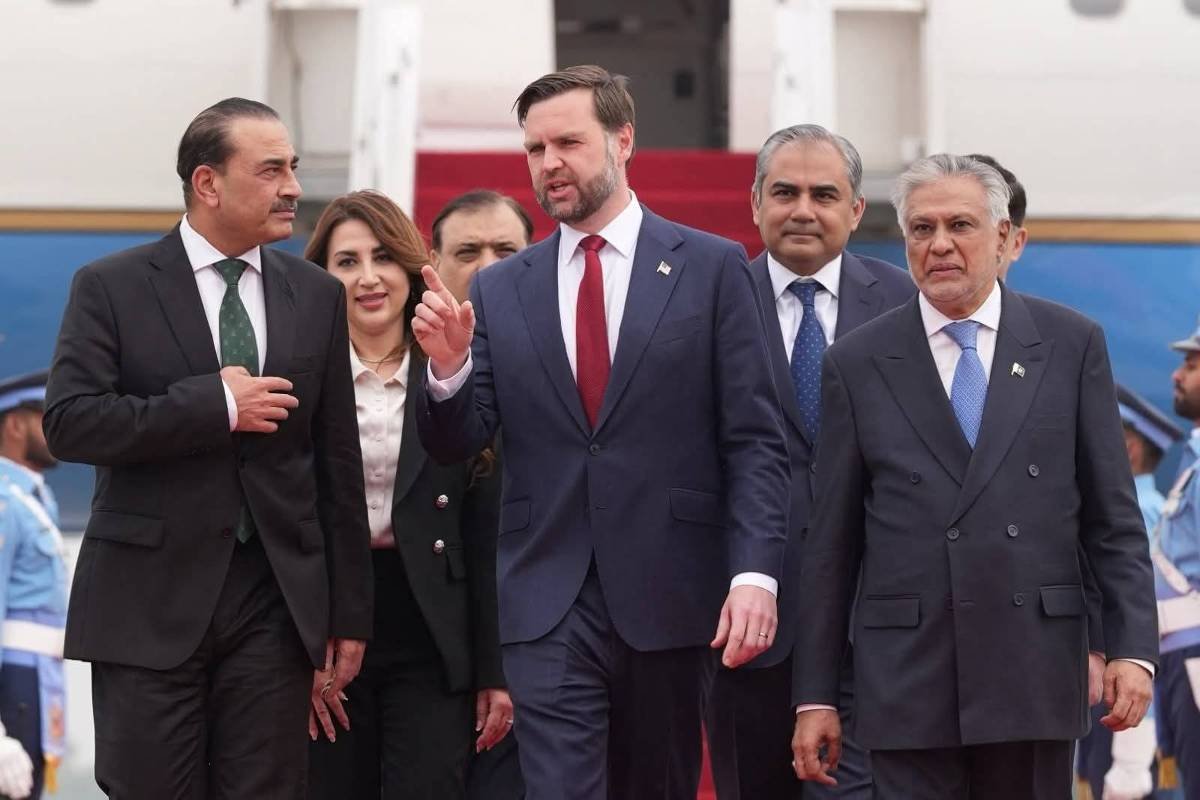
The U.S. delegation, which is led by Vice President J.D. Vance and includes the President’s Special Envoy donald trumpSteve Witkoff, and the president’s son-in-law, Jared Kushner, arrived in two US Air Force planes at an air base in Islamabad on Saturday morning. There, they were received by the chief of the Army and the Pakistani Foreign Minister.
The Iranian delegation, made up of more than 70 members and headed by the President of Parliament, Mohammad Baqer Ghalibaf, and the Minister of Foreign Affairs, Abbas Araghchi, arrived on Friday (10) wearing black robes as a sign of mourning for the death of the Ayatollah. Ali Khamenei. They carried shoes and bags belonging to students killed during the US bombing of a school near a military complex.
“We will negotiate with our finger on the trigger,” said Fatemeh Mohajerani, a spokeswoman for the Iranian regime on state TV. “While we are open to dialogue, we are also fully aware of the lack of trust. Therefore, Iran’s diplomatic team is entering this process with the utmost caution.”
While heading to Pakistan, Vance said he hoped for a positive outcome, but added: “If they try to deceive us, they will find that the negotiating team is not very receptive.”
The meeting takes place at the five-star Serena hotel, with gardens and Moorish architecture, which is one of the most fortified buildings in Islamabad and has its own security system. The address is close to the Marriott hotel, the scene of one of Pakistan’s worst terrorist attacks in 2008, when a truck carrying 600 kg of explosives opened a seven-meter-deep hole and left the ambassador of the Czech Republic among the dead.
Islamabad reinforced the security scheme with thousands of agents in the city, including paramilitary and army troops, who set up checkpoints and blockades throughout the capital. Shops and offices were closed.
According to The New York Times, American and Iranian delegations met separately with Pakistani mediators, beginning rounds that aim to put an end to the war in the Middle East.
It is still uncertain whether negotiations will be conducted face-to-face or mediated by the hosts. In the rounds at the beginning of the year, the Americans passed their demands to the Omani foreign minister, who passed them on to the Iranians, and vice versa.
However, according to information from Al Jazeera, the US and Iranian teams would be in the same room, with Pakistani mediators also present. Information from the AFP news agency also confirms that the meeting will take place face to face.
According to the Arab network, it is believed that the delegations met for around two hours and should meet again for dinner. According to Tasnim, an Iranian news agency related to the Iranian Revolutionary Guard, the talks are ongoing, and, if necessary, could be extended for another day.
The meeting comes at a time of a fragile ceasefire that has suspended fighting for two weeks, with Iran saying any agreement would have to include a halt to attacks on Lebanon and end of sanctions. Tehran has maintained contact with Beirut to ensure that an eventual ceasefire is respected on all fronts. Israel and the US claim that the situation in Lebanon is not part of the agreement.
Also this Saturday, the Iranian state broadcaster stated that the Tehran delegation presented demands related to the Strait of Hormuz, the release of blocked Iranian assets, the payment of reparations to cover damages caused by the war and a ceasefire that covers the entire region.
The dialogue will be the highest level between the US and Iran since the Islamic Revolution of 1979. The last time the US and Iran negotiated eye to eye was in the 2015 nuclear agreement, which exchanged the end of sanctions on theocracy for an intricate scheme of checks according to which the country’s uranium enrichment capacity would be restricted for 15 years, aiming to curb the search for the atomic bomb.
Trump canceled the nuclear deal in 2018, during his first term. That year, Khamenei banned further direct talks between US and Iranian officials.
On Friday, the American posted on social media that the only reason the Iranians were still alive was to negotiate an agreement. “The Iranians don’t seem to realize that they have no tricks up their sleeves except to extort the world through international waterways. The only reason they are still alive today is to negotiate!”
Attacks continue in Lebanon
Attacks in southern Lebanon continued on Saturday morning, according to Lebanese state media. Hezbollah announced that it had carried out several military operations against Israeli positions on Saturday, both in Lebanese territory and in northern Israel.
The governments of Lebanon and Israel agreed to meet, next Tuesday (14), for negotiations on the end of the conflict between Tel Aviv and the extremist group Hezbollahsupported by Iranaccording to the Lebanese government. Israel, however, refuses to negotiate a ceasefire with the faction.
Lebanese officials close to Hezbollah told the Reuters news agency on Friday that the group supports dialogue with Pakistan, as opposed to separate talks in Washington next week.
The opening for talks between Beirut and Tel Aviv comes amid pressure from the Donald Trump government on the Israeli prime minister, Binyamin Netanyahu. Israel increased the intensity of attacks against Lebanon shortly after the announcement, on Wednesday (8), of a US ceasefire against Iran, which in turn refuses to move forward with negotiations until the conflict in Lebanon also ceases.