Trinidad and Tobago, which maintained a conflictive relationship with the Government of Nicolás Maduro, recognized Delcy Rodríguez as interim president of Venezuela this Friday and is preparing to send a high-level delegation to Caracas.
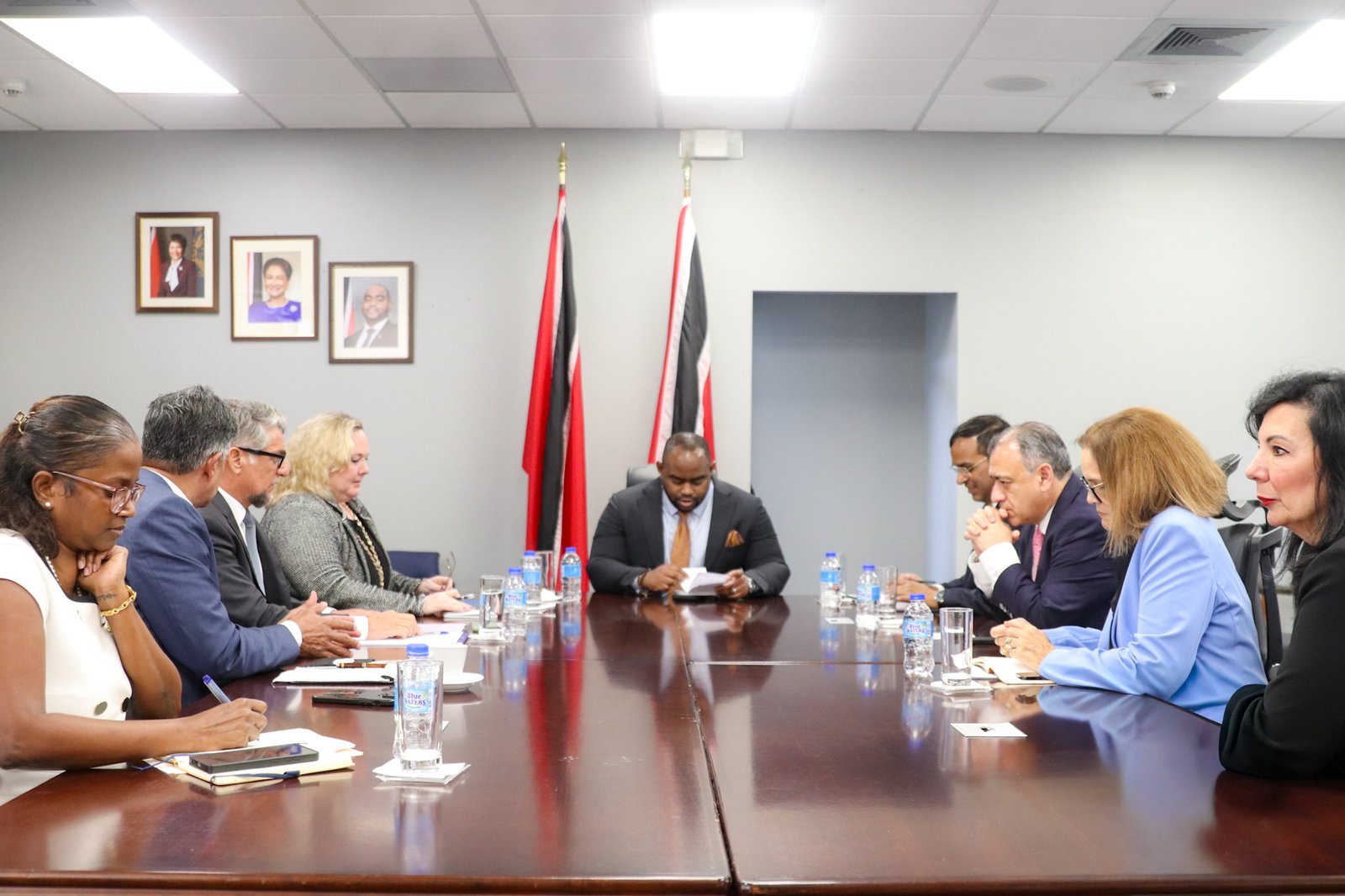
The Trinidadian Minister of Foreign Affairs, Sean Sobers, stated in a press conference that this official recognition by Rodríguez, which has taken several months, reflects the current diplomatic position of Port of Spain following the political changes that occurred in Venezuela earlier this year.
Sobers noted that “ties are improving day by day,” although he acknowledged that tensions with Venezuela persist, since the prime minister, Kamla Persad-Bissessar, continues to be persona non grata for the Chavista government.
«Currently, that is the position of the Venezuelan Congress. It is an issue that is also being debated,” explained the head of diplomacy of Trinidad and Tobago.
Despite this issue, Trinidad and Tobago plans to send a delegation to Caracas in the coming weeks, with the aim of boosting negotiations on shared hydrocarbon resources.
The composition of the team has not been officially revealed but government sources indicated to EFE that the Minister of Energy, Roodal Moonilal, will be part of the mission. It is not yet clear if the prime minister will be present at it.
This initiative follows Persad-Bissessar’s announcement this week that the Government intends to secure what he described as the country’s “fair share” of oil and gas resources, particularly those linked to the National Gas Company (NGC).
The Prime Minister stated that her Government is working with international partners, including Washington, to ensure that Trinidad and Tobago benefits from these agreements.
“Shortly, a diplomatic delegation will leave Trinidad and Tobago for Venezuela to ensure that we receive our fair share of the oil and gas we partially own through the NGC,” Persad-Bissessar stated.
Energy agreements
At the center of the talks are key energy projects, such as the Dragon and Loran-Manatee fields, both considered critical to Trinidad and Tobago’s energy security and liquefied natural gas production.
Dragon, located in Venezuelan waters but close to Trinidad and Tobago’s energy infrastructure, has been identified as a key potential supply source, while Loran-Manatee straddles the maritime border between the two countries.
The development of Dragon has been repeatedly delayed due to geopolitical tensions and sanctions imposed by the United States on Venezuela.
Relations between Port of Spain and Caracas have fluctuated over the years, but have become increasingly strained since Persad-Bissessar’s return to power.
During his previous administration, from 2010 to 2015, the main focus was pragmatic energy cooperation. Agreements were reached with Hugo Chávez and Maduro to unify cross-border gas fields, allowing joint development despite political differences.
However, since 2025, the relationship has shifted toward a more hostile posture after Persad-Bissessar closely aligned itself with US strategic interests, including supporting regional security measures in the Caribbean.