Friday, May 8, 2026
    The GeoStrategic Consensus
    No Result
    View All Result
    • Login
    • HOME
    • AMERICAS
      • Argentina
      • Brazil
      • Canada
      • Chile
      • Colombia
      • Costa Rica
      • Cuba
      • Dominican Republic
      • Ecuador
      • El Salvador
      • Greenland
      • Guatemala
      • Honduras
      • Mexico
      • Nicaragua
      • Panama
      • Paraguay
      • Peru
      • United States
      • Uruguay
      • Venezuela
    • ASIA-PACIFIC
      • Australia
      • Brunei Darussalam
      • Cambodia
      • China
      • Federated States of Micronesia
      • Fiji
      • Indonesia
      • Japan
      • Kiribati
      • Laos
      • Malaysia
      • Marshall Islands
      • Mongolia
      • Myanmar
      • Nauru
      • New Zealand
      • North Korea
      • Palau
      • Papua New Guinea
      • Philippines
      • Samoa
      • Singapore
      • Solomon Islands
      • South Korea
      • Taiwan
      • Thailand
      • Timor-Leste
      • Tonga
      • Tuvalu
      • Vanuatu
      • Vietnam
    • CARICOM
      • CARICOM – Non-English
        • Haiti
        • Suriname
      • CARICOM Associates
        • Anguilla
        • Bermuda
        • British-Virgin-Islands
        • Cayman-Islands
        • Curacao
        • Turks-and-Caicos
      • CARICOM English
        • Antigua and Barbuda
        • Barbados
        • Belize
        • Dominica
        • Grenada
        • Guyana
        • Jamaica
        • Montserrat
        • Saint Kitts and Nevis
        • Saint Lucia
        • Saint Vincent and the Grenadines
        • The Bahamas
        • Trinidad and Tobago
    • EURASIA
      • Armenia
      • Azerbaijan
      • Balarus
      • Georgia
      • Kazakhstan
      • Kyrgyzstan
      • Moldova
      • Russia
      • Tajikistan
      • Turkmenistan
      • Ukraine
      • Uzbekistan
    • EUROPE
      • Albania
      • Andorra
      • Austria
      • Bosnia and Herzegovina
      • Bulgaria
      • Croatia
      • Cyprus
      • Czech Republic
      • Denmark
      • Estonia
      • Finland
      • France
      • Germany
      • Greece
      • Holy See
      • Hungary
      • Iceland
      • Ireland
      • Italy
      • Kosovo
      • Latvia
      • Liechtenstein
      • Lithuania
      • Luxembourg
      • Malta
      • Monaco
      • Montenegro
      • Netherlands
      • North Macedonia
      • Norway
      • Poland
      • Portugal
      • Romania
      • San Marino
      • Serbia
      • Slovakia
      • Slovenia
      • Spain
      • Sweden
      • Switzerland
      • United Kingdom
    • MIDDLE EAST AND NORTH AFRICA
      • Algeria
      • Bahrain
      • Egypt
      • Iran
      • Iraq
      • Israel
      • Jordan
      • Kuwait
      • Lebanon
      • Lybia
      • Morocco
      • Oman
      • Palestinian Territories
      • Qatar
      • Saudi Arabia
      • Syria
      • Tunisia
      • Turkey
      • United Arab Emirates
      • Western Sahara
      • Yemen
    • SOUTH ASIA
      • Afghanistan
      • Bangladesh
      • Bhutan
      • India
      • Maldives
      • Nepal
      • Pakistan
      • Sri Lanka
    • SUB-SAHARAN AFRICA
      • Angola
      • Benin
      • Botswana
      • Burkina Faso
      • Burundi
      • Cabo Verde
      • Cameroon
      • Central African Republic
      • Chad
      • Comoros
      • Cote d’Ivoire
      • Democratic Republic of the Congo
      • Djibouti
      • Equatorial Guinea
      • Eritrea
      • Eswatini
      • Ethiopia
      • Gabon
      • Gambia
      • Ghana
      • Guinea
      • Guinea Bissau
      • Kenya
      • Lesotho
      • Liberia
      • Madagascar
      • Malawi
      • Mali
      • Mauritania
      • Mauritius
      • Mozambique
      • Namibia
      • Niger
      • Nigeria
      • Republic of the Congo
      • Rwanda
      • Sao Tome and Principe
      • Senegal
      • Seychelles
      • Sierra Leone
      • Somalia
      • South Africa
      • South Sudan
      • Sudan
      • Tanzania
      • Togo
      • Uganda
      • Zambia
      • Zimbabwe
    • HOME
    • AMERICAS
      • Argentina
      • Brazil
      • Canada
      • Chile
      • Colombia
      • Costa Rica
      • Cuba
      • Dominican Republic
      • Ecuador
      • El Salvador
      • Greenland
      • Guatemala
      • Honduras
      • Mexico
      • Nicaragua
      • Panama
      • Paraguay
      • Peru
      • United States
      • Uruguay
      • Venezuela
    • ASIA-PACIFIC
      • Australia
      • Brunei Darussalam
      • Cambodia
      • China
      • Federated States of Micronesia
      • Fiji
      • Indonesia
      • Japan
      • Kiribati
      • Laos
      • Malaysia
      • Marshall Islands
      • Mongolia
      • Myanmar
      • Nauru
      • New Zealand
      • North Korea
      • Palau
      • Papua New Guinea
      • Philippines
      • Samoa
      • Singapore
      • Solomon Islands
      • South Korea
      • Taiwan
      • Thailand
      • Timor-Leste
      • Tonga
      • Tuvalu
      • Vanuatu
      • Vietnam
    • CARICOM
      • CARICOM – Non-English
        • Haiti
        • Suriname
      • CARICOM Associates
        • Anguilla
        • Bermuda
        • British-Virgin-Islands
        • Cayman-Islands
        • Curacao
        • Turks-and-Caicos
      • CARICOM English
        • Antigua and Barbuda
        • Barbados
        • Belize
        • Dominica
        • Grenada
        • Guyana
        • Jamaica
        • Montserrat
        • Saint Kitts and Nevis
        • Saint Lucia
        • Saint Vincent and the Grenadines
        • The Bahamas
        • Trinidad and Tobago
    • EURASIA
      • Armenia
      • Azerbaijan
      • Balarus
      • Georgia
      • Kazakhstan
      • Kyrgyzstan
      • Moldova
      • Russia
      • Tajikistan
      • Turkmenistan
      • Ukraine
      • Uzbekistan
    • EUROPE
      • Albania
      • Andorra
      • Austria
      • Bosnia and Herzegovina
      • Bulgaria
      • Croatia
      • Cyprus
      • Czech Republic
      • Denmark
      • Estonia
      • Finland
      • France
      • Germany
      • Greece
      • Holy See
      • Hungary
      • Iceland
      • Ireland
      • Italy
      • Kosovo
      • Latvia
      • Liechtenstein
      • Lithuania
      • Luxembourg
      • Malta
      • Monaco
      • Montenegro
      • Netherlands
      • North Macedonia
      • Norway
      • Poland
      • Portugal
      • Romania
      • San Marino
      • Serbia
      • Slovakia
      • Slovenia
      • Spain
      • Sweden
      • Switzerland
      • United Kingdom
    • MIDDLE EAST AND NORTH AFRICA
      • Algeria
      • Bahrain
      • Egypt
      • Iran
      • Iraq
      • Israel
      • Jordan
      • Kuwait
      • Lebanon
      • Lybia
      • Morocco
      • Oman
      • Palestinian Territories
      • Qatar
      • Saudi Arabia
      • Syria
      • Tunisia
      • Turkey
      • United Arab Emirates
      • Western Sahara
      • Yemen
    • SOUTH ASIA
      • Afghanistan
      • Bangladesh
      • Bhutan
      • India
      • Maldives
      • Nepal
      • Pakistan
      • Sri Lanka
    • SUB-SAHARAN AFRICA
      • Angola
      • Benin
      • Botswana
      • Burkina Faso
      • Burundi
      • Cabo Verde
      • Cameroon
      • Central African Republic
      • Chad
      • Comoros
      • Cote d’Ivoire
      • Democratic Republic of the Congo
      • Djibouti
      • Equatorial Guinea
      • Eritrea
      • Eswatini
      • Ethiopia
      • Gabon
      • Gambia
      • Ghana
      • Guinea
      • Guinea Bissau
      • Kenya
      • Lesotho
      • Liberia
      • Madagascar
      • Malawi
      • Mali
      • Mauritania
      • Mauritius
      • Mozambique
      • Namibia
      • Niger
      • Nigeria
      • Republic of the Congo
      • Rwanda
      • Sao Tome and Principe
      • Senegal
      • Seychelles
      • Sierra Leone
      • Somalia
      • South Africa
      • South Sudan
      • Sudan
      • Tanzania
      • Togo
      • Uganda
      • Zambia
      • Zimbabwe
    No Result
    View All Result
    Agentially
    No Result
    View All Result
    Home EUROPE Estonia

    National divide closing, socioeconomic one widening in Tallinn | News

    The Analyst by The Analyst
    May 8, 2026
    in Estonia
    National divide closing, socioeconomic one widening in Tallinn | News


    Immigrants live all over the world, especially in large cities, and they often cluster in cheaper neighborhoods and near other immigrants. This kind of spatial separation from the local population is known as segregation.

    READ ALSO

    EDITORIAL ⟩ Economy needs a rescue plan

    Estonia relaxes requirements for foreign labor | News

    According to Tiit Tammaru, professor of urban and population geography at the University of Tartu, immigrants tend to move close to one another largely because the desire to be among similar people is strong. “If we think about Estonians moving abroad, they also look for other Estonians to socialize with,” he noted.

    There is nothing inherently wrong with that. The concern, however, is that when immigrants cluster in certain areas, their children end up attending similar schools over generations as well. This can limit their opportunities for upward mobility.

    In a recent study published in Nature Cities, Tammaru and his colleagues examined where immigrant workers in the technology sector choose to live. The aim was to understand how a group that theoretically has the greatest freedom and range of options makes housing decisions: whether they choose to live among people of the same nationality or instead help reduce segregation.

    The researchers focused specifically on technology sector employees who should have more freedom in choosing where to live and are not forced to settle for the cheapest areas, since tech workers earn the highest salaries in Estonia. The field also offers remote work opportunities, which in theory increases flexibility in housing choices.

    “We wanted to see whether these people make nationality-based decisions that reproduce segregation in cities or whether they make choices based on occupation or social status, which would likely lead them to areas with more local residents,” Tammaru explained.

    The researchers examined Estonia as a whole rather than housing choices within a single city, since remote work could in principle allow greater freedom in choosing where to live. As a final step, they compared minority groups with local technology sector workers. In other words, they examined two groups: ethnic Estonian tech workers and minority tech workers.

    The study found that remote work opportunities do not make much difference: technology sector workers, like other high earners, cluster in major cities, primarily Tallinn.

    “The assumption that remote work would allow people to choose homes more freely across Estonia did not hold true, especially for minorities. Ethnic Estonian tech workers do move elsewhere, but minorities clearly clustered in Tallinn. The entire digital transition and the emergence of new opportunities have in no way weakened the position of large cities. If anything, people in this sector remain very city-oriented in their choices,” the professor said.

    Although people arrive in Estonia from many different countries, most technology workers come from Ukraine and Russia. The study found that they do not prefer living near compatriots, but rather tend to live in the same areas as Estonians.

    “In other words, the differences in residential patterns within cities are an order of magnitude smaller for them compared with any other minority group,” Tammaru said.

    Russian-speaking technology sector workers who were born in Estonia and are therefore local in a sense still remain more embedded in nationality-based networks and tend to make choices along ethnic lines.

    The results therefore indicate that minority technology workers choose where to live primarily based on income and social status rather than ethnicity. This means they more often move to higher-income areas where more ethnic Estonians live.

    Because minorities are not clustering along ethnic lines, there is no single clearly distinct district where they settle. However, some preferred areas can still be identified. According to Tammaru, the results are entirely logical: proximity to universities, the airport and Ülemiste City, which is primarily a technology campus.

    “Overall, the housing choices of technology sector workers reduce ethnic segregation because they tend to live alongside Estonians, but at the same time they deepen income- and class-based segregation. What we now see is that wealthy Estonians and Russian-speaking residents live in the same areas, while poorer Russians live elsewhere. Ethnic segregation decreases, but income-based segregation increases. The problem lies in areas with cheaper housing,” he said.

    Lasnamäe. Source: Digger/CC BY-SA 3.0

    Using Lasnamäe as an example, Tammaru explained that changes there have occurred in two waves. First, the proportion of Estonians declined and then higher-paid Russian-speaking residents also began moving away.

    “There is still a risk that both one ethnic group and lower-income residents will become concentrated in Lasnamäe.”

    The scientific article aimed only to describe the situation and did not analyze its possible consequences. Tammaru said, however, that if low-income Russian-speaking residents become overly concentrated in a particular district, it could become a serious concern deserving closer attention.

    Because Tallinn is a small city and residents can use public transportation free of charge, movement between districts is relatively easy, which to some extent balances out the impact of where people live, Tammaru said.

    “That said, it should not be completely ignored,” he added.

    Many cities have begun building more new developments in neighborhoods they want to revitalize and the same has been done in Lasnamäe. Tammaru said he would like to say such solutions definitely work, but he is not optimistic enough to make that claim.

    “We have different examples, particularly in Western European cities where enormous sums have been invested in the urban environment without much changing. There was also a time when nobody wanted to live in Põhja-Tallinn or Kalamaja and people preferred to move away from those areas. Now it is arguably Tallinn’s most attractive district. In other words, a neighborhood’s reputation can change over time,” he said.

    The question, however, is whether a district’s reputation can actually be improved.

    According to Tammaru, Põhja-Tallinn’s popularity was not the result of deliberate urban planning.

    “Young people, often somewhat poorer, found that Telliskivi was actually a pretty nice area.”

    The Telliskivi area had been slated for renovation, but the 2009 economic crisis put those plans on hold, leading instead to the development of the Telliskivi Creative City.

    “There was no deliberate urban planning there. If anything, urban planning has struggled somewhat because from a transportation perspective the area is rather complicated,” the professor said.

    Telliskivi Creative City at night Source: Relkmsaiia/CC BY-SA 4.0

    According to Tammaru, Lasnamäe is in fact naturally beautiful, situated along the limestone escarpment above a valley. The architecture and urban planning department at the Estonian Academy of Arts carried out a research project titled “Unfinished City” from 2017 to 2020, focusing on urban visions and spatial scenarios for Tallinn.

    “Architects there painted a picture of what Lasnamäe could ideally look like and when you look at those plans, you see a modern urban environment that could realistically be created there. Of course, all of that requires funding,” Tammaru noted.

    When thinking about an attractive modern urban environment, the professor said Tallinn’s so-called “hill districts” (Mustamäe, Õismäe, Lasnamäe – ed.) already have many advantages: they are compact, not too far from the city center and offer many local services.

    “On the other hand, the apartment buildings remain unrenovated and in poor condition and there is no real center there. Those aspects work against it,” he said.

    “Looking at the positive side, apartments built during the Soviet era generally became more spacious with each stage of construction and the layouts are often not bad at all. While a modern two-room apartment today might be 30 square meters, one in Lasnamäe may be as large as 50 square meters. Architects believe it is entirely possible to create a contemporary urban environment there,” he added.

    —

    Follow ERR News on Facebook and X and never miss an update!


    Source link

    Related Posts

    EDITORIAL ⟩ Economy needs a rescue plan
    Estonia

    EDITORIAL ⟩ Economy needs a rescue plan

    May 7, 2026
    Estonia relaxes requirements for foreign labor | News
    Estonia

    Estonia relaxes requirements for foreign labor | News

    May 7, 2026
    Vanilla Ninja heading to Eurovision Song Contest with revamped song | News
    Estonia

    Vanilla Ninja heading to Eurovision Song Contest with revamped song | News

    May 7, 2026
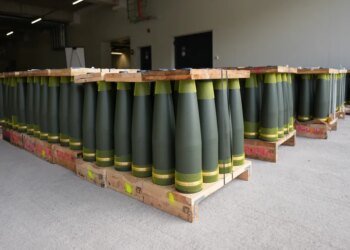
    Turkish defense industry manufacturers promised to produce long-range 155 mm ammunition in Kiviõli
    Estonia

    Turkish defense industry manufacturers promised to produce long-range 155 mm ammunition in Kiviõli

    May 7, 2026
    Gallery: Austrian ambassador hosts Vanilla Ninja Eurovision send-off | News
    Estonia

    Gallery: Austrian ambassador hosts Vanilla Ninja Eurovision send-off | News

    May 7, 2026
    Estonia’s Vanilla Ninja dive into Eurovision rehearsals in Vienna | News
    Estonia

    Estonia’s Vanilla Ninja dive into Eurovision rehearsals in Vienna | News

    May 7, 2026
    Next Post
    Four aspects of learning Danish that baffle English speakers (and one easy one)

    Four aspects of learning Danish that baffle English speakers (and one easy one)

    POPULAR NEWS

    Justin Bieber fans flood Coachella festival for headlining show – Entertainment

    Justin Bieber fans flood Coachella festival for headlining show – Entertainment

    April 20, 2026

    Over 600 flee homes as Army, NPA clash in Negros Occidental

    April 21, 2026

    Ex-DPWH exec recalls P800-M ‘delivery’ to Zaldy Co 

    April 20, 2026

    Former PM Paluckas suspends party membership, to waive immunity over criminal probe

    April 24, 2026
    Pres. Ali challenges CARICOM to transform into health research powerhouse

    Pres. Ali challenges CARICOM to transform into health research powerhouse

    April 23, 2026

    EDITOR'S PICK

    N. Korea dials down hostility toward Seoul in revised constitution: NIS

    N. Korea dials down hostility toward Seoul in revised constitution: NIS

    May 7, 2026
    Boris Dežulović A reliable bet

    Boris Dežulović A reliable bet

    April 28, 2026
    Waste Animal Bones Processed into Organic Fertilizer, Feed, and Raw Material for Aviation Diesel Fuel

    Waste Animal Bones Processed into Organic Fertilizer, Feed, and Raw Material for Aviation Diesel Fuel

    May 1, 2026
    Alen Simonyan positively evaluated his meeting with his Azerbaijani colleague

    Alen Simonyan positively evaluated his meeting with his Azerbaijani colleague

    April 19, 2026

    Recent Posts

    • Between weddings and funerals… a look at the social ties of the Bedouin tribes in Sinai
    • Sorman launches Chamber of Commerce, Industry, and Agriculture
    • Immunoglobulins: stocks under pressure due to lack of national production
    • Research and development: Memorandum of understanding between the Ministry of Health and AstraZeneca – Today Morocco

      © 2026 Agentially - Navigating shifting sovereignties and global risk .

      Welcome Back!

      Login to your account below

      Forgotten Password?

      Retrieve your password

      Please enter your username or email address to reset your password.

      Log In
      No Result
      View All Result

        © 2026 Agentially - Navigating shifting sovereignties and global risk .

        This website uses cookies. By continuing to use this website you are giving consent to cookies being used. Visit our Privacy and Cookie Policy.