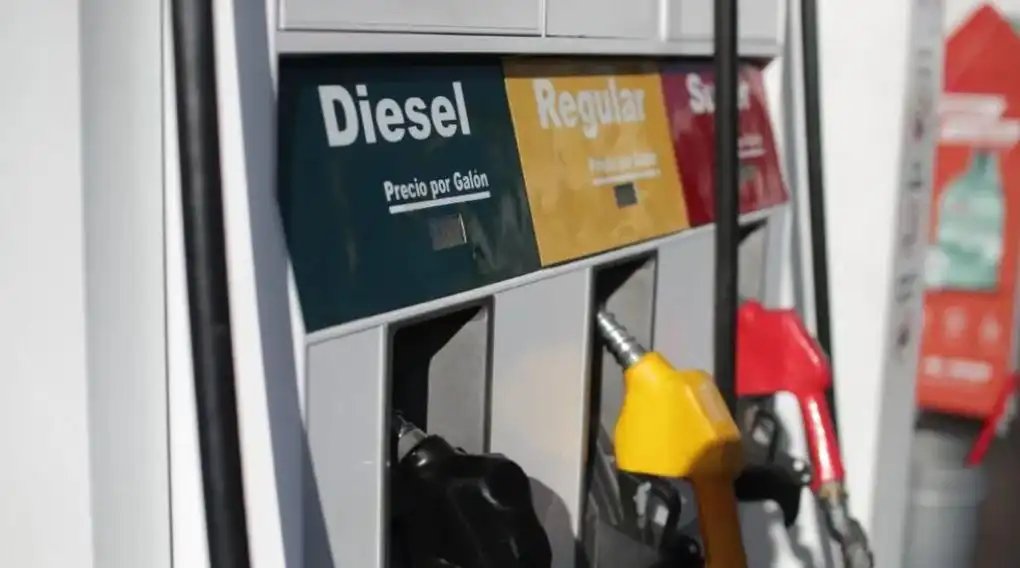
Congress does not reach consensus to define measures in response to the rise in fuel prices. Some opposition groups insist on a mixed proposal of exemption from the distribution tax, combined with a diesel subsidy, while the ruling party considers viable only the subsidy applied to the three fuels.
The body of block heads of the Legislative Body met this Thursday, April 9, behind closed doors, to discuss the issue, with the aim of seeking an agreement that will allow the creation and approval of a bill with measures to address the impact of the rise in gasoline and diesel on consumers. However, no consensus was achieved, as explained by several deputies.
Several proposals are discussed: one is the subsidy for gasoline and diesel through budget readjustment; another refers to temporarily suspending the tax on the distribution of petroleum and its derivatives (IDP). There are already several legislative initiatives in both modalities. Now a “hybrid or mixed” proposal has emerged that combines both measures; In this case, the subsidy would only cover diesel. For the latter, a bill would have to be presented.
It is planned to resume dialogue to seek a multiparty agreement, and the block heads will meet again next Monday, April 13.
Effects will take time
For political analyst Renzo Rosal, the discussion of either of the two measures is viable, given that the effects or de-escalation of the geopolitical conflict in which the countries involved participate “will not occur around the corner.”
To the extent that the conflict intensifies or persists over time, the consequences may be even stronger for the country.
“In that sense, I believe that the elimination of the tax is an immediate measure. Once the Congress of the Republic approves it, it could have a relatively quick effect,” he considered.
He added that, regarding the subsidy, it could have a longer implementation period. However, this depends on several factors: that the Congress of the Republic acts seriously and that the Executive, at the time either of the two measures is approved, has good execution capacity.
CONTENT FOR SUBSCRIBERS
Political clash stops decisions
When asked about the reasons why there is no consensus in the Legislature, Rosal affirmed that part of the responsibility falls on the Executive.
“The Executive has not been clear enough to propose the scenarios, the feasibility, but also the factors to be considered in either of the two options. What I have seen in recent days is that the Ministry of Finance has been opting more for the subsidy,” he stated.
He recalled that this week the authorities of the Ministry of Finance, the Ministry of Economy and the Superintendency of Tax Administration (SAT) have also proposed scenarios related to the elimination of the tax.
So, they have only said publicly: “We are not going that way.” However, in Congress there is a lack of elements to know what the pros and cons of these two measures are or even to propose a third option, which I don’t know what it could be, but I think we must have alternatives. “Congress has no options, it is difficult.”
He added that another factor is the lack of operators on the official side; That is, it does not have a bench. Except for the independent deputies, who are a small group, which creates difficulties.
Another factor is that the electoral dynamics have already begun, so a good part of the deputies evaluate what generates the most incentives for next year’s elections. He considered that these factors have influenced Congress not to approve any measure.
Executive limited to subsidies in the face of crisis
Rosal indicated that the Executive is being “very short” of scope, since for now it is only discussing fuel subsidies, while other governments are adopting other measures without leaving aside oil derivatives, such as containment actions against the crisis.
He added that there are no other collective compensatory measures in the current situation, compared to other governments that have already implemented various actions.
Late response
The executive director of the Freedom and Development Foundation, Paul Boteo, explained that the price of oil has been unstable due to the conflict in the Middle East and pointed out some factors why the subsidy may not have the advertised effect of benefiting the final consumer.
One of them is that it could be a late implementation, since the measure has not yet been approved in Congress. For a law like this to come into force, it must comply with the legislative process and the procedure in the Executive, in addition to the period that its implementation entails.
He said that the effects of these measures will also depend on how long the crisis lasts and its impact. He considers that, if the crisis continues for one or two more months, the implementation would be late and the measure would be approved unnecessarily, because the price of fuel would have already started to fall or would be lower than at present.
Furthermore, he pointed out that the problem with this type of measure is that an expense would be subsidized, since the money goes to companies and is not delivered directly to the consumer, which is why he believes that it will not be reflected in a reduction as proposed.
The first scenario, he indicated, is that the measure is late and that the crisis ends or the price decreases before the benefit reaches the user.
The second scenario is that the conflict extends for another year and the price remains at these levels or even higher. In that case, if it is proposed to continue applying the subsidy, the question arises as to how much of the State budget it would mean to maintain that measure.
Boteo observes other difficulties, since he considers that, once a measure like that is established, if prices continue at the same pace, there is an incentive to push for its application again, with the risk of turning it into a permanent subsidy. In addition, he criticized the lack of transparency in subsidies and that they are applied indiscriminately, not only to the vulnerable population.
Lack of consensus will mark political agenda
Political analyst Douglas González emphasized that there must be fuel subsidies to mitigate its impact and, on the other hand, temporary monetary support for low-income families, similar to that implemented during the pandemic in 2020.
He stated that, with what has been observed in Congress in recent days and being at the beginning of the 2027 electoral campaign, one of the problems will be the difficulty of achieving agreements and consensus on each political side.
“Each group will seek to enhance its profit image and try to diminish its opponents,” he warned.