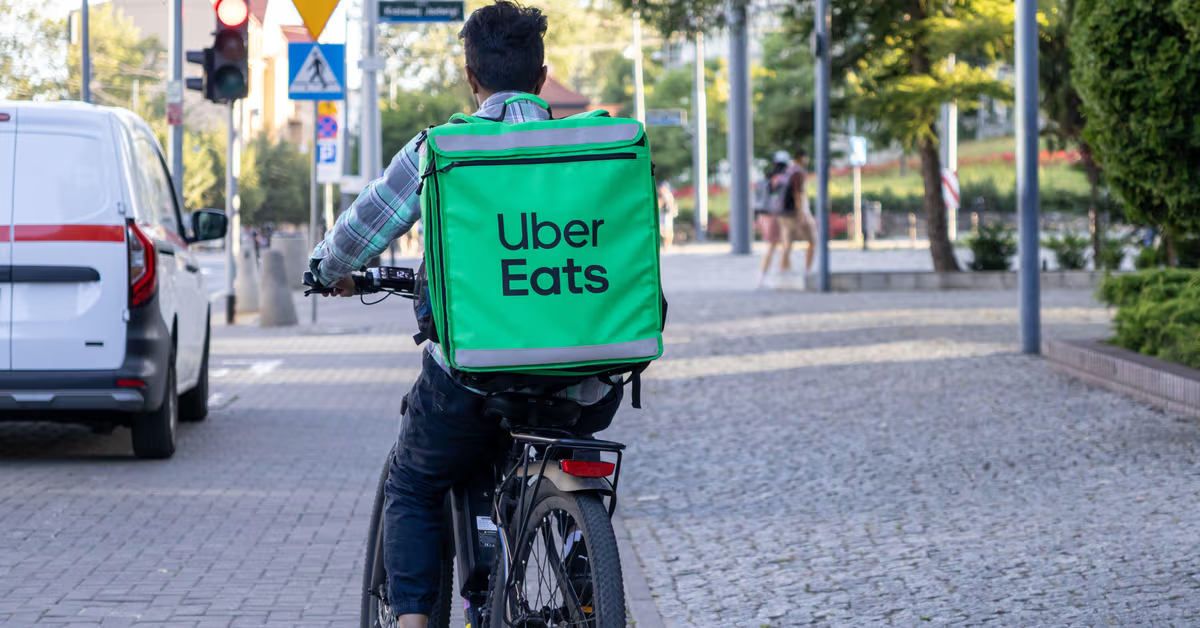
The company began operations in Helsinki on Wednesday and is headed to Espoo and Tampere later this month.

US-based food delivery service Uber Eats officially started operations in Finland on Wednesday.
It is making its first steps into the market in Helsinki, with plans to expand to Espoo and Tampere later this month.
Uber has operated its app-based ride-hailing service in Finland for years, but it started food deliveries a few days ago as it ramped up for Wednesday’s official launch.
According to the company’s Northern Europe director, Matthew Price, Uber Eats’ move into Finland is part of a broader European expansion.
“This is a big moment for us in Europe,” Price told Yle.
Finland’s app-based courier service market has undergone some changes in recent months, and at the moment there is only one main player, Wolt.
At the end of February Wolt’s main competitor, Germany-based Foodora, exited the Finnish market after more than a decade of operations in the country.
As it pulled out of Finland, Foodora said the company was focusing its operations in markets where it has an opportunity to be the leader.
The situation has left Wolt the market leader for months now. But it has a slightly different business model than Uber Eats, which in addition to ride-sharing, also offers subscription-based courier services.
Wolt also offers subscription-based deliveries, but doesn’t offer ride-hailing services.
Price said the firm’s monthly Uber One subscribers get access to rides, rewards and offers, and now the programme also includes food delivery services.
According to Price, Uber has already established a customer base of “hundreds of thousands of customers” in Finland.
Uber’s goal is to combine the ride-hailing service with deliveries. Price explained that the firm is aiming to build a more comprehensive app that customers can use to handle a large part of their everyday needs.
Last week Uber announced plans to enter the travel services market. It has signed a deal with hotel booking service Expedia allowing users to book lodging on Uber’s app.
Entrepreneurs or employees
In a precedent-setting decision last year, the Supreme Administrative Court ruled that food couriers were employees, not entrepreneurs, as the delivery firms had insisted.
The company made an unsuccessful attempt to have the decision overturned. Then, earlier this year, Wolt hired its first food couriers as employees. However, service sector union PAM has since rejected Wolt’s two-option model.
The main differences between the two arrangements hinge on benefits and protections that employees receive, compared with those working as entrepreneurs.
According to Price, Uber offers its drivers the option to choose whether they want to work as entrepreneurs or as employees.
Price did not disclose the proportion of its couriers who decided to work as entrepreneurs as opposed to employees, but said there has been interest in both options.
No shared courier accounts at Uber Eats
Earlier this year, Yle reported about thousands of Wolt courier accounts being leased to others. The public broadcaster heard from couriers paying up to 900 euros per month for the privilege of using someone else’s account.
As the couriers taking part in this arrangement are entrepreneurs, Wolt has been unable to stop the practice.
However, Price said that Uber Eats will not allow couriers to share or rent their accounts, even if it is a question of an entrepreneur doing so.
He said the company already has a built-in system to delegate replacement couriers, adding that the firm always wants to know who is making the deliveries.