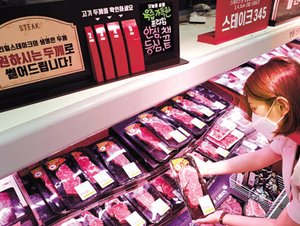
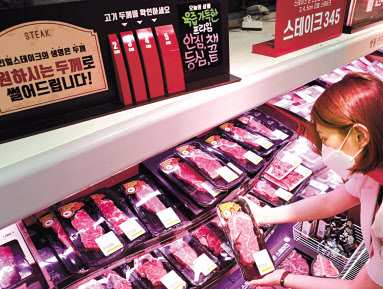
A South Korean’s annual meat consumption produces greenhouse gas emissions equivalent to about 10 flights across the country and back, a report showed Wednesday, highlighting the heavy climate footprint of Korea’s meat-heavy diet.
Meat consumed in South Korea generated an estimated 56.94 million tons of carbon dioxide equivalent emissions in 2024, according to Solution for Our Climate. The estimate was based on 3.08 million tons of beef, pork and chicken consumed in the country.
The total is equivalent to about 34 percent of the annual emissions from South Korea’s coal-fired power plants, the report said.
On a per capita basis, meat consumption generated 1,115 kilograms of carbon dioxide equivalent emissions per year. That is roughly equal to 21 one-way flights, or 10.5 round-trip flights, between Seoul and Jeju Island.
The findings are part of what the group described as the country’s first consumer-based analysis of emissions from meat consumption. The study covered beef, pork and chicken across production, processing and distribution, including imported meat.
The report found that South Korea’s meat consumption structure is more carbon-intensive than that of China and Japan, partly because Koreans eat more meat per person and consume a higher share of beef.
Beef is by far the most emissions-intensive of the three major meats. The report said beef generates about four times more emissions than pork and more than 10 times more than chicken per kilogram, largely because cattle take longer to raise and produce methane during digestion.
South Korea’s per capita beef consumption reached 15 kilograms in 2024, about 2.5 times Japan’s level and four times China’s. Koreans also consumed more pork and chicken per person than consumers in the two neighboring countries.
The research group said the actual emissions could be higher, as the analysis does not fully reflect emissions from feed production, transport and storage of live animals, and manure management in grazing systems.
“Current livestock emissions data in Korea are still centered on direct farm-level emissions, leaving post-farm stages such as slaughtering, processing and distribution largely unaccounted for,” said Sim Hyun-jung, the researcher who led the study.
“The government should establish a standardized national life-cycle database for livestock products and build an institutional framework to make the information more accessible to consumers,” she said.
forestjs@heraldcorp.com