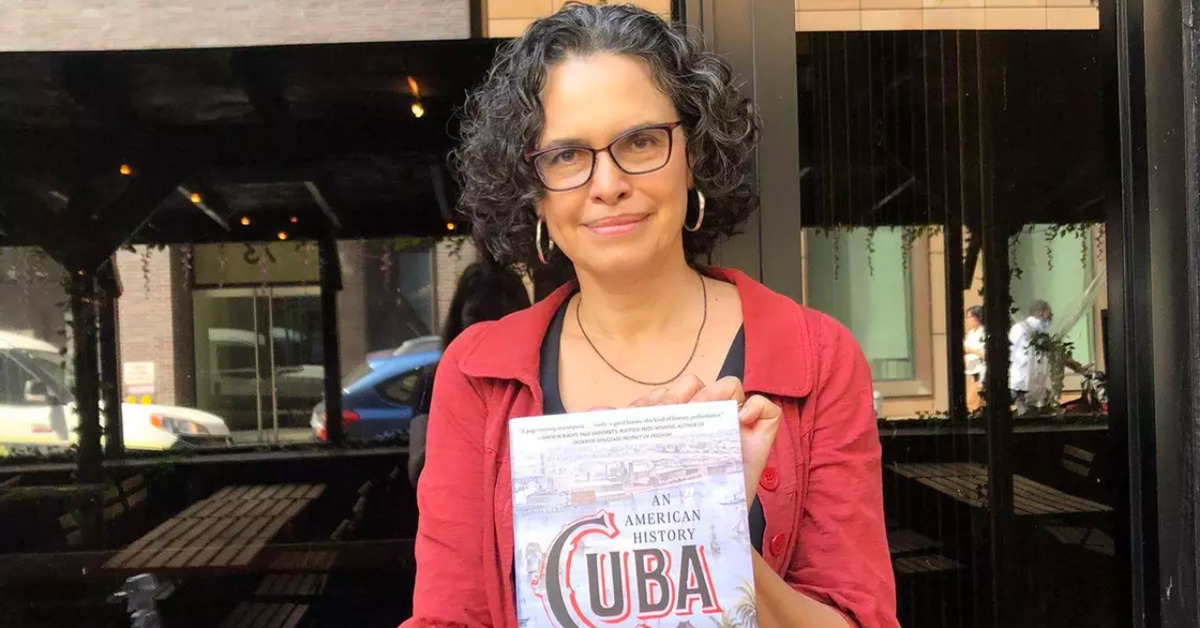
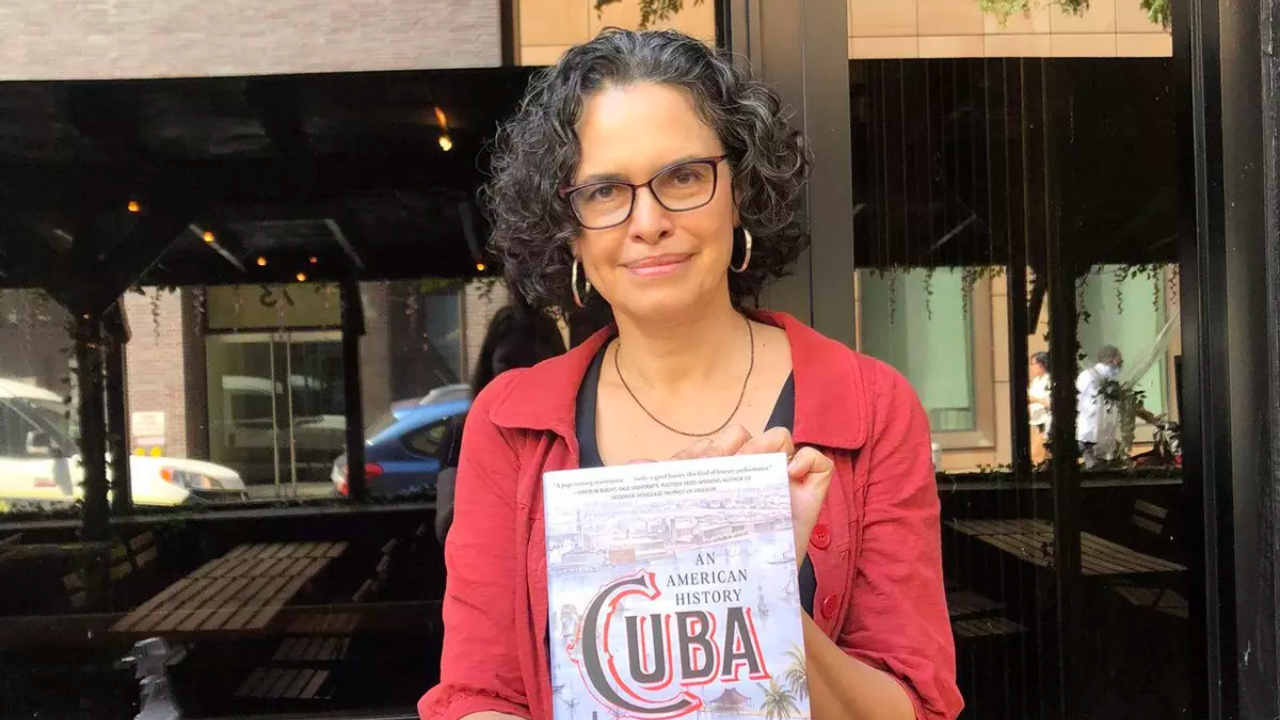
Madrid/Ada Ferrer, historian and author of Cuba: An American History –with which he won the Pulitzer in 2022–, was born in 1962 in Havana, but was only one year old when he arrived in the United States, where his father, Ramón Ferrer Correa, had already emigrated. As he did in the last years of his life, writing letters to a Fidel Castro that he almost certainly never read, the Princeton professor published this Wednesday in The New York Times a dedicated letter to Miguel Díaz-Canel to tell him that it is time “for a true national dialogue.”
Ferrer begins his letter by introducing himself to the president, although he assumes that he knows who it is, since Granma reviewed the book with which he won the prestigious awardof which his analysis of the 19th century stood out, although his interpretation of the Revolution was questioned. “On that point, many Cubans in Miami agreed,” he confesses. His family suffered the pain of separation – two of his brothers stayed in Cuba for many years – and his father, now an old man in Palm Beach, discovered his taste for writing, including the epistolary genre that pushed him to write one letter after another in which he repeated: “It’s time, Dr. Castro.”
That phrase was Ramón Ferrer’s way of urging the revolutionary leader to leave power in the hands of a younger generation and, above all, abandon communism. In 2005, and appealing to Castro’s narcissism, he told him that it was time to “bequeath to history that gesture of greatness that will make him the bravest politician of all time.”
In 2005, and appealing to Castro’s narcissism, he told him that it was time to “bequeath to history that gesture of greatness that will make him the bravest politician of all time.”
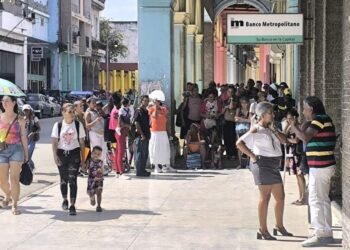
“Following my father’s tradition, I am writing to you now,” says the teacher, who refutes the message with which Díaz-Canel began his mandate and maintains to this day: “We are continuity.” “Unless they are completely isolated, they should know that continuity is not what most Cubans want,” he explains. Ferrer reviews the many hardships that Cubans currently face, from the high percentages of poverty to the inability to feed themselves because, simply, there is nothing to eat. It also mentions the lack of energy, the problems of devastated healthcare, the garbage that piles up and the medicines that cannot be found.
“For you, sir, continuity can be a political slogan. For many ordinary Cubans, it feels like a death sentence,” he writes.
The letter does not spare its criticism of the United States. Ferrer admits that he agrees with the regime that the embargo complicates everything and that it is not trivial that it cannot trade with what should be, for geographical reasons, its natural partner or main source of tourists for the same reason.
“Lately, sanctions have been crueler than ever. However, there are many things that the embargo cannot explain,” he concludes. Among them, he cites the incomprehensible gesture of stopping some reforms promised in 2011, having carried out a monetary reform – the Ordering Task – that has turned out to be a failure capable of causing critical inflation, or the excessive investment in tourism just when the sector was suffering a pronounced drop in visitors.
But there are not only criticisms for the economic. Ferrer mentions the harassment and surveillance of her colleague, Professor Alina Bárbara López Hernández, just for holding “silent vigils once a month in the Freedom Park” in Matanzas with “a white sign to symbolize the absence of fundamental freedoms.” Maykel Castillo also criticizes the situation of the artists imprisoned and sentenced to nine and five years in prison. Osorbo and Luis Manuel Otero Alcántara, who he says “are languishing in prison for their art, their voice and their example.”
The professor asks Díaz-Canel not to confuse her words, which do not constitute in any case a defense of US policy. “Much less a call for military intervention, something I do not support”
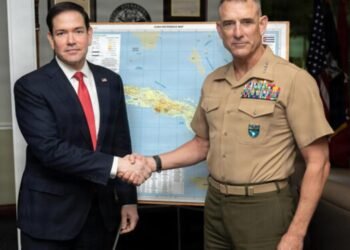
Complaints do not replace policies, says Ferrer, who directly asks the president what plan he has to counteract the embargo and negotiate its relaxation. The professor asks Díaz-Canel not to confuse his words, which do not constitute in any case a defense of US policy. “Much less a call for military intervention, something I do not support,” she says, and harshly reproaches the words of the president, Donald Trump. ”Cuba is not theirs for the taking.”
Ferrer assures that he explains in his History classes what the Platt amendment is and talks about Juan Gualberto Gómez, “who warned that granting this right to the United States was like giving it ‘the keys to our house.'”
However, he also accuses the regime of having handed over the sovereignty of Cuba to others, so that the word has lost its meaning. “It replaced dependence on the United States with dependence on the Soviet Union and, later, Venezuela. Without an external protector, Cuba is crumbling and sovereignty is beginning to seem like an abstraction. You cannot eat sovereignty,” he adds.
Ferrer once again asks the president, directly, to answer what he plans to do to get out of the situation that has been reached. “If they are not willing to look for real answers, if they only offer a ruinous continuity with no future, then, as my father would say, the time has come. It is time, at the very least, for a true national dialogue,” he concludes.