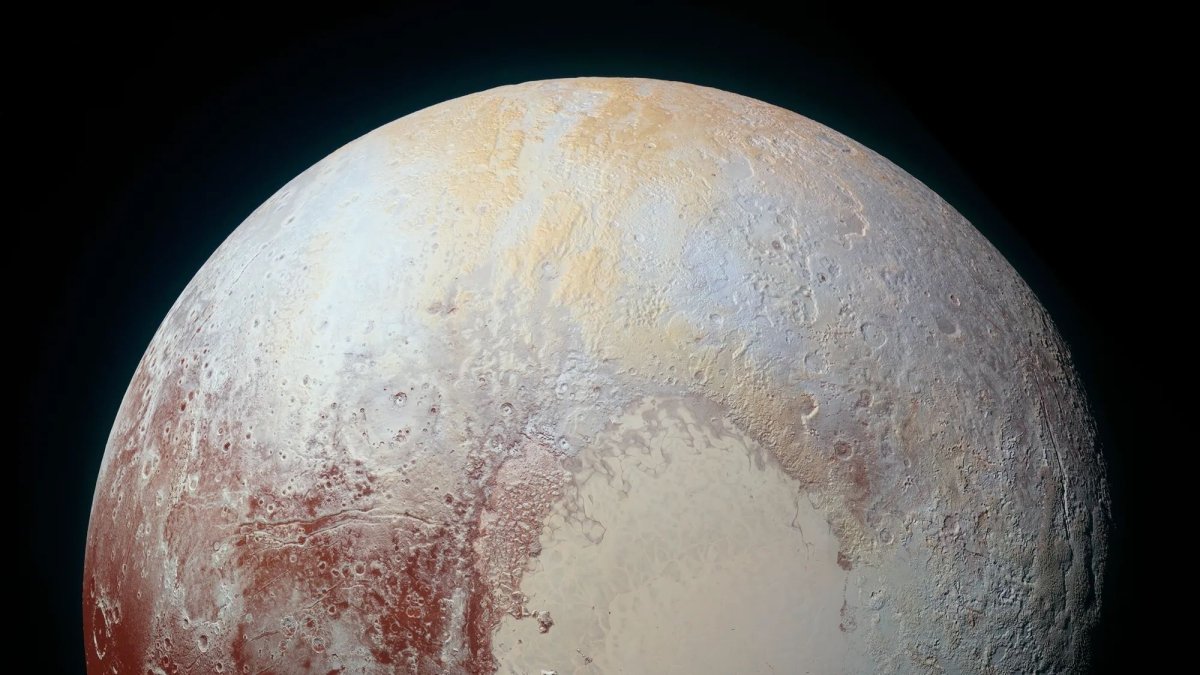
The CEO of NASA, Jared Isaacman, spoke before the American Congress: “We want to make Pluto a planet again.” The celestial body was discovered (by a US astronomer) in 1930
Let’s give Pluto back what Pluto (probably) deserves: namely planetary status. This is even supported by the CEO of NASA, Jared Isaacman, who intervened somewhat surprisingly to have his say on a dispute that has lasted for years the decision to downgrade that celestial body so far away and so distant but capable, ever since we went to school, of igniting the imagination and making ourselves loved. How can we not think that the Greek god of wealth, among other things, even inspired Walt Disney, who with the name of the “planet” named Mickey’s dog (Pluto). A fascination that has also struck scientists. Which they have in fact cataloged as Plutonium the chemical element with atomic number 94the one most used in nuclear fission bombs and the one that Enrico Fermi had discovered first, calling it “hesperium”.
Pluto, therefore, could have its revenge. But first of all we need the background, that is relegation to a sort of second division of the cosmosthe size of the so-called “dwarf” planets. For 76 years – the discovery occurred in 1930 thanks to the American astronomer Clyde W. Tombaugh, engaged in the search for objects beyond the orbit of Neptune that could explain its anomalous behavior – it had been considered the ninth planet of the Solar System. But doubts had already begun in 1992 and the creaks about cataloging. It was only the appetizer of the final blow, determined by the discovery, between 2004 and 2005, of Haumea, Makemake and Eris, three celestial bodies from the same region and of similar dimensions. So on August 24, 2006, during a conference in Praguethe International Astronomical Union (IAU) decided to reclassify Pluto: no longer a planet, but a dwarf planet. Scientists were in fact oriented towards establish the necessary criteria more rigorously so that an object can aspire to the definition of a planet. These are: orbiting the Sun; being spherical in shape; having cleared its orbit of other bodies. Pluto did not respect one of the three established points, namely that of the so-called orbital dominance: essentially, it shares – so it has been argued – its orbit with other objects of similar size.
Not everyone agreed on the transition, in fact the measure gave rise to a dense debate over the years. Then in 2015 – it seems like yesterday, but fifteen years have already passed – NASA’s New Horizons probe reached good Pluto, transmitting to us the first images from close range. The photos revealed towering mountains, vast nitrogen glaciers and a now-famous heart-shaped region. Even if those photos and videos were not enough to requalify it as a planet, Pluto can certainly thank the fly-by: if nothing else, it has reignited attention towards it.
Now there is indeed a step forward – or backward: it depends on your point of view – from NASA, intending to restore the planet’s lost status and to Clyde Tombaugh the right recognition for having discovered it. But what is the US space agency’s action based on? On the fact that new supporting documents will be produced. «I’m definitely on the side of those who want to make Pluto a planet againIsaacman said during a hearing on NASA’s 2027 budget before the Senate Appropriations Committee. At one point Senator Jerry Moran asked him a specific question about Pluto, getting this response: «I would like to add that right now we are working on some documents that we would like to bring to the attention of the scientific community to reopen the discussion and ensure that Clyde Tombaugh also receives the recognition he has been given in the past and deserves to receive again.” It seems that even Mickey Mouse applauded…