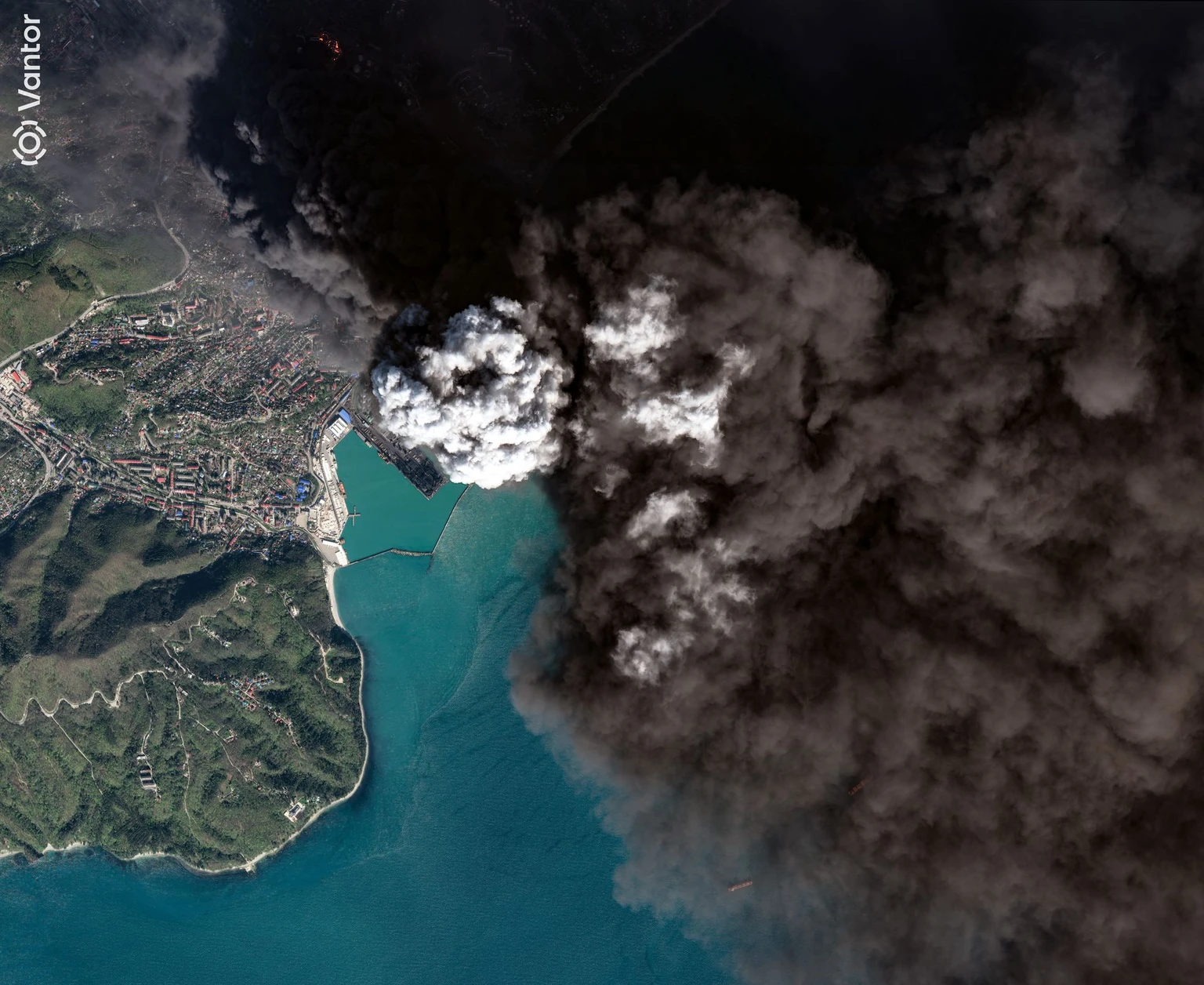
Over the past 10 days, in response to intensified Russian airstrikes, Ukrainian forces have carried out a series of drone strikes against an oil refinery in the Russian Black Sea city of Tuapse, the Kyiv Independent writes.
The city is a key point for Russian oil exports, revenue that funds the Kremlin’s military operations. After the attacks, hundreds of tons of oil leaked from the facility. Pollution covers both the city and the coast, turning the area into an ecological disaster zone.
Ukraine has attacked refineries in Russia before in order to limit oil revenues. But the case in Tuapse stands out for its scale and consequences.
An ecological catastrophe with a human dimension
Since the beginning of the full-scale war, oil spills in the Black Sea region have become more frequent. Until now, however, most serious incidents were related to the so-called Russian “shadow fleet” of tankers.
The worst case is from December 2024, when two technically unfit ships sank during a storm and spilled thousands of tons of oil into the Black Sea.
Although the pollution was more widespread then, the effects in Tuapse had a more direct effect on the people.
“The sinking of the tankers affected the marine ecosystems. In Tuapse, the pollution covered both the air and the soil,” says a Russian environmental expert, who requested anonymity. “It’s too early to fully assess, but there will be ramifications for infrastructure, agriculture, animals – many areas.”
This time, the local population is exposed to toxic air pollution. According to experts, thousands of people could be affected, with an increased risk of cancer and other diseases in the future.
In parallel, ecosystems already weakened by previous spills will have to take another hit.
Ecologist Eugene Simonov from the UWEC group warns that river mouths in the area are seriously damaged.
“Dolphin populations, which already reach a mortality peak in April, are likely to be further affected. Birds are also vulnerable as this is a migration period,” he says. “The rest of the effects will become clear later, but for now the pattern resembles that of 2024-2025.”
A disaster that could have been prevented
According to independent experts, some of the damage could have been avoided.
The reaction of the Russian authorities comes late. A regional state of emergency was only declared on April 28 – almost two weeks after the first strike on April 16.
“This should have been done immediately. A federal state of emergency should have even been declared,” says a Russian environmentalist.
At the same time, official instructions to the population underestimate the risk. Only on April 28, Rospotrebnadzor recommends that people stay at home and wear medical masks.
That same day, Vladimir Putin refused to admit that there was already an ecological disaster.
“Medical masks are not enough,” says Vladimir Slivyak of the environmental organization Ecodefense. “Respiratory masks are needed to protect against fine toxic particles – some of which can cause cancer.”
Evacuation also starts late and is limited. The orders only cover people in the immediate vicinity of the refinery.
According to experts, the spill itself could have been contained.
“Refineries must have hermetic protective embankments that stop the spread of oil,” explains the anonymous expert. “Even if there were breaches, they could have been plugged in hours with a technique. But nothing was done after the first attack.”
Repeating pattern
The case in Tuapse is not isolated. According to observers, it follows a well-known pattern of reaction by the Russian authorities.
“First the problem is ignored. Then it’s downplayed. And only when it gets too big is it partially acknowledged,” says Slivjak.
In his words, the reaction in this case – including Putin’s statements – shows that this pattern remains unchanged.
Meanwhile, the consequences are piling up – not only for nature, but also for the people who live in the shadow of a war whose effects go far beyond the battlefield.