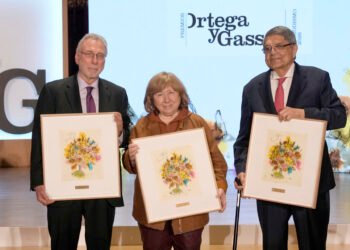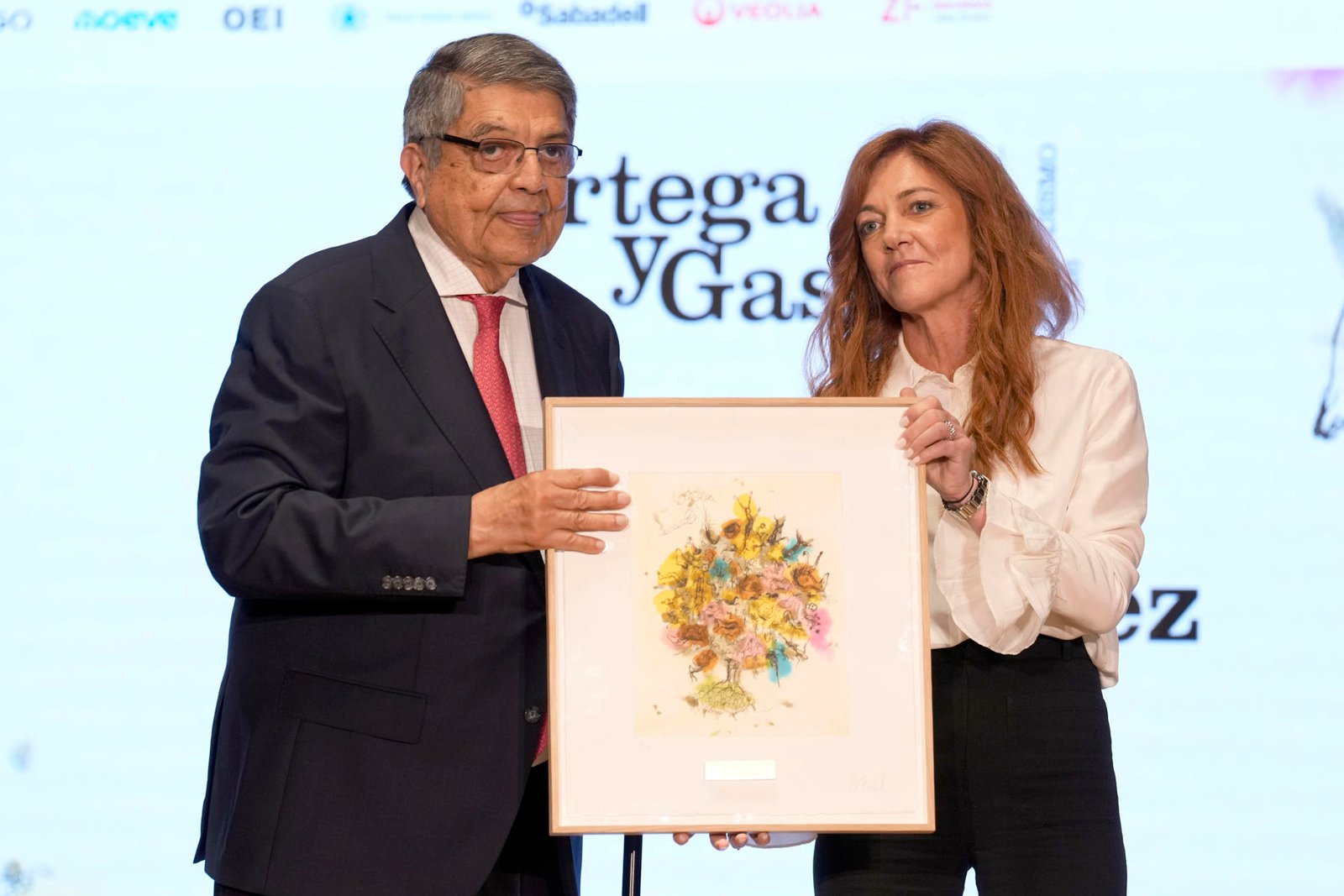
I want to begin these brief words by dedicating the José Ortega y Gasset award that I receive today to the more than 300 Nicaraguan journalists who have been forced into exile by the new family dictatorship that oppresses my country. A tyranny that is the enemy of speech, which has curtailed the right to free expression in the country, where there is no longer any independent media. Sixty of these media outlets, including television stations, radio stations, newspapers, and Internet portals, have been closed or their facilities confiscated.
Meanwhile, silence extends over Nicaragua, while the world looks elsewhere, in a time of conflict and uncertainty. Silence and oblivion.
In the final days of the Somoza family dictatorship, which also repressed free information, journalists came to use the resource of transmitting the news from churches, where people gathered to listen to it. It was what was then called “the journalism of the catacombs.” Today, journalists prepare information from outside the borders, in Costa Rica, Mexico, the United States, Spain, and it reaches Nicaragua through digital platforms. It is the journalism of the virtual catacombs, supported by a network of anonymous correspondents within the territory, who work in secret.
Clandestine journalism that challenges absolute power and prevails over silence and fear, to fulfill the critical duty of reporting. To those men and women who make it possible from their trenches, I pay my tribute, and on behalf of all of them I receive this award that the newspaper El País, so closely linked to my life, grants me on its 50th anniversary of founding, in the most enviable of companies, that of two great contemporary journalists:
Svetlana Aleksievich, who has turned reporting into a literary art of such magnitude that she deserved the Nobel Prize in Literature; and Martin Baron, an example of ethical journalism that investigates the truth to the bottom, without concessions to power. Being on this stage of honor next to both of them is an award in itself.
I feel that this award, upon being awarded to me, seeks in me the columnist that I have been for decades, only to remember that my first columns in El País appeared in 1985; but also the journalist I always wanted to be, between the typing of typewriters and the smoke of cigarettes in the din of the newsrooms, or a reporter on duty on the night shift, like my countryman Rubén Darío who at the age of twenty covered street events in Santiago de Chile as a chronicler for the red page.
But there is also another happy job, which is that of the writer of inventions, which takes me every morning to type with the rigor of a typist and always youthful enthusiasm, in the solitude of my study, before in Managua, now in Madrid; It is the same fingers that move over the keys: those of those who narrate real facts, and those of those who tell lies. But he knows that if on the one hand the imagination is more legitimate the more it is free, on the other hand it cannot be free except while searching for the truth.
I can say that this is the commitment of a lifetime dedicated to writing, under an irreducible commitment to words. In one profession or another, writer or journalist, they are the same words.
Thank you very much then for rewarding my words, in your uncompromising search for freedom.