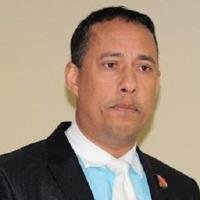
FORMER police commissioner Gary Griffith has renewed his call for police body cameras, insisting their absence continues to cloud public understanding of deadly police encounters.
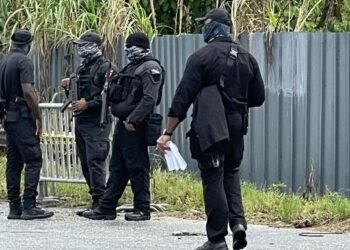
This as he defended officers involved in Saturday’s fatal anti-crime operation in Cunupia.
Speaking with the Express yesterday, Griffith said while he fully supported law enforcement officers who act within the rules on the use of force, the lack of body-worn cameras leaves too much room for speculation and mistrust.
‘This is where the blur comes in – the absence of body cameras,’ Griffith said, stressing that technology, not rhetoric, was needed to bring clarity to police operations.
‘Get the bloody body cameras,’ he said.
Griffith aligned himself with comments made by Homeland Security Minister Roger Alexander that those who choose a criminal lifestyle run the risk of violent confrontation with police.
He said the reality facing officers on the ground could not be ignored.
‘These officers place their lives at risk. If all of them (the criminals) had firearms, the police by right have to return fire to save their own lives,’ Griffith said. ‘Hats off to them. Law-abiding citizens’ lives would have been saved (because of the actions of the police).’
However, he said that even justified police actions are now routinely questioned because there is no video record to support officers’ accounts.
Griffith recalled that within about two months of his tenure he had secured about 1,000 body cameras for the Trinidad and Tobago Police Service (TTPS), but said successive administrations failed to build on that initiative.
He also rejected recent complaints by current Commissioner of Police Allister Guevarro that the cameras required manual activation.
‘These same cameras I acquired are used all over the world by other law enforcement agencies. If there was an issue with the cameras I acquired, then get other cameras,’ Griffith said.
He emphasised that body cameras were meant to protect officers, not undermine them, particularly during high-risk operations and roadblocks.
‘You do not need to get 7,500 cameras for every single officer,’ he said. ‘During special operations, officers can equip themselves. This would reduce public criticism and constant questions about the lawfulness of police actions.’
‘Crime has nothing to do with skin colour’ Turning to Alexander’s appeal to young black men to turn away from crime, Griffith said criminality should not be framed along racial lines.
‘Crime has nothing to do with skin colour. It has to do with whether you are a criminal or not. If you are a killer, a rapist, a home invader, you are an enemy of the State,’ he said.
Griffith further argued that criminals using high-powered firearms should be treated as terrorists and subjected to stricter legal consequences.
‘When these criminals have assault weapons, they should be deemed terrorists. But as the law stands, they can be granted bail and be back out in no time. They should be incarcerated for life,’ he said.
On Saturday following the police operation, Alexander urged young black men to reject criminal activity and strive to build lives that bring pride to their families and communities. He had also commended the joint response by the police and Defence Force in confronting the suspects linked to the home invasion.