
Iran wants a deal: Trump
Iran warns vessels to solely use Iran-designated Hormuz corridor
U.S. Secretary of State Marco Rubio said Tuesday the U.S. military campaign against Iran, which was jointly launched with Israel on Feb. 28, is “over,” reported Xinhua.
“The operation is over, Epic Fury, as the president notified Congress. We’re done with that stage of it,” Rubio said at a White House briefing.
“We’re now on to this Project Freedom,” a military operation the Pentagon launched Monday to guide stranded commercial vessels out of the Strait of Hormuz, Rubio went ahead, noting Washington’s priority now was reopening the crucial global energy waterway.
The announcement is seen as the Trump administration’s attempt to sidestep the War Powers Resolution, which requires the president to seek congressional authorization to continue military hostilities after 60 days.
Rubio repeated U.S. President Donald Trump’s claim that the 1973 law that limits the president’s war power “is 100 percent unconstitutional.”
The Trump administration notified Congress last week that hostilities against Iran had been “terminated” as it reached a 60-day legal threshold.
However, Trump has not ruled out resuming military strikes amid stalled talks. Rubio said that Iran now has the opportunity to “make it clear” that they do not want a nuclear weapon, which he said is key to a peace deal with Washington.
Iran would “hold the world hostage” with a nuclear weapon, Rubio warned, accusing Tehran of trying to develop “long-range delivery missiles” and build underground facilities for uranium enrichment activity.
“Someone has to do something about it,” he stressed.
Earlier on Tuesday, Trump refused to spell out what would constitute a violation of the fragile ceasefire with Iran, reiterating that Tehran wants a peace deal with Washington.
On Feb. 28, the United States and Israel launched joint strikes against Tehran and other Iranian cities, killing Iran’s then Supreme Leader Ali Khamenei, senior commanders, and civilians. Iran responded with waves of missile and drone attacks on Israeli and U.S. targets across the Mideast region, and tightened control over the Strait of Hormuz.
A ceasefire took effect on April 8, followed by talks between Iranian and U.S. delegations in Islamabad that ended without a deal.
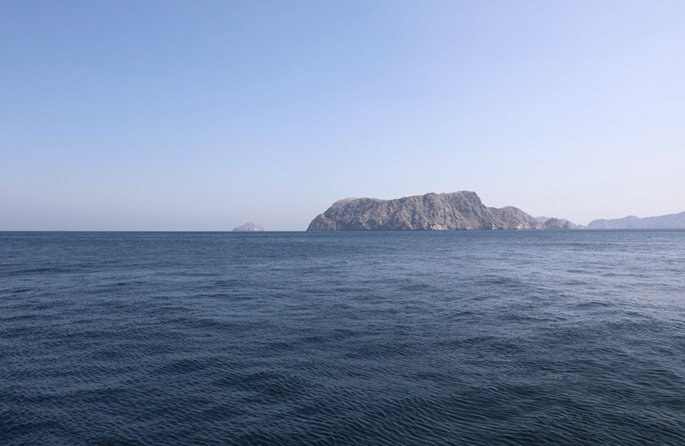
Meanwhile, Iran’s Islamic Revolution Guard Corps (IRGC) Navy on Tuesday reiterated its warning to all vessels seeking to transit the Strait of Hormuz to solely take the corridor previously announced by the country.
It issued the warning in a post on social media platform X, stressing that any deviation by vessels to other routes will face the IRGC Navy’s “decisive” action.
Meanwhile, Iran’s semi-official Fars news agency on Tuesday cited an unidentified informed source as saying that two U.S. commercial vessels have been stuck in the southern part of the Strait of Hormuz near Oman’s coast, with no way forward or back.
Iran tightened its grip on the Strait of Hormuz beginning Feb. 28, when it barred safe passage to vessels belonging to or affiliated with Israel and the United States following joint strikes on Iranian territory.
U.S. President Donald Trump said Sunday that the United States will begin guiding ships out of the Strait of Hormuz on Monday morning.
In response, Iran’s main military command, Khatam al-Anbiya Central Headquarters, warned that “any foreign armed forces, especially the aggressive U.S. army, will be attacked if they intend to approach and enter the Strait of Hormuz.”
The U.S. Central Command said Monday that two U.S.-flagged merchant vessels had successfully passed through the Strait of Hormuz as U.S. navy was helping “restore commercial shipping.” The IRGC rejected the claims, saying that “no commercial vessel or oil tanker” has transited the Strait of Hormuz.
Meanwhile, Trump on Tuesday refused to spell out what would constitute a violation of the fragile ceasefire with Iran, reiterating Tehran wants a peace deal with Washington.
Asked by reporters in the Oval Office what actions by Tehran would cross the red line of the ceasefire, Trump gave no specifics.
“Well, you’ll find out, because I’ll let you know,” he said, adding that Iran is “looking around for little boats to try and compete with our great Navy.”
“They (the Iranian leaders) know what to do,” he said. “They know what not to do, more importantly.”
“Iran wants to make a deal,” Trump said.
Trump insisted that “nobody’s going to challenge the blockade” imposed by the U.S. Navy, though hours earlier, Chairman of the Joint Chiefs of Staff Dan Caine told reporters at the Pentagon that Iran has attacked U.S. forces “more than 10 times” since the ceasefire began earlier last month.
Two U.S. Navy destroyers passed through the strait on Monday under a sustained Iranian attack, including missiles, drones and small boats. Trump said U.S. forces destroyed seven or eight Iranian small boats in the engagement.
The U.S. blockade against Iranian ports has redirected 51 vessels “to turn around or return to port” as of Tuesday, the U.S. Central Command said on X.
US forces guiding ships in Hormuz “temporary”: Pentagon chief
The U.S. military operation to guide commercial ships out of the Strait of Hormuz, named Project Freedom, is temporary and separate from Epic Fury, the large-scale military operation against Iran launched on Feb. 28, U.S. Defense Secretary Pete Hegseth said Tuesday.
“To be clear, this operation is separate and distinct from Operation Epic Fury,” Hegseth told a press conference at the Pentagon on Tuesday morning.
“Project Freedom is defensive in nature, focused in scope and temporary in duration,” he added. The operation was launched on Monday.
Hegseth insisted the U.S.-Iran ceasefire remains in place, though the two sides exchanged fire in the Strait of Hormuz on Monday.
“No, the ceasefire is not over,” said the Pentagon chief. “And we expected there would be some churn at the beginning, which happened.”
The U.S. military is “locked, loaded and ready to go” if necessary, he added.
Meanwhile, Hegseth reiterated that the White House does not need to seek congressional approval to continue the war with Iran since the ceasefire with Iran is not over.
Iran has attacked U.S. forces more than 10 times since the ceasefire began earlier last month, Chairman of the Joint Chiefs of Staff Gen. Dan Caine said at the press conference.
However, it is “below the threshold” for the U.S. military to restart combat operations, said Caine.
“Since the ceasefire was announced, Iran has fired at commercial vessels nine times and seized two container ships, and they’ve attacked U.S. forces more than 10 times, all below the threshold of restarting major combat operations at this point,” the general said.
“The threshold of restarting is a political decision above my pay grade. What I’ll say is it’s low harassing fire right now. It feels like Iran is grasping at straws,” Caine said.
Only two vessels, both U.S.-flagged merchant ships, are known to have transited the Strait of Hormuz so far, according to the Pentagon. CBS News reported Monday night that two U.S. Navy destroyers had passed through the strait after navigating an Iranian barrage.
US refuelling aircraft sends emergency code after operating over Gulf
A second U.S. Air Force refueling aircraft that was carrying out operations over the Gulf squawked 7700 emergency signal on Tuesday in Saudi Arabia’s airspace as it was on its way back to Israel’s Tel Aviv, the semi-official Tasnim News Agency reported, said Xinhua.
The report identified the aircraft as a Boeing KC-46 Pegasus, saying the first aircraft that had sent the same distress code earlier in the day was a KC-135R Stratotanker.
Tasnim cited a post by MenchOsint military observer on social media platform X as saying, “Wouldn’t be surprised if they collided mid-flight earlier.”
Flight tracking data and regional reports show that the KC-135 Stratotanker, operated by the U.S. Air Force, reportedly experienced an in-flight emergency over the Gulf and Strait of Hormuz region and squawked 7700 before vanishing from radar tracking systems.