The United Kingdom and Finland, current co-chairs of the 51-member Media Freedom Coalition (MFC), have raised concerns over what they describe as “troubling trends” in Georgia’s media environment, in a joint op-ed marking World Press Freedom Day and supported by the Coalition’s fourteen other member states.
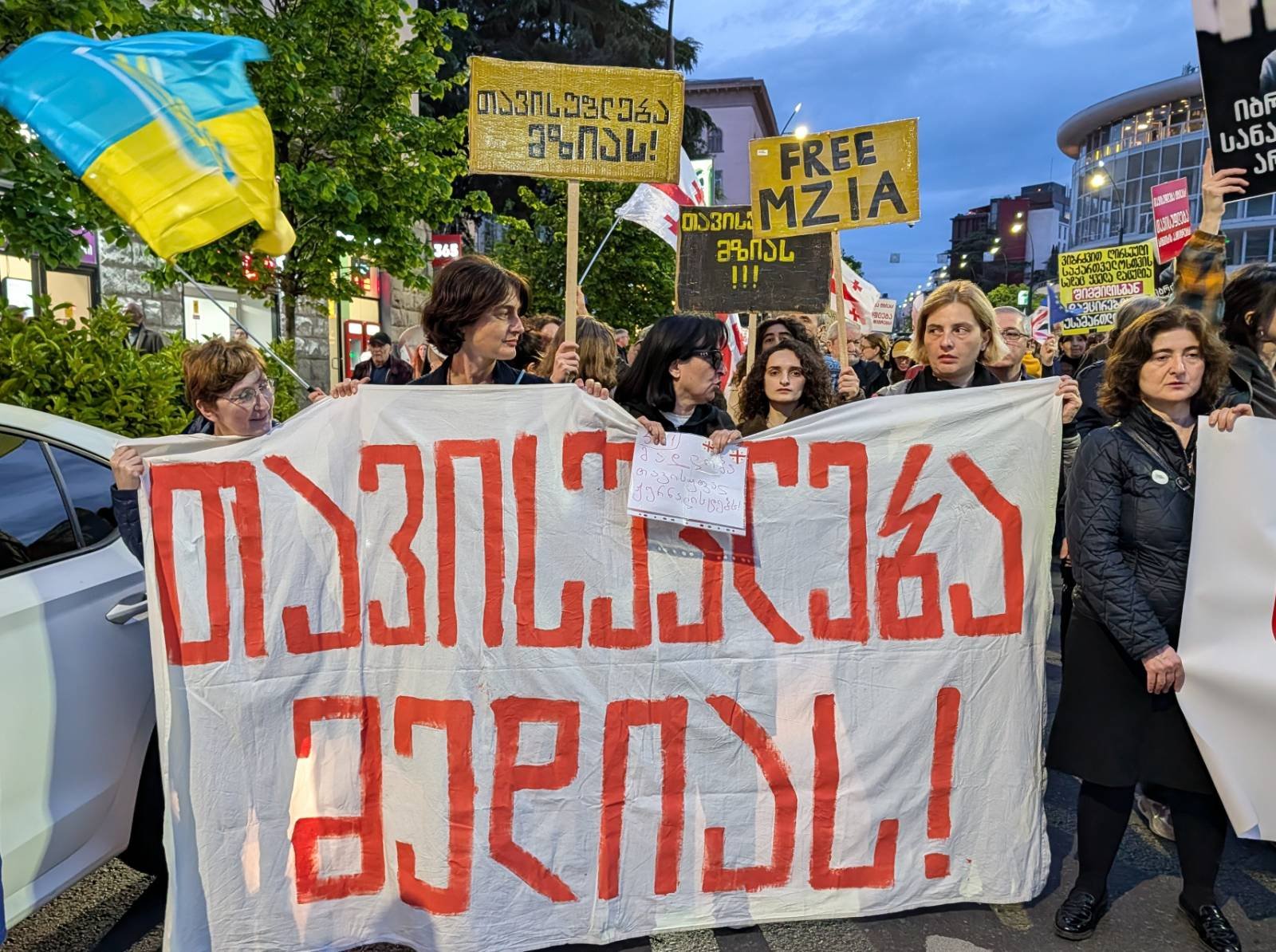
The statement, released by the British Embassy in Tbilisi on May 4, was endorsed by Austria, Belgium, Denmark, Estonia, Germany, Iceland, Ireland, Latvia, Lithuania, Luxembourg, the Netherlands, Norway, Poland, and Sweden. It also called for the release of Mzia Amaghlobeli, a jailed journalist and founder of Netgazeti and Batumelebi outlets.
“At a time when international peace feels fragile and democracy is under strain, we are proud to stand with those journalists who continue to speak truth to power, often at great personal risk,” the statement said.
“In Georgia, we see troubling trends,” the co-chairs outlined, citing the recent ranking of the Reporters Without Borders (RSF), which showed that Georgia’s press freedom ranking has “fallen dramatically,” dropping from 77th place in 2022 to 135th in 2026, characterizing it as “one of the steepest declines.”
“RSF categorises Georgia’s media environment as ‘difficult,’ citing official interference, violence against journalists, and restrictive legislation that is shrinking the space for free expression. There are at least 50 journalists documented injured, beaten, detained, or obstructed during demonstrations. These attacks are unacceptable. Journalists must be free to investigate, to report, and to question those in power without fear,” the statement said.
The co-chairs also cited the OSCE’s Moscow Mechanism critical report released on March 12, in which, according to the statement, the Sole Rapporteur “highlights a pattern of violence during protests in Tbilisi and other Georgian cities during 2024-2025 protests, including against journalists.”
It further said that “in his recent report the Council of Europe Human Rights Commissioner notes the lack of accountability for allegations of unlawful arrests and excessive use of force against protesters and journalists during protest in 2024-2025, as well as increasingly restrictive legislation affecting the rights to freedom of expression, peaceful assembly, and association.”
The co-chairs singled out the case of jailed journalist Mzia Amaghlobeli, saying it “powerfully symbolises what is at stake,” noting that “her arrest, treatment and imprisonment following protests in 2025 were condemned internationally as unjust and politically motivated.”
“We call again for her release,” the statement said, noting that “aim of imprisoning a journalist like Mzia Amaghlobeli is to intimidate an entire profession.”
Reacting to the joint op-ed, Shalva Papuashvili, speaker of the disputed parliament, who shared the statement on social media, dismissed it as “crocodile tears” filled with “false pathos.” He said it came “from an embassy that has been trying for two months to kill off two leading Georgian media outlets,” apparently referring to the UK’s recent sanctions on pro-government channels PosTV and TV Imedi as part of its wider measures against Russia.
Also Read: