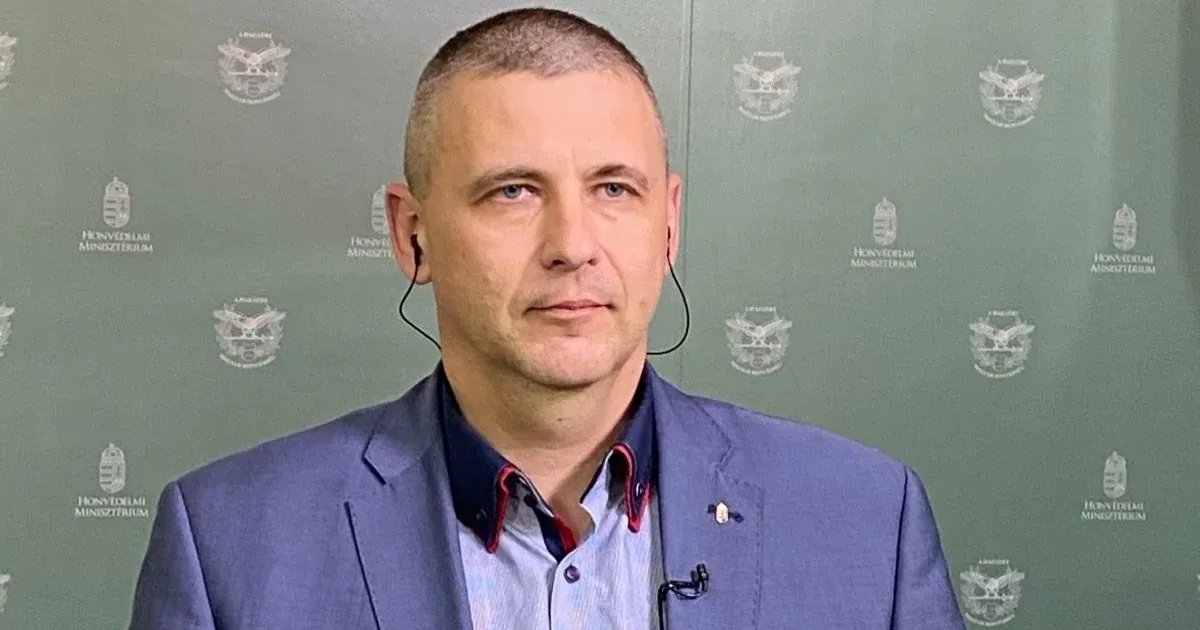
“The handover and acceptance tasks have also begun in the Ministry of National Defense. The professional delegates are already inside, working, doing their work, as they should at this time,” he wrote on his Facebook page Ruthenian-Szendi Romulusthe successor of the outgoing Kristóf Szalay-Bobrovniczky. The future Minister of National Defense also wrote that
“However, the current Minister of National Defense has not contacted me to inform me about the real situation of the Ministry. He appointed the Secretary of State for Public Administration to this task.”
According to Ruszin-Szendi, at the same time, there is something to talk about, and he mentioned as examples the ongoing cases, the state of the budget or ongoing disciplinary procedures, including the circumstances of the hand grenade accident or the aircraft parts that disappeared from the barracks in Kecskemét. “If not during the handover, but within a short time all such cases for investigation costs”, he continued by saying that where necessary, accountability will not be left behind.
“The program is clear: the first priority is to restore the morale of the staff.
Because the basis of national defense is not communication, but people.”
Prior to the election, Szilveszter Pálinkás spoke about the conditions within the armed forces in a detailed, long interview. The 33-year-old soldier, formerly of the Hungarian Armed Forces was the face of its national recruitment campaignappeared in public for the first time with his name and face. Last summer we wrote it on the Telexthat he submitted his request for demobilization, which he justified by saying that he did not agree with the leadership of the Ministry of National Defense and that he could no longer identify with the organization of which he was the face.
Szilveszter Pálinkás said that there had never been a greater moral low point in the history of the Hungarian Armed Forces, that so many soldiers had never wanted to be demobilized, and that the decisions of the Minister of National Defense had now killed the military profession. The text summary of our interview with Pálinkás Szilveszter can be read here.