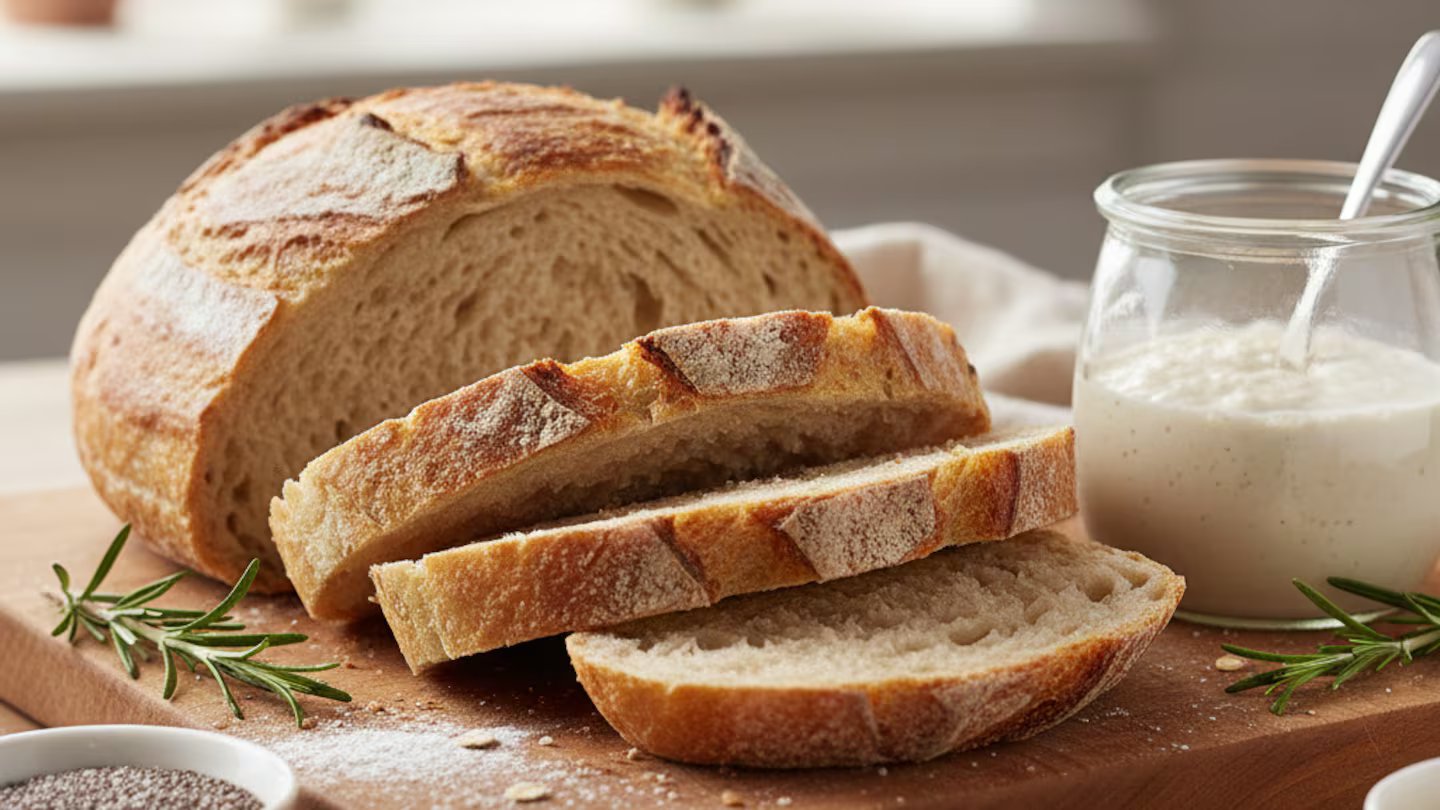
Sourdough bread It offers marked differences compared to common bread. The main one is found in its natural fermentation process, which replaces the use of industrial yeast with a live culture of bacteria and wild yeasts.
This procedure allows a slower and deeper fermentationwhich intensifies flavor, improves texture, extends shelf life and increases its nutritional value without the need for additives.
The study Exploring the Nutritional Impact of Sourdough Fermentation: Its Mechanisms and Functional Potential (Foods, 2024) confirmed that sourdough bread improves the absorption of essential minerals such as iron, zinc and calcium. Also helps reduce the glycemic index and increases the presence of antioxidant compounds.
Key Differences Between Regular Bread and Sourdough Bread
Traditional bread is made with commercial yeast. This speeds up its preparation but limits the nutritional benefits.
On the other hand, sourdough bread is developed with a natural culture that allows fermentation between 12 and 24 hours. This produces a airier crumb, a crispy crust and a more balanced nutritional profile.
This artisanal technique improves digestion, favors the intestinal microbiota and avoid the use of chemical additives for its conservation.
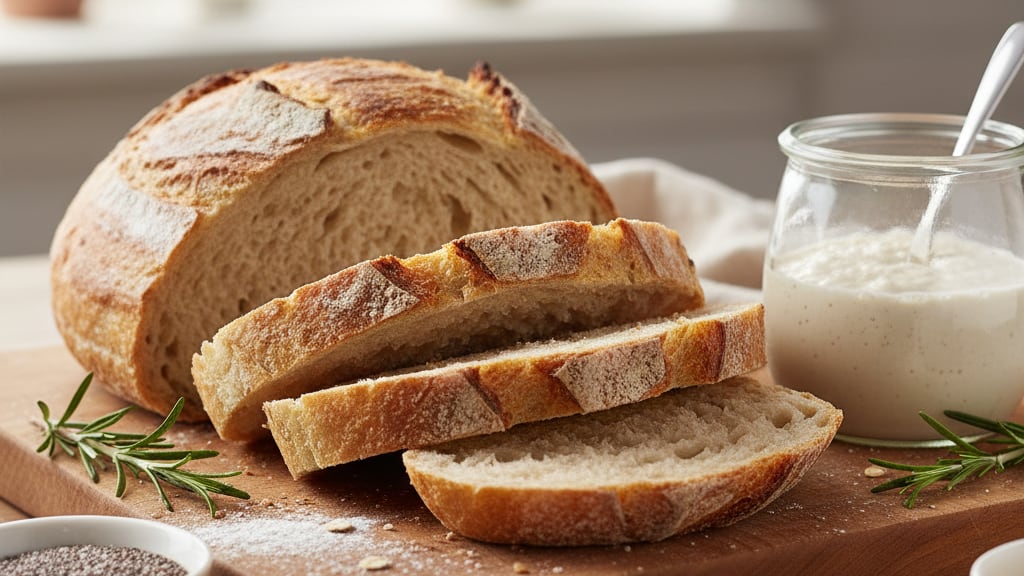
Health benefits of sourdough bread
Sourdough bread is distinguished by its positive impact on nutrition and digestive health.
Among its main benefits are:
- Improves digestion thanks to its prolonged fermentation.
- Increases the absorption of minerals such as iron, zinc and calcium.
- Help regulate blood glucose levels.
- Contains natural antioxidants with anti-inflammatory effect.
- Prolongs the feeling of satiety.
- It has better conservation without artificial additives.

Sourdough bread recipe with high nutritional value
Preparing sourdough bread at home can offer a functional food, rich in fiber and with nutritional properties enhanced by the fermentation process.
Ingredients:
- 500 g organic whole wheat flour (wheat or spelled)
- 350 ml of filtered water
- 150 g active sourdough
- 10 g unrefined sea salt
- 30 g of seeds (chia, flax or sunflower)
Preparation:
- Mix the whole wheat flour with the water and let it rest for 30 minutes.
- Add the sourdough and salt. Knead until you obtain a homogeneous mixture.
- Add the seeds and distribute evenly.
- Let the dough ferment, covered, at room temperature for 12 to 24 hours.
- Form the bread, place it in a mold or basket, and let it rise for 1 to 2 hours.
- Preheat the oven to 230°C with steam to improve the crust.
- Bake for 40 to 45 minutes. After the first 15 minutes, reduce the temperature to 210°C.
- Let cool completely before cutting.
This homemade method allows bread to be preserved for longer without using additives and improves its nutritional and functional impact.

*The creation of this content was assisted by artificial intelligence. The source of this information is from Grupo de Diarios América (GDA) media and reviewed by an editor to ensure its accuracy. The content was not generated automatically.