Updated ,first published
Two heroes who went to assist a stricken yacht in the NSW Northern Rivers have died after rescuers were thrown into the water and trapped in the hull of their capsized rescue boat.
The Marine Rescue NSW volunteers were among a crew of six who responded to a call from a person on the breakwall at South Ballina reporting the vessel in distress about 5.40pm on Monday.
“These men are heroes,” NSW Police Superintendent Joe McNulty said on Tuesday.
“It was extremely treacherous bar conditions at the time those marine rescue personnel went to sea … to save the life of another yachtsman.”
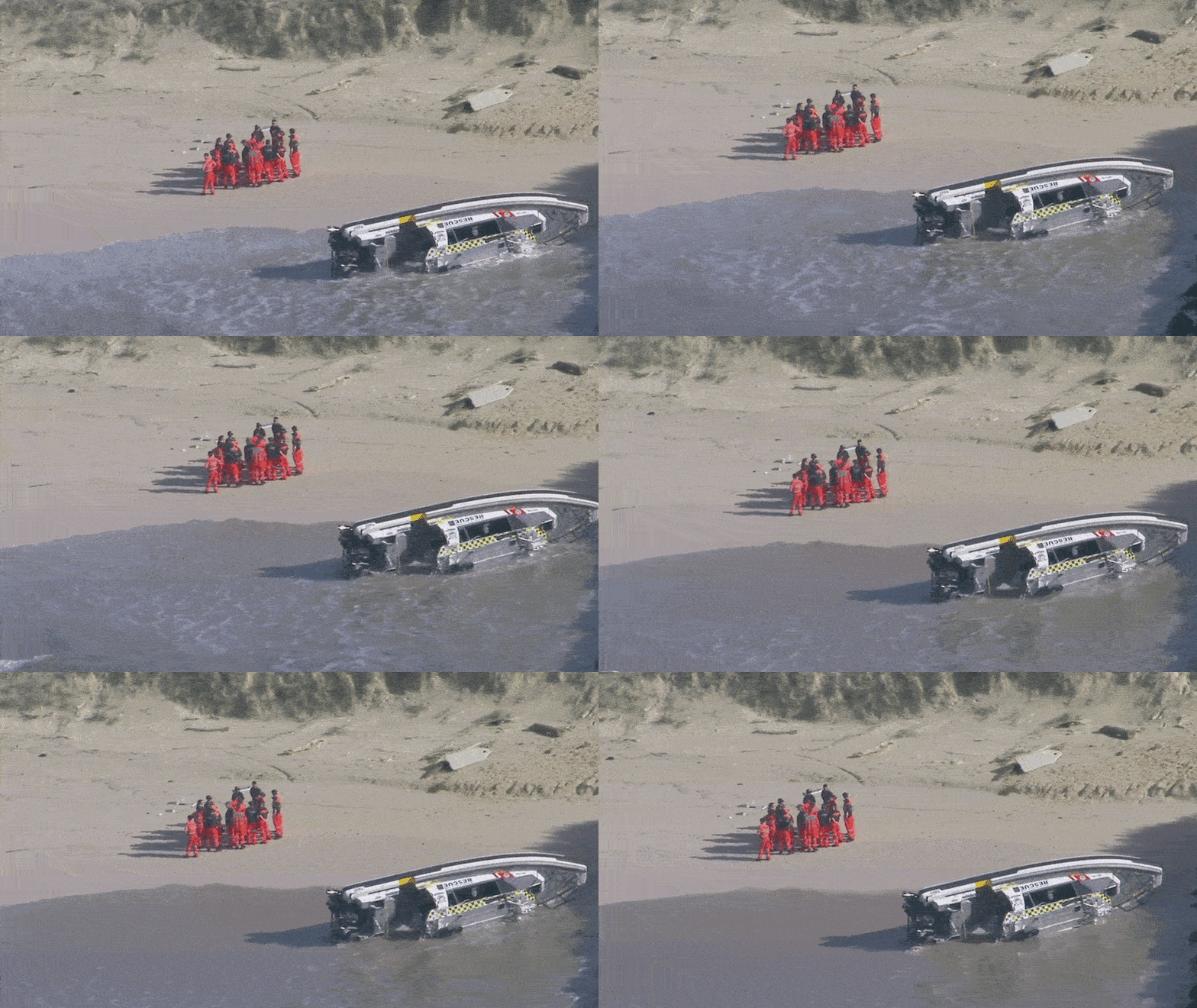
Their rescue boat, Marine Rescue NSW’s recently acquired BA30, capsized as it crossed the bar in 2½-metre swells.
“Some of the Marine Rescue crew were trapped in the hull, some were ejected from the vessel, and unfortunately two lives have been lost,” McNulty said.
The two men killed were volunteers, aged 78 and 62. Four injured crew members, aged 55, 75, and two aged 61, made it to shore. They were checked by paramedics, but are not believed to have life-threatening injuries.
The yacht collided with the breakwall, broke apart and sank. A man in his 50s, believed to have been on the yacht but who is yet to be formally identified, was found dead. He was not wearing a life jacket and had not called for help.
Police divers will attempt to recover evidence from the sunken yacht later in the week to investigate the incident.
MRNSW notified police at the Marine Area Command in Balmain as they went to assist the distressed vessel, and “acted in accordance with the protocols that we have in place”, McNulty said.
“We received no distress call, no [Emergency Position Indicating Radio Beacon], no flares,” McNulty said.
“It was the good samaritan on the breakwall … he raised the alarm and contacted Marine Rescue directly.”
The rescue agency is offering counselling services to volunteers and their families.
“Last night was the darkest night in Marine Rescue history,” MRNSW Commissioner Todd Andrews said on Tuesday in Ballina.
The crew who responded were experienced and qualified and a risk assessment had been conducted before the operation, Andrews said.
“Conditions out at sea can change rapidly, and what may look like a calm situation can turn quickly,” Andrews said.
Premier Chris Minns said the tragedy was a reminder of the incredible work of emergency services.
“In some cases, they’re volunteers, and in their spare time for no money, they put their own lives on the line to protect complete strangers,” Minns said.
Emergency Services Minister Jihad Dib said rescuers had rushed to help in difficult conditions.
“The loss of these members of our emergency services is a tragedy for their families and friends, as well as the communities they helped protect,” he said.
“It is a loss that is deeply felt across all our emergency services, especially throughout the Marine Rescue family.”
One local man, in a post on social media, said he had “never seen” so many emergency service vehicles go past his home after living there for 10 years.
“It has been a terrible night for Marine Rescue NSW and our focus right now is supporting the families of those affected, and our volunteers,” a spokesman for the organisation said.
Marine traffic monitoring websites showed Marine Rescue BA30 in the area – “under way using engine” – last transmitting shortly before 7pm.
The search operation, which began on Monday night, was suspended on Tuesday morning.
A tribute at the scene thanked rescuers “for your dedicated service”.
“It affects the community when something like that happens, especially when a rescuer is lost and those people risk their lives to go and help other people in difficulty,” Ballina local Margie Fitzgerald told Nine’s Today program on Tuesday morning.
The volunteer rescue organisation completed more than 3100 search and rescue missions between October 1 and Anzac Day, helping more than 7000 people around NSW.
In March, Marine Rescue Ballina warned boaties of the dangers.
“The entrance of the Richmond River at Ballina has long carried a reputation as one of the most dangerous river bars on the Australian coast,” the local rescue branch warned on social media.
“This reputation has not arisen without reason.”
The capsized rescue vessel BA30 entered service in November after community fundraisers helped raise $150,000 towards its cost.
 Jack Gramenz is a breaking news reporter at The Sydney Morning Herald.Connect via email.
 Sarah McPhee is the Overnight Homepage Editor for The Sydney Morning Herald.Connect via email.