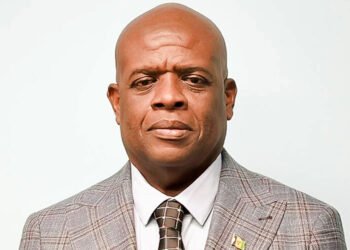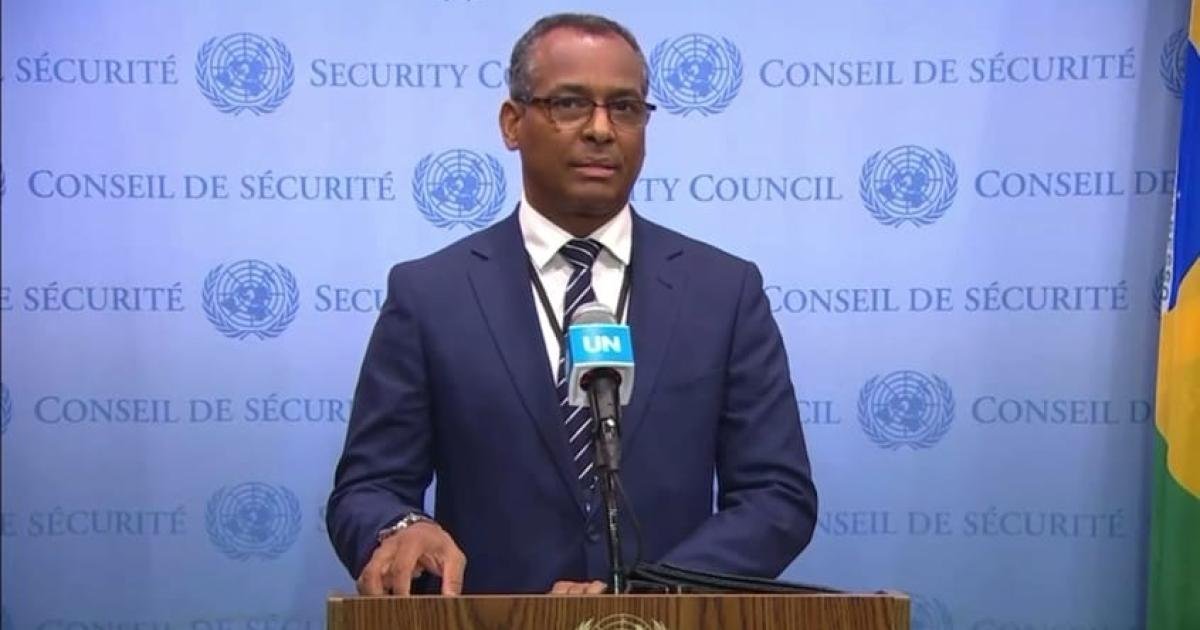
New York (United Nations), May 3, 2026 (SPS) Dr. Sidi Mohamed Ammar, member of the National Secretariat, representative of the Polisario Front at the United Nations and coordinator with MINURSO, stressed that a just and lasting solution must be based on ensuring that the Sahrawi people exercise their inalienable, non-negotiable and non-delegated right to self-determination and independence through a free, transparent and democratic process in accordance with the relevant General Assembly resolutions.
This confirmation came during a recent press interview conducted by the Sahrawi diplomat with Al-Ayyam News, in which he gave a detailed presentation on the developments in the Western Sahara issue and the course of action of the United Nations Mission for the Referendum in Western Sahara (MINURSO).
The Sahrawi diplomat explained that the Security Council had adopted, on October 31, 2025, Resolution 2797 (2025), according to which it decided to extend the mandate of the United Nations Mission for the Referendum in Western Sahara (MINURSO) until October 31, 2026, noting that consideration of extending the mission’s mandate will take place during the upcoming session of the Security Council next October.
Dr. Sidi Mohamed Ammar pointed out that the new element in the peace process sponsored by the United Nations is represented by the discussions that recently took place at the level of foreign ministers between the two parties to the conflict, the Polisario Front and Morocco, and in the presence of the two neighboring countries, Algeria and Mauritania, in accordance with what was called for by Security Council Resolution 2797 (2025), which urged the two parties to enter into discussions without preconditions with the aim of reaching a just and final solution that guarantees the self-determination of the people of Western Sahara.
The Sahrawi diplomat added that these discussions took place under the joint chairmanship of the United Nations and the United States of America, as the “pen-bearer” regarding Western Sahara in the Security Council, and centered on the implementation of the aforementioned resolution, stressing that these talks represent the beginning of a path and it is still too early to evaluate their results.
Dr. Sidi Mohamed Ammar also stated that the Polisario Front reaffirmed its desire for the success of the efforts being made, stressing that a just and lasting solution must be based on ensuring that the Sahrawi people exercise their inalienable, non-negotiable and non-delegated right to self-determination and independence through a free, transparent and democratic process, in accordance with the relevant General Assembly resolutions. It also affirmed its categorical rejection of all quasi-solutions that aim to legalize the Moroccan occupation and circumvent the aspirations of the Sahrawi people for freedom, independence, and complete sovereignty over their entire national territory.
On the other hand, the Sahrawi diplomat indicated that the Security Council, under the presidency of Bahrain, held closed consultations on MINURSO on April 23, 2026, during which members heard briefings from Staffan de Mistura, the Personal Envoy of the Secretary-General for Western Sahara, Alexander Ivanko, Special Representative of the Secretary-General and Head of MINURSO, and Asif Khan, charged with preparing the strategic review on MINURSO, explaining that this session was a “briefing” session and did not issue anything from it. Any way out regarding the peace process and the mission’s mandate.
He also mentioned that the establishment of the mission came after the two parties to the conflict accepted the joint settlement plan between the United Nations and the Organization of African Unity in 1988, as the Security Council established the MINURSO mission in accordance with its resolution 690 (1991) of April 29, 1991 in order to implement the provisions of the settlement plan, including monitoring the ceasefire and organizing a self-determination referendum in Western Sahara.
Dr. Sidi Mohamed Ammar added that the Moroccan occupation state has, from the beginning, been obstructing the full implementation of MINURSO’s mandate, and even expelled the mission’s civilian employees, including African Union observers, in March 2016. It also continues to impose numerous restrictions on the mission’s work, including requiring its vehicles to use Moroccan number plates and stamp the passports of its members, which undermines the international character of the mission and undermines its neutrality, as stated in reports. Secretary General.
The Sahrawi diplomat confirmed that these practices fall within attempts to undermine the mandate of MINURSO, not only because of the rejection of the self-determination referendum, but also because the mission represents an international presence and efforts to complete the decolonization of Western Sahara, noting that the occupying state seeks, with the support of its allies in the Security Council, to reduce the mission’s political and operational role.
Regarding the impact of the absence of a human rights monitoring mechanism within MINURSO on the credibility of the United Nations, Dr. Sidi Mohamed Ammar pointed out that the Moroccan occupation authorities impose a military siege and a comprehensive media blackout on the occupied territories, and prevent the access of United Nations bodies, non-governmental organizations, the media, and observers, in addition to expelling many observers, journalists, lawyers, and politicians, stressing that all of this is happening without action from the mission.
In this context, the Polisario Front renewed its call on the Security Council to empower MINURSO and grant it full powers, including monitoring, protecting and submitting reports on human rights, considering it unacceptable for the mission to remain an exceptional case at a time when protecting human rights has become a priority in UN peacekeeping operations.
As for the reason for excluding Western Sahara from the human rights oversight mechanisms approved by other UN missions, Dr. Sidi Mohamed Ammar explained that the first reason is due to the refusal of the Moroccan occupying state, which fears the exposure of the violations committed, while the second reason is represented by the positions of some countries supporting it, such as France, which obstructs the inclusion of the human rights file in Security Council discussions, considering that this situation reflects a clear contradiction in the positions of some countries that call for respect for human rights in other regions, while supporting the continuation of the Moroccan occupation and its violations in Western Sahara.(SPA)