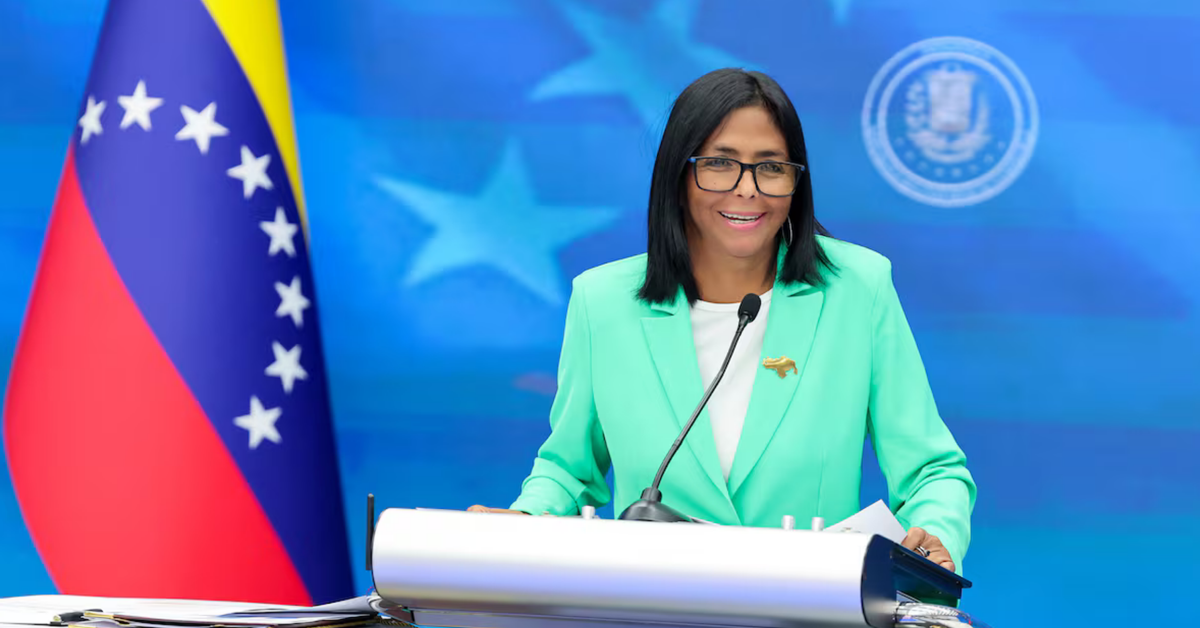
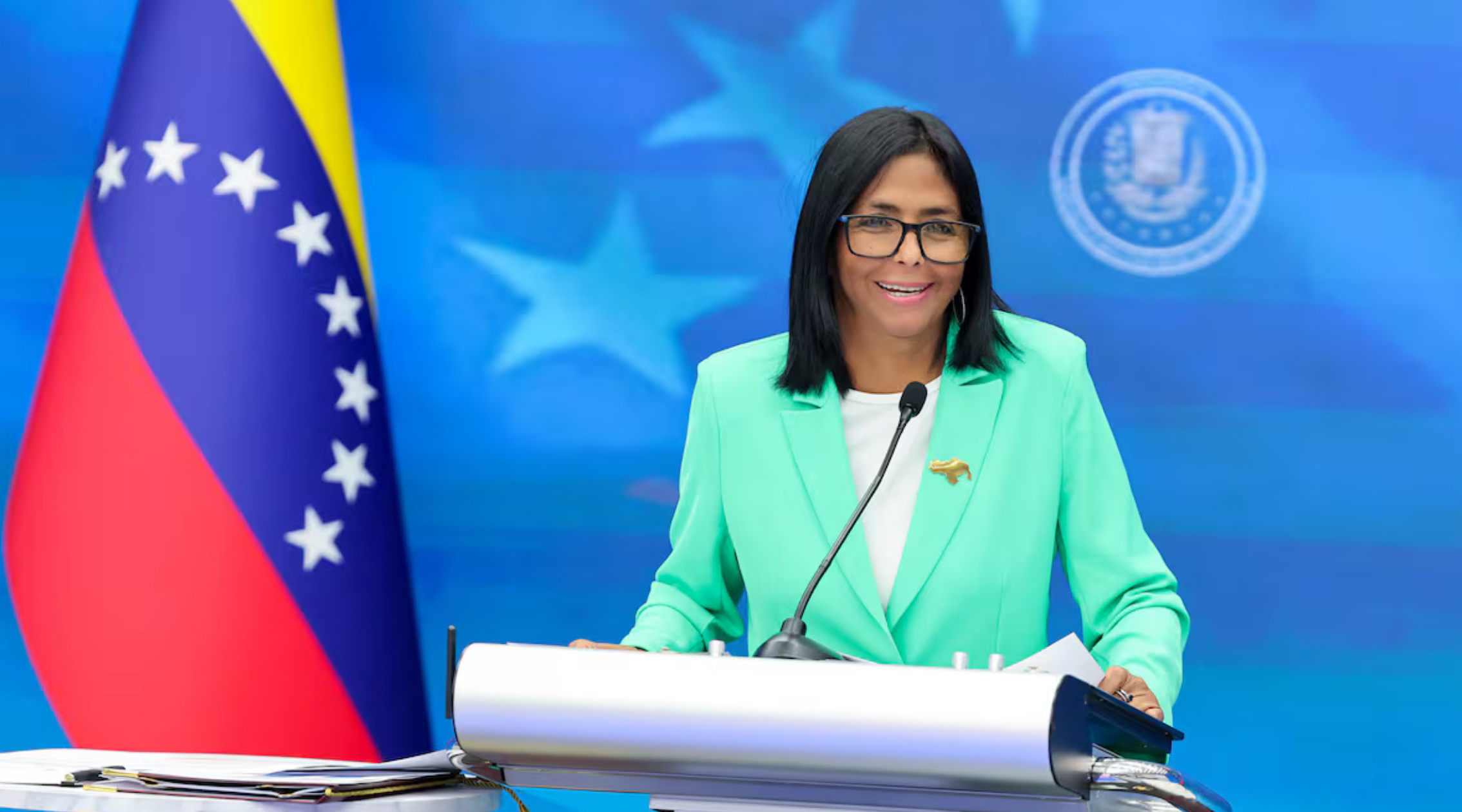
Caracas/The president in charge of Venezuela, Delcy Rodríguez, announced this Wednesday a series of measures to boost her country’s economy, although without defining concrete actions, and which involve the review of the Chavista model, with the promise of a labor dialogue, a salary increase, tax reforms and real estate laws.
The president, who assumed power after the capture of Nicolás Maduro by the United States, asked to correct “past mistakes” and “not repeat them.”
“Our immediate, medium and long-term objective is to steadily and gradually recover the income of workers through productive growth both in the area of hydrocarbons and mining that generate immediate income,” Rodríguez said in a message to the country that lasted almost half an hour and whose transmission briefly failed due to a power outage.
And, in that sense, he announced a “responsible” salary increase for next May 1, although without specifying the percentage or whether it is the minimum wage, frozen since March 2022, or an income that public workers receive made up of two bonuses and which was increased last March.
And, in that sense, he announced a “responsible” salary increase for next May 1, although without specifying the percentage or whether it is the minimum salary.
The minimum monthly wage in Venezuela was equivalent to 30 dollars in March 2022, but chronic inflation and devaluation keep it at 27 cents today, according to the official exchange rate.
Rodríguez confirmed that last March a monthly bonus that public workers receive in bolivars at the official rate of the day was increased from $160 to $190 and that it has no impact on labor benefits, following a sale of fuel oil, a fuel derived from petroleum, in the midst of the oil opening and rapprochements with the United States.
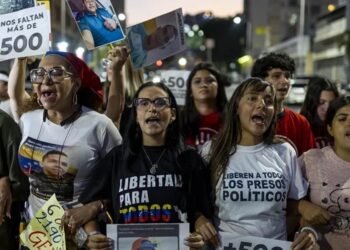
Likewise, the Chavista leader reported the installation of a commission for “labor dialogue” amid protests by workers demanding an increase in salaries.
The announcements came on the eve of a march called by union members to the Executive headquarters, in the center of Caracas, to demand answers to their demands.
The president also ordered the formation of another commission for the “strategic” evaluation of the country’s assets, which will be made up of the State, the private sector and workers, although she clarified that this process will not include the hydrocarbon industry. He did not specify his functions or lines of work in the same way.
Furthermore, he reiterated that if “the recovery of Venezuela’s assets” blocked abroad is carried out amid the sanctions that weigh on the country, these resources will be allocated “immediately” to guarantee the increase in salaries and to the “rehabilitation of basic infrastructure”, such as electricity, water, roads, schools and hospitals.
If “the recovery of Venezuela’s assets” blocked abroad is completed, they will be used “immediately” to guarantee salary increases and the “rehabilitation of basic infrastructure.”
Finally, he called for reform of the rules that regulate the real estate market and signed the law to accelerate procedures approved by Parliament the week before, while calling for the creation of a new tax model in the country, for which he “immediately” installed a national economic council that will receive proposals.
In this context, he requested that this model be more efficient and also promote technological platforms that allow Venezuela to move to a “higher level”, without delving into this point.
“I hope that a new tax model of consensus among all economic sectors of the country can emerge from this national economic council,” said the president in charge, when in Venezuela several unions have warned about the “high tax burden” faced by formal companies, which allocate, on average, 80% of their profits to paying taxes.